
Diporiphora winneckei
Not listed as a conservation concern·Oviparous
The Canegrass Dragon (Diporiphora winneckei) is a small, terrestrial lizard endemic to the arid zones of Australia. Characterized by its slim build, long tail and limbs, and distinctive grey or pale brown coloration with prominent ventral and lateral stripes, this diurnal species is well-camouflaged within its sandy habitat. It is an insectivore, though it may occasionally consume plant matter, and plays a role in the food web of its environment.
Key Facts
- ›Endemic to the arid zones of Australia.
- ›Possesses a slim body with long tail and limbs, typically 15–24 cm in total length.
- ›Coloration ranges from grey to pale brown or reddish-brown with distinct ventral and lateral stripes.
- ›Primarily insectivorous, but may supplement diet with leafy greens and flowers.
- ›Breeds between October and April, with females laying 1-3 eggs per clutch.
- ›Known for its excellent camouflage and secretive behavior, making it rarely sighted.
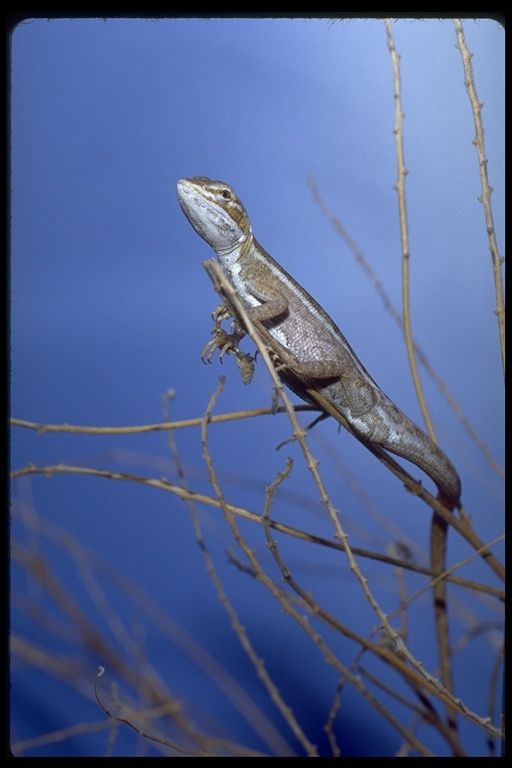
Canegrass Dragon, Canegrass Two-Line Dragon, Blue-Lined Dragon, Winnecke's Two-Pored Dragon
Australia
Arid Zones, Desert Sand Ridges, Sandy Soils, Ground Litter, Canegrass, Spinifex, Hummock Grasses
- Slim Lizard With A Long Tail and Limbs.
- Total Length Approximately 15–24 cm .
- Coloration Is Grey Or Pale Brown To Reddish-Brown.
- Features A Thick Grey Ventral Band From Nape To Tail.
- Has Creamy-Yellow Or Silver Grey Stripes Down Each Side of Its Back, Converging At the Pelvis.
- Females Have Dark Angular Blotches Between the Stripe and Ventral Band; Males Have Fewer Or No Blotches.
- Possesses A Creamy Mid-Lateral Stripe From Eye To Ear.
- Scales Are Homogenous.
- Has Weak Gular and Postauricular Folds.
- Lacks Spines and Crests Found In Many Other Dragon Species.
Insectivorous, Leafy Greens, Flowers
- Terrestrial
- Diurnal
- Secretive Behavior
- Excellent Camouflage
- Males Use Head Bobs To Attract Females For Mating
Foxes, Dogs, Cats, Cane Toads
Introduced Diseases, Death On Roads, Habitat Modification, Habitat Degradation, Habitat Loss, Feral Predators
About Diporiphora winneckei
The Canegrass Dragon
The Canegrass Dragon, scientifically known as Diporiphora winneckei, is a small, terrestrial lizard native to the arid regions of Australia. This diurnal species is characterized by its slender build, long tail and limbs, and a distinctive coloration that aids in its camouflage. It typically measures between 15 to 24 centimeters in total length, featuring a grey to pale brown or reddish-brown body adorned with a prominent grey ventral band and lateral stripes that converge at the pelvis. Males often display silver-grey stripes, while females have yellower stripes and more pronounced dark blotches.
Distribution and Habitat
Diporiphora winneckei is endemic to Australia, thriving in arid zones where rainfall is less than 500mm annually. Its range is predominantly centered around the junction of the Northern Territory, Queensland, New South Wales, and South Australia, extending into Western Australia. The Canegrass Dragon is commonly found on desert sand ridges and other sandy soils, often seeking shelter among ground litter, canegrass, spinifex, or hummock grasses. Despite not being rare, its excellent camouflage and secretive nature make it a rarely sighted species.
Diet and Reproduction
This species is primarily insectivorous, feeding on insects during daylight hours. Occasionally, it supplements its diet with leafy greens and flowers. The Canegrass Dragon reaches sexual maturity around one year of age. The breeding season occurs from October to April, during which males attract females through head-bobbing displays. Females lay clutches of one to three eggs in small nests dug into moist sandy soil. The eggs typically incubate for approximately two to three weeks.
Behavioral Traits and Threats
The Canegrass Dragon exhibits secretive behavior and relies heavily on its natural camouflage to avoid detection. While it is not currently facing conservation concerns, it is susceptible to general threats affecting Australian reptiles. These include the impact of introduced diseases, road mortality, habitat degradation and loss, and predation by feral animals such as foxes, cats, and dogs, as well as cane toads.
Source: Wikipedia ↗
Frequently Asked Questions
What is the scientific name for the Canegrass Dragon?
The scientific name for the Canegrass Dragon is Diporiphora winneckei. This binomial nomenclature is used to classify the species within the scientific community.
Where is the Canegrass Dragon found?
The Canegrass Dragon is endemic to the arid zones of Australia, with a rainfall of less than 500mm. It is predominantly found in the region where the Northern Territory, Queensland, New South Wales, and South Australia borders meet, and also extends across Western Australia.
What does the Canegrass Dragon eat?
The Canegrass Dragon is primarily insectivorous, feeding on insects during the day. On occasion, it has been observed to consume leafy greens and flowers, indicating a somewhat varied diet.
How does the male Canegrass Dragon attract a mate?
During the breeding season, the male Canegrass Dragon will attract a female through repeated head bobs, a display that signifies his readiness to mate. If the female is receptive, she will lower her head to show her interest.
What are the main threats to the Canegrass Dragon?
While not currently listed as a conservation concern, the Canegrass Dragon faces threats common to Australian reptiles, including introduced diseases, road fatalities, habitat modification and loss, and predation by feral animals like foxes, dogs, cats, and cane toads.
What is the typical size of a Canegrass Dragon?
The Canegrass Dragon is a small lizard, reaching approximately 15 to 24 centimeters (5.9 to 9.4 inches) in total length. This includes its body and its long tail.
Related Lizards

Ctenotus brooksi
Ctenotus brooksi, also known as Brooks' wedge-snouted ctenotus, is a skink species endemic to semi-arid Australia. This fast-moving, diurnal lizard is characterized by its smooth scales, well-developed limbs, and a notable variation in color and pattern across its fawn to reddish-brown body. It inhabits desert sand ridge habitats, often associated with spinifex, and feeds primarily on insect prey.

Hardwick's spiny-tailed lizard
Hardwicke's spiny-tailed lizard, also known as the Indian spiny-tailed lizard, is a herbivorous reptile found in arid regions of India and Pakistan. It is characterized by its flattened body, wrinkled skin, and a tail adorned with spiny scales. This species is known to live in colonies and excavates complex burrows for shelter and hibernation.
Uromastyx hardwickii
Saara hardwickii, also known as Hardwicke's spiny-tailed lizard or the Indian spiny-tailed lizard, is a herbivorous agamid lizard found in arid regions of India and Pakistan. It is characterized by its flattened body, wrinkled skin, and a tail adorned with spiny scales. These lizards are known to live in colonies and excavate deep burrows for shelter.