
Cuban night lizard
The Cuban night lizard (Cricosaura typica) is the sole member of its genus and a unique species within the Xantusiidae family, distinguished by its small size and specific scale arrangements. This xerophilic lizard inhabits the dry forests and woods of southern Cuba, seeking refuge under rocks and debris. It is notably the only oviparous (egg-laying) species within the night lizard family.
Key Facts
- ›Endemic to the southern coast of Cuba.
- ›Smallest of the night lizards, with a snout-vent length under 4 cm.
- ›Distinctive scale pattern including two frontonasal and one frontal scale.
- ›The only egg-laying species in the Xantusiidae family.
- ›Feeds on insects, small arthropods, molluscs, and gastropods.
- ›Listed as Vulnerable on Cuba's Red List.
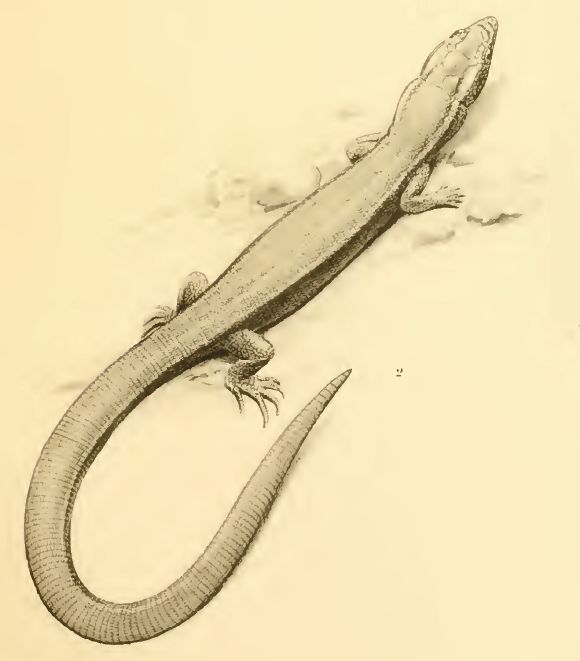
Cuban Night Lizard
Cuba
Xeric Forest, Woods, Dry Forest
Smallest of the Night Lizards., Snout-Vent Length Less Than 4 cm., Possesses Two Frontonasal Scales., Has One Frontal Scale., Lacks A Parietal Scale., Fourth Finger Has Four Phalanges.
Insects, Small Arthropods, Molluscs, Gastropods
- Xerophilic .
- Crepuscular and To Some Degree Diurnal.
- Lives Very Secretively.
- Can Be Easily Collected During the Day.
- Progresses In Loose Soil By Snake-Like Wiggling and Head Movement.
Habitat Fragmentation, Habitat Loss, Deforestation, Farming, Cutting Down Trees, Setting Fires, Introduction of Invasive Alien Animal Species, Adverse Natural Events
About Cuban night lizard
The Cuban night lizard, scientifically known as Cricosaura typica, is a small reptile endemic to the southern coast of Cuba. It holds a unique position as the sole species within its genus, Cricosaura, and is one of three genera belonging to the night lizard family, Xantusiidae. Physically, it is distinguished by its small size, with a snout-vent length measuring less than 4 cm, making it the smallest among the night lizards. Key distinguishing features include having two frontonasal scales, a single frontal scale, the absence of a parietal scale, and a fourth finger composed of four phalanges. The name 'Cricosaura' itself is derived from Greek words meaning 'ring lizard,' possibly referencing its caudal scales, while 'typica' signifies 'typical'.
Habitat and Distribution
This xerophilic species thrives in the arid forests and woodlands found in the westernmost regions of Cuba's southernmost coast, specifically within the Granma and Santiago de Cuba provinces. It can be found at elevations up to 200 meters. The Cuban night lizard prefers microhabitats that retain some moisture, often seeking shelter beneath rocks, stones, logs, and other debris. Despite its secretive nature, it is reported to be quite common within its specific habitat and can be collected during daylight hours. Its locomotion in loose soil is characterized by snake-like wiggling and head movements.
Diet and Reproduction
The diet of the Cuban night lizard primarily consists of insects, with a notable preference for ants. It also supplements its diet with other small arthropods, including spiders and diplopods, as well as molluscs like snails and slugs. A significant characteristic that sets Cricosaura typica apart from other night lizards is its reproductive method; it is the only oviparous species within the Xantusiidae family. Eggs are typically laid between April and June. The eggs are white, measuring between 9.4 to 10.7 mm in length, and undergo an incubation period that can last up to 60 days. Hatchlings emerge measuring approximately 15 mm from snout to vent.
Conservation and Lifespan
The Cuban night lizard is categorized as Vulnerable on Cuba's Red List. The primary threats to its survival stem from habitat fragmentation and loss, largely due to human activities such as farming, deforestation, and the occurrence of fires. The introduction of invasive alien animal species and adverse natural events also pose risks to its populations. While some populations reside within protected areas, the study and management of the species are considered inadequate. Populations outside these protected zones are particularly vulnerable. In captivity, the Cuban night lizard has a documented lifespan of up to 2 years and 11 months, though its natural lifespan in the wild is less precisely recorded.
Source: Wikipedia ↗
Frequently Asked Questions
What distinguishes the Cuban night lizard from other night lizards?
The Cuban night lizard is unique within its family for possessing two frontonasal scales, a single frontal scale, and lacking a parietal scale. It also has a fourth finger with four phalanges and is the smallest member of the night lizard family.
Where is the Cuban night lizard found?
This species is exclusively found in the westernmost corner of the southernmost coast of Cuba, specifically in the Granma and Santiago de Cuba provinces, at altitudes up to 200 meters.
What kind of habitat does the Cuban night lizard prefer?
The Cuban night lizard is a xerophilic species, meaning it prefers dry environments. It lives in xeric forests and woods, hiding under rocks, stones, logs, and debris in microhabitats that maintain some level of humidity.
What does the Cuban night lizard eat?
Its diet consists primarily of insects, particularly ants. It also consumes other small arthropods like spiders and diplopods, as well as molluscs and gastropods.
How does the Cuban night lizard reproduce?
Unlike other members of the Xantusiidae family, the Cuban night lizard is oviparous, meaning it lays eggs. Eggs are typically laid between April and June, measuring between 9.4-10.7 mm in length, with an incubation period of up to 60 days.
What is the conservation status of the Cuban night lizard?
The Cuban night lizard is listed as Vulnerable in Cuba. Its populations face threats from habitat fragmentation and loss due to deforestation, invasive alien species, and adverse natural events.
What is the typical lifespan of a Cuban night lizard?
Information on lifespan in the wild is limited. However, in captivity, Cuban night lizards have been reported to live up to 2 years and 11 months.
Related Lizards
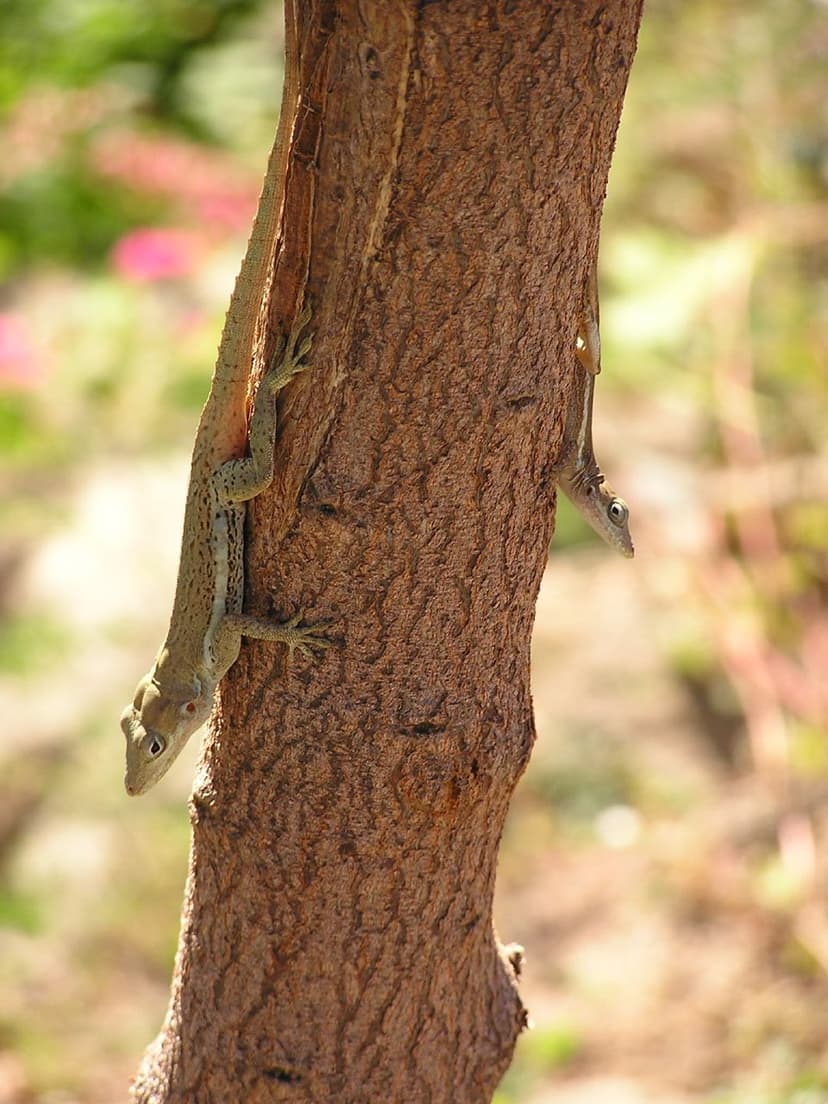
Anolis gingivinus
The Anolis gingivinus, also known as the Anguilla Bank tree anole, is a lizard species endemic to the northern Lesser Antilles islands of Anguilla, Saint Martin, and Saint Barthélemy. It is characterized by its olive to light grey coloration, bold stripes along the back, and a vivid orange chinflap, with males sometimes exhibiting dark marbled spotting. This adaptable species inhabits diverse mesic to xeric environments, including woods, coastal scrub, and overgrown fields, and can be found both in trees and on the ground.

Paroedura maingoka
Paroedura maingoka, also known as the scorpion leaf-toed gecko, is a species of lizard endemic to southwest Madagascar. This nocturnal reptile inhabits rock outcrops in dry forests and scrubland. It is recognized for its distinctive defensive behavior, where it curls its tail over its back in a manner reminiscent of a scorpion, a trait that gives it its common and scientific name.

Smallwood's anole
Smallwood's anole, also known as the green-blotched giant anole, is a lizard species native to Cuba. It primarily inhabits dry forest and coastal scrub areas, where it can be found perching on tree trunks and branches. This anole is characterized by its insectivorous diet and a snout-to-vent length typically measuring between 3 to 4 inches.