
Smallwood's anole
Smallwood's anole, also known as the green-blotched giant anole, is a lizard species native to Cuba. It primarily inhabits dry forest and coastal scrub areas, where it can be found perching on tree trunks and branches. This anole is characterized by its insectivorous diet and a snout-to-vent length typically measuring between 3 to 4 inches.
Key Facts
- ›Native to Cuba.
- ›Inhabits dry forest and coastal scrub environments.
- ›Perches on tree trunks and branches.
- ›Belongs to the trunk-crown ecomorph group.
- ›Primarily insectivorous, but may consume grapes in captivity.
- ›Snout-to-vent length is typically 3-4 inches.

Green-Blotched Giant Anole
Cuba
Dry Forest, Coastal Scrub, Arboreal Perches
Snout-To-Vent Length Typically 3-4 Inches.
Insects, Grapes
Perches On Tree Trunks and Branches.
Climate Change
About Smallwood's anole
Smallwood's anole, scientifically designated as Anolis smallwoodi and also referred to as the green-blotched giant anole, is a species of lizard native to the island of Cuba. This anole is a member of the Dactyloidae family and is noted for its preference for dry forest and coastal scrub environments.
Habitat and Behavior
Within its natural habitat, Smallwood's anole is typically observed perching on tree trunks and branches. It is classified within the trunk-crown ecomorph group, a classification that describes its ecological niche among Cuban anoles. Researchers have indicated that altering climate patterns may have a significant effect on the geographical distribution and thermal tolerance of this species across Cuba.
Physical Characteristics and Diet
Regarding its physical attributes, Smallwood's anole generally measures between 3 to 4 inches in snout-to-vent length. Its diet consists primarily of insects, though there are reports of captive individuals consuming grapes. Specific details regarding its lifespan, reproduction, and natural predators are not extensively documented in available records.
Source: Wikipedia ↗
Frequently Asked Questions
Where does Smallwood's anole live?
Smallwood's anole is found in Cuba. It specifically inhabits dry forest and coastal scrub habitats across the island.
What does Smallwood's anole eat?
This species is primarily insectivorous, meaning it feeds on insects. In captivity, it has also been observed to eat grapes.
How large is Smallwood's anole?
The typical size of Smallwood's anole, measured from snout to vent, is between 3 to 4 inches.
What kind of habitat does Smallwood's anole prefer?
Smallwood's anole prefers dry forest and coastal scrub environments. Within these habitats, it is often found perching on tree trunks and branches.
Are there any environmental concerns for Smallwood's anole?
Recent scientific studies suggest that climate change may impact the range and thermal niche of Smallwood's anole on the island of Cuba.
Related Lizards
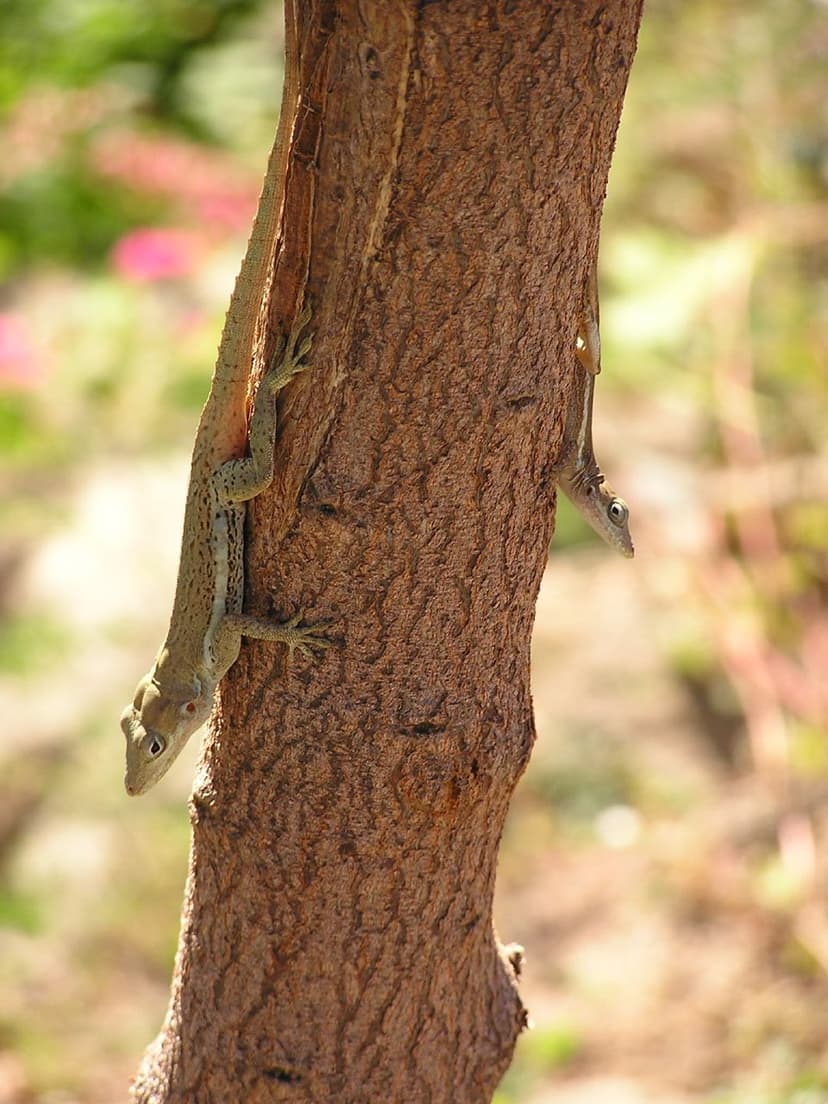
Anolis gingivinus
The Anolis gingivinus, also known as the Anguilla Bank tree anole, is a lizard species endemic to the northern Lesser Antilles islands of Anguilla, Saint Martin, and Saint Barthélemy. It is characterized by its olive to light grey coloration, bold stripes along the back, and a vivid orange chinflap, with males sometimes exhibiting dark marbled spotting. This adaptable species inhabits diverse mesic to xeric environments, including woods, coastal scrub, and overgrown fields, and can be found both in trees and on the ground.
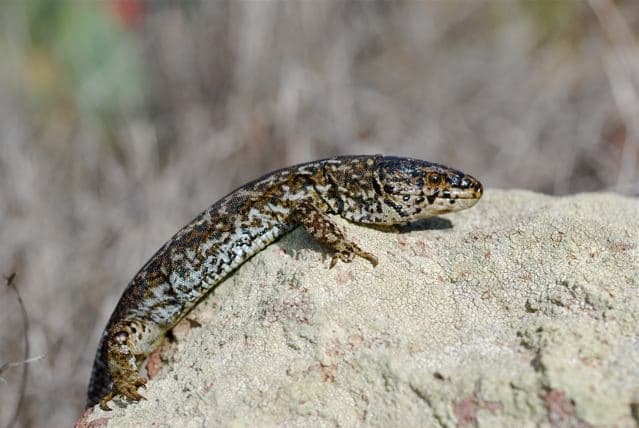
Xantusia riversiana
The island night lizard (Xantusia riversiana) is a medium-sized reptile native to three of California's Channel Islands. It is characterized by its variable coloration and pattern, and it inhabits dense coastal scrub environments. Unlike many lizards, it gives birth to live young and can live for several decades.

Brachysaura minor
Hardwicke's bloodsucker, also known as Calotes minor, is a small, stocky agamid lizard found across South Asia. It is characterized by its pot-belly, short tail, and distinct olive-brown coloration with dark-brown spots. Primarily terrestrial and diurnal, this harmless species inhabits dry forests, arid environments, and barren deserts.