
Anolis gingivinus
Oviparous (inferred from typical anole reproduction)
The Anolis gingivinus, also known as the Anguilla Bank tree anole, is a lizard species endemic to the northern Lesser Antilles islands of Anguilla, Saint Martin, and Saint Barthélemy. It is characterized by its olive to light grey coloration, bold stripes along the back, and a vivid orange chinflap, with males sometimes exhibiting dark marbled spotting. This adaptable species inhabits diverse mesic to xeric environments, including woods, coastal scrub, and overgrown fields, and can be found both in trees and on the ground.
Key Facts
- ›Endemic to Anguilla, Saint Martin, and Saint Barthélemy in the Lesser Antilles.
- ›Males have an average snout-to-vent length (SVL) of 72 mm, while females average 53 mm.
- ›Distinctive features include olive to light grey coloration, bold dorsal stripes, and a VIVID orange chinflap.
- ›Found in a variety of mesic to xeric habitats, including woods, coastal scrub, and overgrown fields.
- ›Can be found living in trees and on the ground.
- ›Preyed upon by American kestrels in its native range.
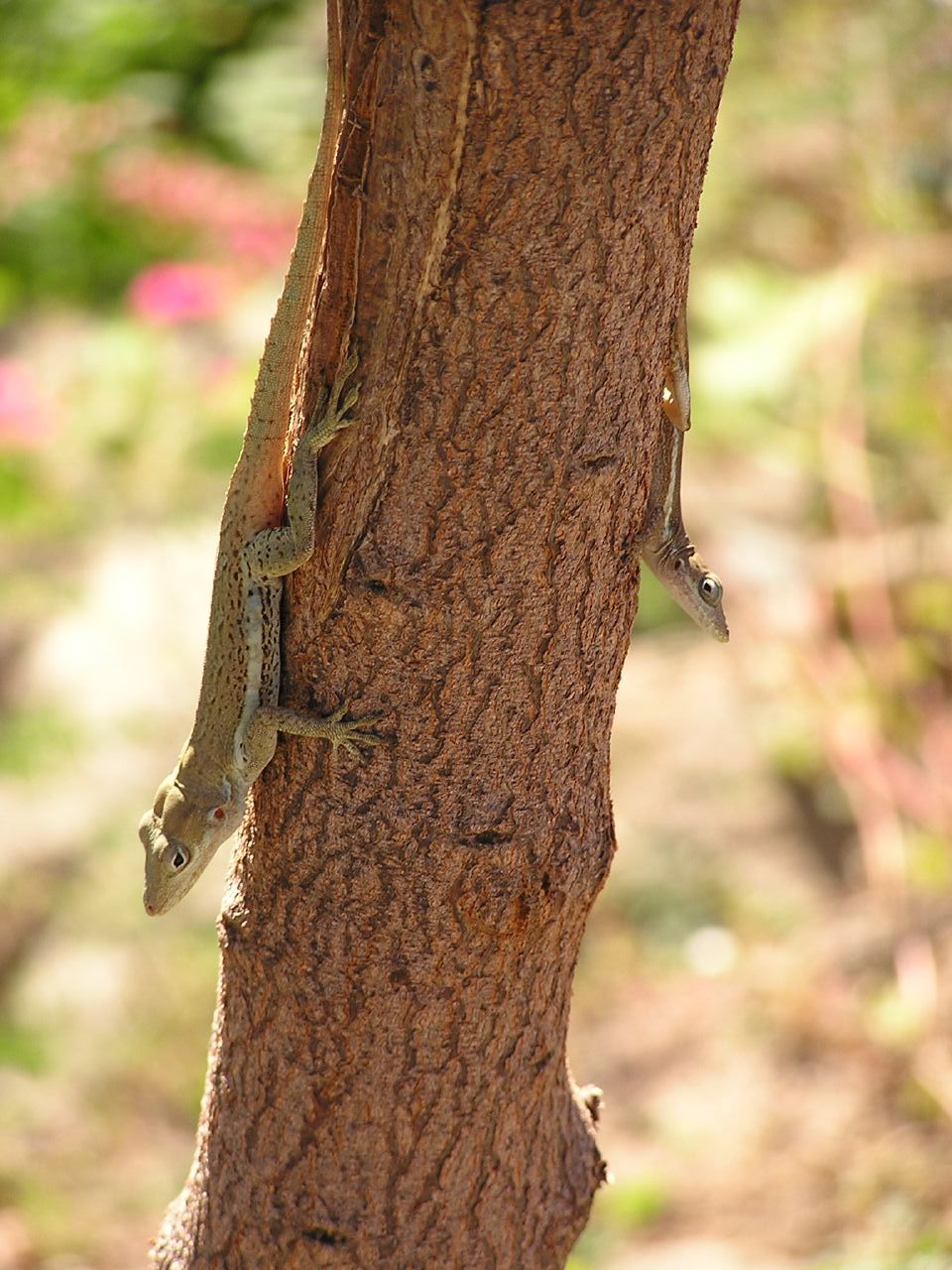
Anguilla Bank Tree Anole, Anguilla Bank Anole, Anguilla Anole
Anguilla, Saint Martin, Saint BarthéLemy, Sint Maarten
Woods, Coastal Scrub, Overgrown Fields, Arboreal, Terrestrial
- Males Have An Average Svl of 72 mm , Females Around 53 mm .
- Overall Color Is Olive To Light Grey.
- Features A Vivid Orange Chinflap.
- Bold Stripes Are Present Along the Back, Becoming Paler On the Sides.
- May Have Green Coloration On Lower Bodies.
- Males Can Exhibit Dark Marbled Spotting Along the Body.
Insects, Arthropods
- Highly Adaptable.
- Occupies Trees and the Ground.
- Prefers Higher and More Exposed Perches When Coexisting With Other Anole Species.
American Kestrels
About Anolis gingivinus
Anolis gingivinus, commonly referred to as the Anguilla Bank tree anole, is a species of lizard native to the islands of Anguilla, Saint Martin, and Saint Barthélemy in the Caribbean's Lesser Antilles. This anole is recognized for its distinctive appearance, featuring an olive to light grey body typically adorned with bold stripes running down its back, which gradually lighten along the flanks. A notable characteristic is its vivid orange chinflap, which is particularly prominent in males. Males can also display dark, marbled spotting on their bodies, adding to their unique coloration.
Distribution and Habitat
The Anguilla Bank tree anole is highly adaptable to various environments. It thrives in mesic to xeric habitats, including woodlands, coastal scrublands, and overgrown fields. This species demonstrates a capacity to live both in trees, as its common name suggests, and on the ground, showcasing its versatility in occupying different ecological niches. While widespread and common on its primary islands, its distribution can be localized in areas like Sint Maarten and St. Barthélemy, where it does not inhabit grassland environments.
Ecology and Behavior
Anolis gingivinus plays a role in the local ecosystem, though it is preyed upon by predators such as the American kestrel on Anguilla. Historically, it was the sole anole species on Anguilla until the introduction of Anolis carolinensis. On Saint Martin, it coexists with Anolis pogus, often occupying different microhabitats; Anolis gingivinus tends to favor higher and more exposed perches in areas where both species are present.
Source: Wikipedia ↗
Frequently Asked Questions
What are the common names for Anolis gingivinus?
Anolis gingivinus is commonly known as the Anguilla Bank tree anole, Anguilla bank anole, and Anguilla anole. These names refer to its geographical distribution and arboreal habits.
Where is Anolis gingivinus found?
This lizard species is endemic to the northern Lesser Antilles, specifically the islands of Anguilla, Saint Martin, and Saint Barthélemy, along with their satellite islands. Its distribution is primarily on the Anguilla Bank.
What does Anolis gingivinus look like?
Anolis gingivinus typically has an olive to light grey body with prominent stripes running along its back, which fade to paler shades on its sides. A striking feature is its vivid orange chinflap. Males may also display dark marbled spots on their bodies.
What kind of habitats does Anolis gingivinus prefer?
This anole is highly adaptable and can be found in mesic to xeric environments. These include woodlands, coastal scrub areas, and overgrown fields. It is comfortable living both in trees and on the ground.
What is the typical size of Anolis gingivinus?
Adult males of Anolis gingivinus generally have a snout-to-vent length (SVL) of about 72 mm (2.8 inches). Females are typically smaller, with an average SVL of around 53 mm (2.1 inches).
What are the predators of Anolis gingivinus?
On Anguilla and many of its satellite islands, Anolis gingivinus is heavily preyed upon by American kestrels. This suggests that birds of prey are a significant natural predator for the species.
Related Lizards
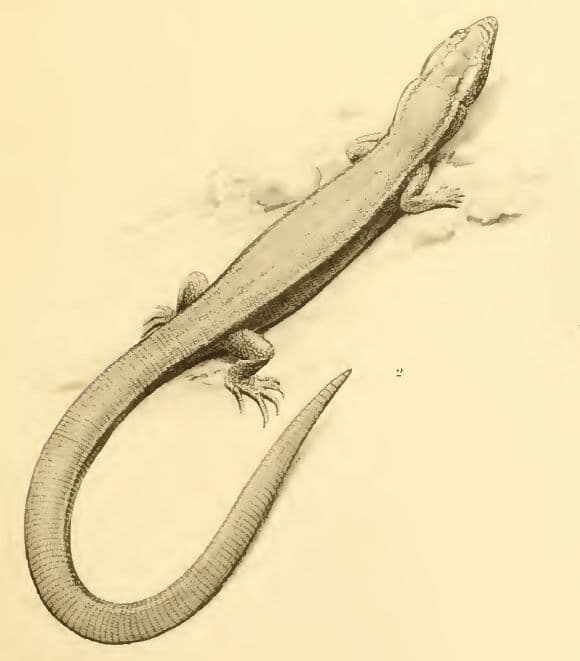
Cuban night lizard
The Cuban night lizard (Cricosaura typica) is the sole member of its genus and a unique species within the Xantusiidae family, distinguished by its small size and specific scale arrangements. This xerophilic lizard inhabits the dry forests and woods of southern Cuba, seeking refuge under rocks and debris. It is notably the only oviparous (egg-laying) species within the night lizard family.

Smallwood's anole
Smallwood's anole, also known as the green-blotched giant anole, is a lizard species native to Cuba. It primarily inhabits dry forest and coastal scrub areas, where it can be found perching on tree trunks and branches. This anole is characterized by its insectivorous diet and a snout-to-vent length typically measuring between 3 to 4 inches.
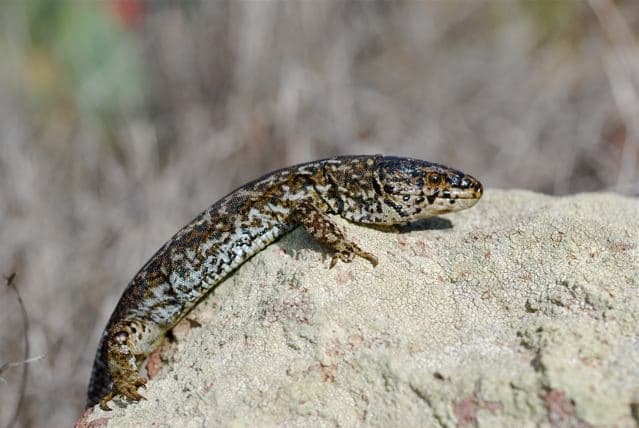
Xantusia riversiana
The island night lizard (Xantusia riversiana) is a medium-sized reptile native to three of California's Channel Islands. It is characterized by its variable coloration and pattern, and it inhabits dense coastal scrub environments. Unlike many lizards, it gives birth to live young and can live for several decades.