
Cyclodomorphus casuarinae
The Tasmanian she-oak skink (Cyclodomorphus casuarinae) is a large, snake-like skink native to Tasmania, Australia. Characterized by its elongated tail, which constitutes over 60% of its total body length, this species is related to the blue-tongued skink. It is viviparous, with mating occurring in spring and young born in late summer.
Key Facts
- ›Endemic to Tasmania, Australia.
- ›Possesses a long tail, exceeding 60% of its total body length.
- ›It is a viviparous species, giving birth to live young.
- ›Mating occurs in the spring, with births in late summer.
- ›Previously classified under the genus Tiliqua, it is related to the blue-tongued skink.
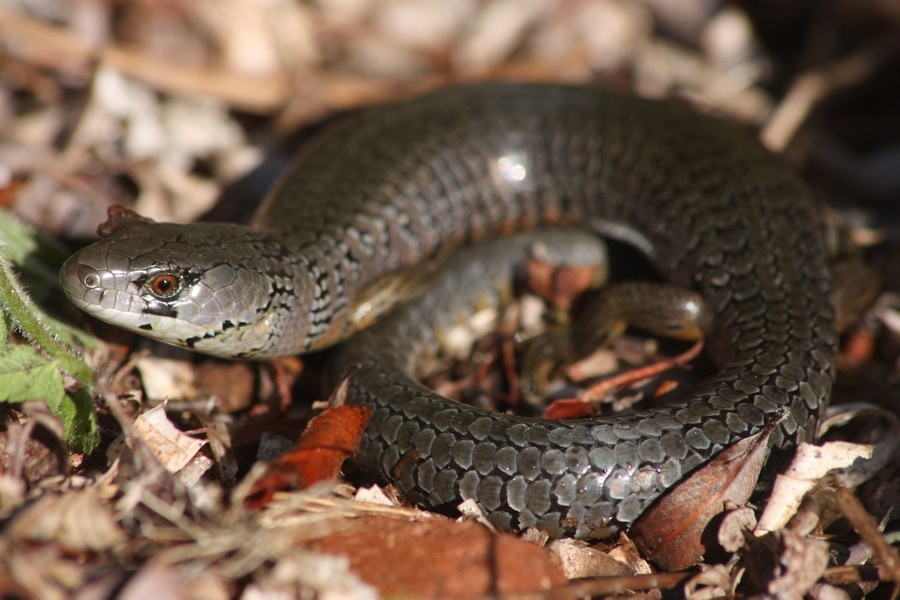
She-Oak Skink
Tasmania, Australia
Large Size, Up To About 30 cm Total Length., Long Tail, Making Up Over 60% of Body Length., Snake-Like Body Form.
About Cyclodomorphus casuarinae
The Tasmanian She-Oak Skink
The Tasmanian she-oak skink, scientifically known as Cyclodomorphus casuarinae, is a distinctive lizard species endemic to the island state of Tasmania, Australia. This skink is notable for its considerable size, potentially reaching up to 30 centimeters in total length, and its remarkably elongated tail, which comprises more than 60% of its overall body length. Its physical form is often described as snake-like, contributing to its unique appearance among Australian reptiles.
This species is viviparous, meaning it gives birth to live young rather than laying eggs. The reproductive cycle involves mating during the spring months, with the birth of offspring occurring later in the summer. The Tasmanian she-oak skink shares a close taxonomic relationship with the more robust blue-tongued skink, belonging to the genus Tiliqua. Indeed, it was previously classified under this genus, known historically as Tiliqua casuarinae.
Source: Wikipedia ↗
Frequently Asked Questions
What is the Tasmanian she-oak skink?
The Tasmanian she-oak skink, scientifically known as Cyclodomorphus casuarinae, is a large lizard species found exclusively in Tasmania, Australia. It is recognized for its distinctive snake-like appearance and exceptionally long tail.
What are the key physical characteristics of the Tasmanian she-oak skink?
This skink is notable for its size, reaching up to approximately 30 cm in total length, and its elongated tail, which makes up more than 60% of its body length. Its body shape is often described as snake-like.
How does the Tasmanian she-oak skink reproduce?
Cyclodomorphus casuarinae is a viviparous species, meaning it gives birth to live young rather than laying eggs. Mating typically takes place during the spring, and the young are born in late summer.
What is the relationship between the Tasmanian she-oak skink and the blue-tongued skink?
The Tasmanian she-oak skink is closely related to the more robust blue-tongued skink. Both species belong to the same broader taxonomic group, and Cyclodomorphus casuarinae was formerly known by the scientific name Tiliqua casuarinae.
Related Lizards
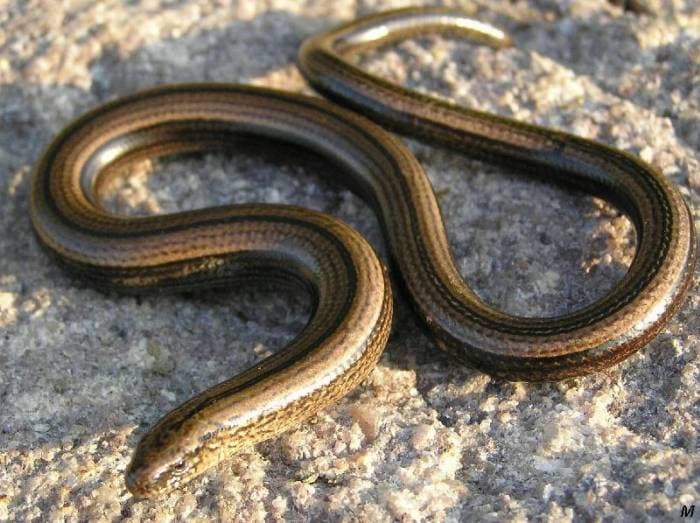
Anguis
Anguis, commonly known as slow worms, are a genus of legless lizards that are often mistaken for snakes. They are characterized by their grey-brown coloration, with females often exhibiting a coppery sheen and males displaying blue spots, especially during breeding season. These lizards inhabit a variety of warm, protected environments across Europe and parts of Asia, feeding primarily on invertebrates.

Bezy's night lizard
Bezy's night lizard (Xantusia bezyi) is a small, smooth-skinned lizard found in central Arizona. Its habitat includes desert highlands and pine woodlands, where it shelters under exfoliating rock in granite outcrops. Distinctive features include a flattened head, dark splotches on its back, and eyes lacking eyelids with vertical pupils.

Carinascincus ocellatus
The spotted skink (Carinascincus ocellatus), also known as the ocellated cool-skink, is a viviparous, ground-dwelling lizard native to Tasmania, Australia. It thrives in rocky environments and is commonly found in the northern and eastern regions of the state, as well as on islands in the Bass Strait. Variations in altitude influence its reproductive timing, with higher-altitude populations exhibiting slightly later ovulation and parturition.