
Anguis
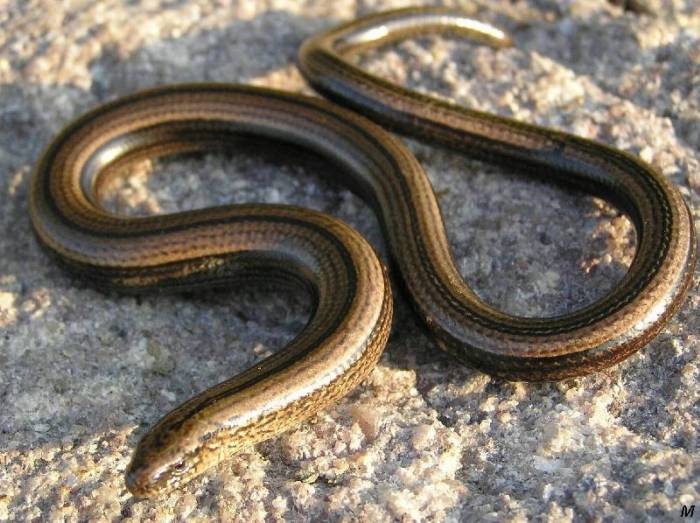
Anguis, commonly known as slow worms, are a genus of legless lizards that are often mistaken for snakes. They are characterized by their grey-brown coloration, with females often exhibiting a coppery sheen and males displaying blue spots, especially during breeding season. These lizards inhabit a variety of warm, protected environments across Europe and parts of Asia, feeding primarily on invertebrates.
Key Facts
- ›Anguis are legless lizards belonging to the family Anguidae.
- ›They possess eyelids and small ear openings, distinguishing them from snakes.
- ›Slow worms reproduce by giving birth to live young.
- ›They are known for their ability to shed their tails as a defense mechanism.
- ›Their diet consists mainly of invertebrates like slugs, caterpillars, insects, spiders, and earthworms.
Blindworm, Hazelworm
Europe, Asia
- Typically Grey-Brown Coloration.
- Females Often Have A Coppery Sheen and Two Lateral Black Stripes.
- Males Display Electric Blue Spots, Especially During the Breeding Season.
- Give Birth To Live Young, Which Are About 4 cm Long At Birth and Generally Have Golden Stripes.
- Average British Slow Worm Grows To 45 cm and Weighs About 100g; Females Are Slightly Larger Than Males.
- Tail Makes Up Around Half Its Length and Is Indistinguishable From the Body.
- Possess Eyelids and Small Ear Openings.
- Tongue Is Notched In the Center, Not Forked.
Slugs, Hairless Caterpillars, Other Insects, Spiders, Earthworms
- Slow-Moving.
- Can Shed Their Tails To Distract Predators .
- Tail Regrows But Never Fully.
- Hibernate From October To February/March, Communally and Solitarily.
- May Share Hibernating Sites With Other Reptiles.
Birds, Badgers, Hedgehogs, Foxes, Domestic Cats
About Anguis
Anguis: The Slow Worm Genus
Anguis, commonly known as slow worms, represents a genus of snake-like, legless lizards belonging to the family Anguidae. These reptiles are often mistaken for snakes due to their limbless appearance, but they possess distinct reptilian characteristics such as eyelids and small ear openings, which snakes lack. The genus encompasses five living species, including the well-known common slow worm (Anguis fragilis), the eastern slow worm (Anguis colchica), the Greek slow worm (Anguis graeca), the Peloponnese slow worm (Anguis cephalonnica), and the Italian slow worm (Anguis veronensis), with several fossil species also documented.
Description and Morphology
Slow worms typically exhibit a grey-brown coloration. Females often display a distinctive coppery sheen and two lateral black stripes, while males are known for their electric blue spots, particularly noticeable during the breeding season. A remarkable defense mechanism employed by slow worms is caudal autotomy, the ability to shed their tails when threatened by predators or handled too roughly; the tail, which constitutes about half of their total length, eventually regrows but never to its original size. Morphologically, they can be differentiated from snakes by their movable eyelids, small external ear openings, and a notched tongue, contrasting with the forked tongues of snakes. They reproduce by giving birth to live young, which are born approximately 4 cm long and usually feature golden stripes.
Habitat and Diet
These lizards thrive in a variety of habitats that offer warmth and protection, including woodlands, grasslands, and heathlands. They are also frequently found in garden compost heaps, sometimes intentionally introduced for pest control. Their geographic distribution spans across most of Europe and extends into parts of Asia, with a preference for temperate and humid environments. Slow worms are primarily insectivorous, with a diet consisting of soft invertebrates such as slugs, hairless caterpillars, other insects, spiders, and earthworms. They generally avoid snails unless the prey is very young and its shell can be easily crushed.
Behavior and Lifespan
Slow worms are characterized by their slow movement, which can make them vulnerable. They hibernate from October through February or March, engaging in both communal and solitary hibernation, and sometimes sharing hibernating sites with other reptile species. The average lifespan of a slow worm in the wild is up to 30 years, with a recorded maximum of 54 years in captivity, highlighting their longevity.
Conservation
Several countries, including the United Kingdom, Poland, Croatia, and Slovakia, provide legal protection for slow worms, underscoring their ecological importance and the need for conservation efforts.
Source: Wikipedia ↗
Frequently Asked Questions
What are slow worms?
Slow worms are a genus of snake-like, legless lizards that are often mistaken for snakes. They belong to the family Anguidae and are characterized by their ability to shed their tails and their unique reptilian features that differentiate them from true snakes.
How can I tell a slow worm from a snake?
Slow worms can be distinguished from snakes by several features. They have eyelids, unlike snakes, and possess small ear openings. Additionally, their tongues are notched in the center, rather than being completely forked like a snake's.
What do slow worms eat?
Slow worms primarily feed on soft invertebrates. Their diet includes slugs, hairless caterpillars, various insects, spiders, and earthworms. They typically avoid snails unless the snails are very young and their shells can be easily broken.
Where do slow worms live?
These lizards inhabit warm and protected environments such as woodlands, grasslands, and heathlands. They are also frequently found in garden compost heaps. Their range extends across most of Europe and into parts of Asia, favoring temperate and humid habitats.
Do slow worms have predators?
Yes, slow worms have several natural predators, which include birds, badgers, hedgehogs, foxes, and domestic cats. Their slow-moving nature can make them vulnerable to capture.
What is the lifespan of a slow worm?
In the wild, a slow worm can live for up to 30 years. The record for a slow worm in captivity is significantly longer, with one individual living for 54 years.
Related Lizards

Viviparous lizard
The viviparous lizard (Zootoca vivipara), also known as the common lizard, is a Eurasian reptile renowned for its ability to give birth to live young, though it can also lay eggs. This small lizard inhabits a wide range of cold climates, extending farther north than most non-marine reptiles, and is adept at thermoregulation to survive harsh conditions. It exhibits sexual dimorphism, with males often having larger heads and brighter undersides, while females display more color polymorphism.

Pogona minor
Pogona minor, commonly known as the western bearded dragon, is a species of agamid lizard native to the southwest coast and interior of Western Australia. This species is characterized by its chameleon-like coloration, which aids in camouflage or can be used for display during social interactions. It is distinguished from similar species by its smaller head and the arrangement of spines on its underside and neck.

Chalcides striatus
The western three-toed skink (Chalcides striatus) is a lizard found in the Iberian Peninsula, southern France, and northwestern Italy. It superficially resembles a snake due to its tiny limbs, but possesses smooth, glossy skin with a silvery or bronze coloration marked by longitudinal dark lines. This secretive species inhabits damp, sunny areas with dense low vegetation and feeds on invertebrates.