
Dalmatian wall lizard
The Dalmatian wall lizard is a species of lizard found across parts of Southern Europe, inhabiting temperate forests, shrublands, rocky areas, and pastures. These lizards are characterized by their size, growing up to 65 mm in snout-vent length with a tail twice that of their body. A distinctive feature is their three ventral color morphs: yellow, orange, and white, with orange males exhibiting more dominant and aggressive behaviors.
Key Facts
- ›Found in Albania, Bosnia and Herzegovina, Croatia, Italy, Serbia, Montenegro, and Slovenia.
- ›Inhabits temperate forests, Mediterranean shrublands, rocky areas, and pastures.
- ›Adults reach up to 65 mm in snout-vent length, with tails about twice the body length.
- ›Females lay 2-8 eggs.
- ›Displays three ventral color morphs: yellow, orange, and white.
- ›Orange morph males are considered more dominant and aggressive, influencing female mating preferences.
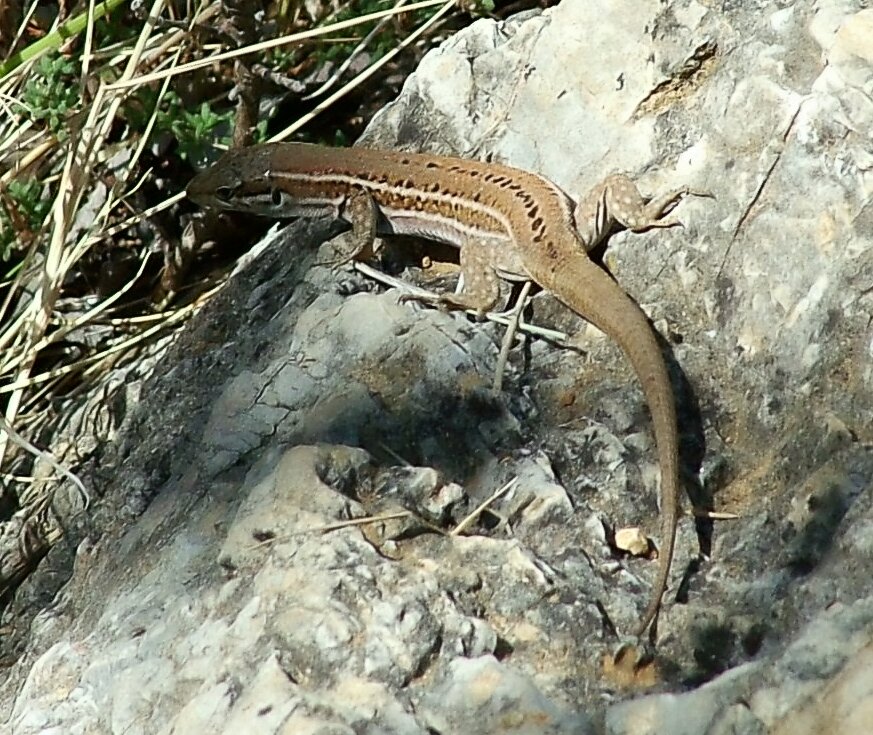
Albania, Bosnia and Herzegovina, Croatia, Italy, Serbia, Montenegro, Slovenia
- Grow Up To 65 mm In Snout–Vent Length.
- Tail Is About Twice As Long As the Body.
- Display Three Ventral Color Morphs: Yellow, Orange, and White.
- Juveniles Are About 25 mm In Snout–Vent Length Upon Hatching.
- Orange Males Display More Dominant and Aggressive Behavior In Intrasexual Competition.
- Orange Males Possess Larger Size and Bite Force For Warding Off Competitors and Claiming Territory.
- Females Prefer Orange Males For Indirect Benefits To Offspring.
- Females May Mate With Yellow Morphs For Direct Benefits Such As Protection and Territory.
- White Males May Mate By Intruding On Other Males' Territories.
About Dalmatian wall lizard
The Dalmatian wall lizard, scientifically known as Podarcis melisellensis, is a species of lizard belonging to the Lacertidae family. This reptile is indigenous to a range of countries in Southern Europe, including Albania, Bosnia and Herzegovina, Croatia, Italy, Serbia, Montenegro, and Slovenia. Its natural habitats are diverse, encompassing temperate forests, Mediterranean-type shrubby vegetation, rocky terrains, and open pasturelands, demonstrating its adaptability to various environments.
Physical Characteristics and Mating Behavior
Dalmatian wall lizards are relatively small, reaching up to 65 mm (approximately 2.6 inches) in snout-vent length, with a tail that is about twice the length of their body. A fascinating aspect of this species is the presence of three distinct ventral color morphs in males: yellow, orange, and white. These color variations are not merely aesthetic but play a significant role in the social hierarchy and mating dynamics. The orange color morph is particularly notable, as it is associated with more dominant and aggressive males. These males tend to be larger and possess a stronger bite force, enabling them to effectively defend their territories and ward off rivals to secure mating opportunities with females. Females often show a preference for orange morph males, perceiving them as providing superior indirect benefits for their offspring, such as good health and genetic quality. However, females will also mate with yellow morph males, who may offer more direct benefits like protection and access to small territories. White morph males, in contrast, are less successful in establishing their own territories and often resort to intruding on other males' areas to mate with their females.
Reproduction
Reproduction in the Dalmatian wall lizard is oviparous, meaning females lay eggs. A female typically lays between 2 to 8 eggs per clutch. The hatchlings, or juveniles, are small upon emergence, measuring around 25 mm (approximately 0.98 inches) in snout-vent length, and begin their lives in the varied landscapes inhabited by their species.
Source: Wikipedia ↗
Frequently Asked Questions
Where are Dalmatian wall lizards found?
Dalmatian wall lizards are naturally found in Albania, Bosnia and Herzegovina, Croatia, Italy, Serbia, Montenegro, and Slovenia. They inhabit a variety of natural environments within these regions.
What is the typical size of a Dalmatian wall lizard?
Adult Dalmatian wall lizards grow up to 65 mm (2.6 inches) in snout-vent length. Their tails are notably long, approximately twice the length of their body.
What are the different color morphs of Dalmatian wall lizards?
These lizards exhibit three distinct ventral color morphs: yellow, orange, and white. These color variations play a role in their social interactions and mating behaviors.
How do the color morphs affect male dominance and mating?
Orange morph males are perceived as more dominant and aggressive, often being larger with a stronger bite force. Females tend to prefer orange males due to the perceived indirect benefits for their offspring, though they will also mate with yellow morphs.
What is a female Dalmatian wall lizard's reproductive output?
Female Dalmatian wall lizards typically lay between 2 to 8 eggs during the breeding season. Newly hatched juveniles are quite small, measuring about 25 mm in snout-vent length.
Related Lizards
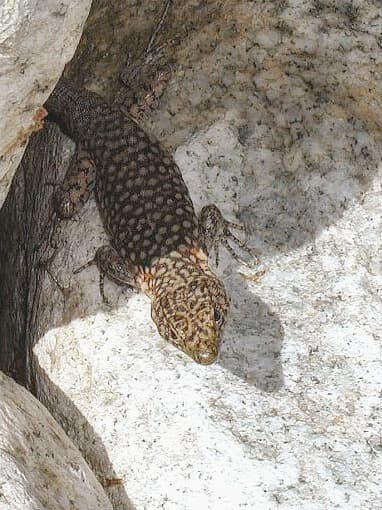
Archaeolacerta bedriagae
Bedriaga's rock lizard, scientifically known as Archaeolacterta bedriagae, is a species endemic to the islands of Corsica and Sardinia. This lizard is characterized by its brownish-grey coloration with a net pattern, which changes during the mating season, and juveniles are identifiable by their bright blue tails. It inhabits a variety of environments, including rocky areas, Mediterranean shrubland, and rural gardens, and is known for its ability to climb vertical surfaces and jump to catch flying insects.
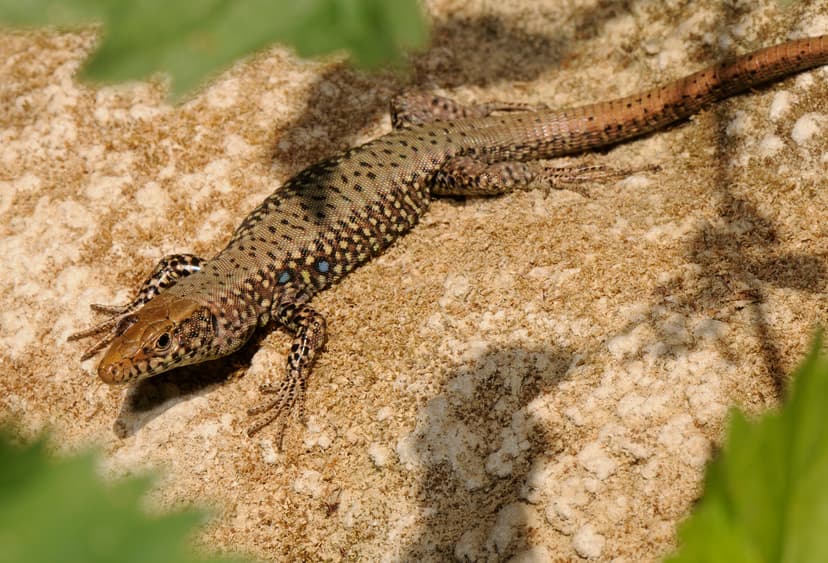
Greek rock lizard
The Greek rock lizard is a medium-sized lizard endemic to southern Greece, characterized by its glossy greyish-brown coloration and a tail at least twice its body length. It inhabits temperate forests, Mediterranean shrubland, rocky areas, and pastures, often near water sources. This agile species is known for its climbing abilities and a unique defense mechanism of spitting acid when threatened.
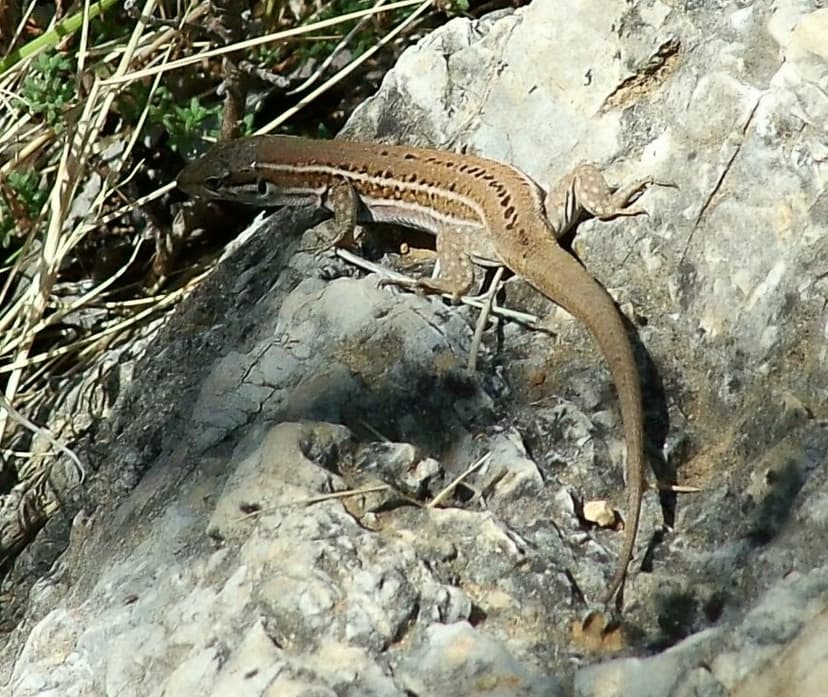
Podarcis melisellensis
The Dalmatian wall lizard (Podarcis melisellensis) is a species of lizard found across parts of southeastern Europe. It inhabits temperate forests, Mediterranean shrublands, rocky areas, and pastures. This species is notable for its three distinct ventral color morphs in males: yellow, orange, and white, with the orange morph signaling dominance.