
Greek rock lizard
The Greek rock lizard is a medium-sized lizard endemic to southern Greece, characterized by its glossy greyish-brown coloration and a tail at least twice its body length. It inhabits temperate forests, Mediterranean shrubland, rocky areas, and pastures, often near water sources. This agile species is known for its climbing abilities and a unique defense mechanism of spitting acid when threatened.
Key Facts
- ›Endemic to the Peloponnese region of southern Greece.
- ›Medium-sized with a snout-to-vent length of approximately 8 cm and a long tail.
- ›Prefers habitats near streams and pools, in light woodland, and rocky areas with sufficient humidity.
- ›Possesses an unusual defense mechanism of spitting acid when angered.
- ›Threatened by habitat loss due to fires and the planting of eucalyptus trees.
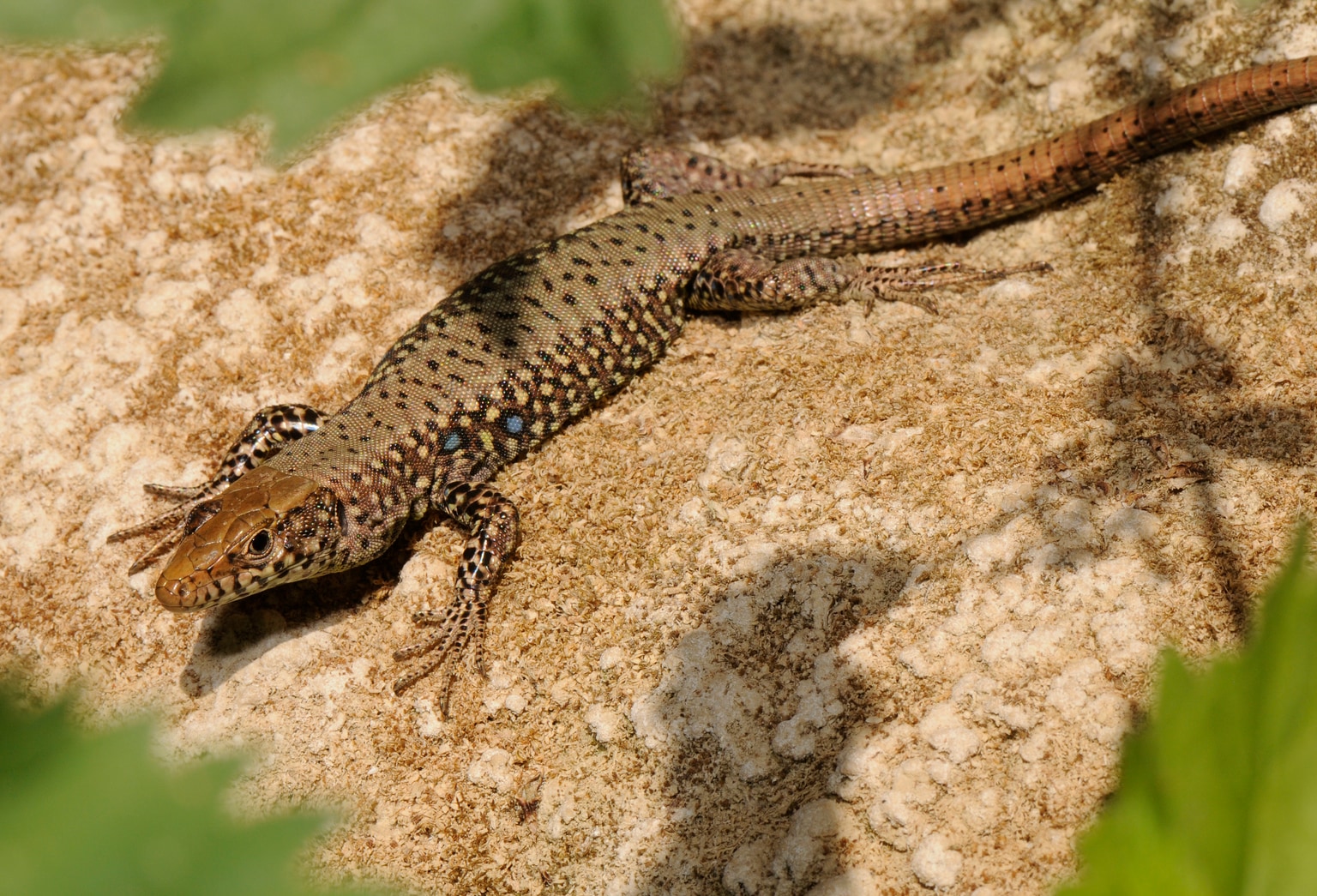
Greek Rock Lizard
Greece
Temperate Forests, Mediterranean-Type Shrubby Vegetation, Rocky Areas, Pastureland, Light Woodland, Edge of Fields Bordering Woodland, Scree
- Medium-Sized Lizard With A Snout-To-Vent Length of About 8 cm.
- Tail Is At Least Twice the Length of the Body.
- Body Is Somewhat Flattened.
- Legs Are Relatively Long and Slender.
- Coloration Is Usually A Glossy Greyish-Brown, Sometimes Yellowish-Brown With A Faint Reddish Tinge.
- Males Have Irregular Dark Spots On the Back and Dark Flanks With Many Small Pale Spots.
- Females Have Smaller Heads, Fewer Dark Spots On the Back, and More Diffuse Pale Spots On the Flanks.
- May Have One Or Two Blue Spots Above the Shoulder, Which In Males Can Extend Along the Flanks.
- Underparts Are Yellow Or Orange, Usually Speckled With Fine Dark Markings, Especially On the Throat.
- Forages On the Ground
- Dietary Specifics Not Detailed, Implied To Be Insectivorous Or Omnivorous Based On Foraging Behavior.
- Agile Species
- Climbs On Rocks, Walls, Parapets, and Tree Trunks
- Avoids Prolonged Periods In the Full Sun
- Forages On the Ground Sometimes
- Lays A Single Clutch of Eggs
- Spits Acid At Other Animals When Angry
Habitat Loss, Fires, Planting of Eucalyptus Trees
About Greek rock lizard
The Greek rock lizard, scientifically known as Hellenolacerta graeca, is a medium-sized reptile endemic to the Peloponnese region of southern Greece. Its natural habitats include temperate forests, Mediterranean shrubland, rocky outcrops, and pastures, with a preference for areas near water sources and shaded locales.
Physical Characteristics
This lizard typically reaches a snout-to-vent length of approximately 8 cm, with a tail that is at least twice this length. The body is somewhat flattened, and its legs are long and slender. Adults usually exhibit a glossy greyish-brown coloration, which can sometimes lean towards yellowish-brown with a subtle reddish hue. Males are distinguished by irregular dark spots on their backs and dark flanks dotted with numerous small pale spots. Females, in contrast, possess smaller heads, fewer dorsal spots, and more diffused pale markings on their flanks. A notable feature, present in both sexes but more prominent in males, are one or two blue spots situated above the shoulder, which may extend slightly along the flanks. The underparts are typically yellow or orange, often adorned with fine dark speckles, particularly on the throat.
Behavior and Diet
The Greek rock lizard is an agile climber, adept at scaling rocks, walls, parapets, and tree trunks, though it tends to avoid prolonged exposure to direct sunlight. While primarily arboreal, it does forage on the ground at times. A remarkable defensive behavior observed in this species is its ability to spit acid when angered or threatened by other animals.
Reproduction
Reproduction in the Greek rock lizard is oviparous, meaning they lay eggs. A female typically lays a single clutch, consisting of up to six eggs, in a concealed crevice or sheltered location. The incubation period for these eggs is approximately six weeks.
Distribution and Habitat
This species is exclusively found in southern Greece, specifically within the Peloponnese peninsula. It inhabits elevations ranging from 300 to 1,600 meters above sea level, with a greater concentration typically observed between 300 and 700 meters. Its preferred microhabitats are rocky areas with sufficient humidity, often found near streams and pools, within light woodlands, and at the edges of fields that border wooded areas.
Conservation Status
The Greek rock lizard faces threats primarily from habitat loss. Fires and the widespread planting of eucalyptus trees in place of native vegetation significantly reduce the available territory for this species. Despite these challenges, the International Union for Conservation of Nature (IUCN) currently classifies the Greek rock lizard as 'least concern,' acknowledging that it remains quite common in certain locales, although its total area of occupancy is limited.
Source: Wikipedia ↗
Frequently Asked Questions
What is the scientific name for the Greek rock lizard?
The scientific name for the Greek rock lizard is Hellenolacerta graeca. This binomial nomenclature is used to classify it within the animal kingdom.
Where is the Greek rock lizard found?
The Greek rock lizard is exclusively found in the Peloponnese region of southern Greece. It inhabits areas at altitudes ranging from 300 to 1,600 meters.
What does the Greek rock lizard look like?
It is a medium-sized lizard, typically 8 cm in snout-to-vent length with a tail at least twice that long. Its coloration is usually a glossy greyish-brown, with males displaying dark spots and females having more diffuse markings.
What is the habitat of the Greek rock lizard?
This lizard thrives in temperate forests, Mediterranean shrubland, rocky areas, and pastures, particularly in shady spots with adequate humidity. It is often found near streams and pools.
How does the Greek rock lizard defend itself?
When agitated or angry, the Greek rock lizard has been observed to spit acid at perceived threats. This is a distinctive defense mechanism among lizards.
What are the main threats to the Greek rock lizard?
The primary dangers to the Greek rock lizard are habitat destruction caused by fires and the replacement of native vegetation with eucalyptus trees. These activities reduce the amount of suitable habitat available.
What is the conservation status of the Greek rock lizard?
The International Union for Conservation of Nature (IUCN) has listed the Greek rock lizard as 'least concern.' While threatened by habitat loss, it is still considered quite common in some areas.
Related Lizards

Lacerta andreanskyi
The Atlas dwarf lizard (Atlantolacerta andreanskyi), also known as Andreansky's lizard, is a species indigenous to the High Atlas mountain range in north-western Africa. It is characterized by its adaptability to alpine meadows, scree, and rocky areas, often remaining well-hidden within vegetation. This species is notable for its long hibernation periods and its reproductive strategy of laying multiple small clutches of eggs annually.
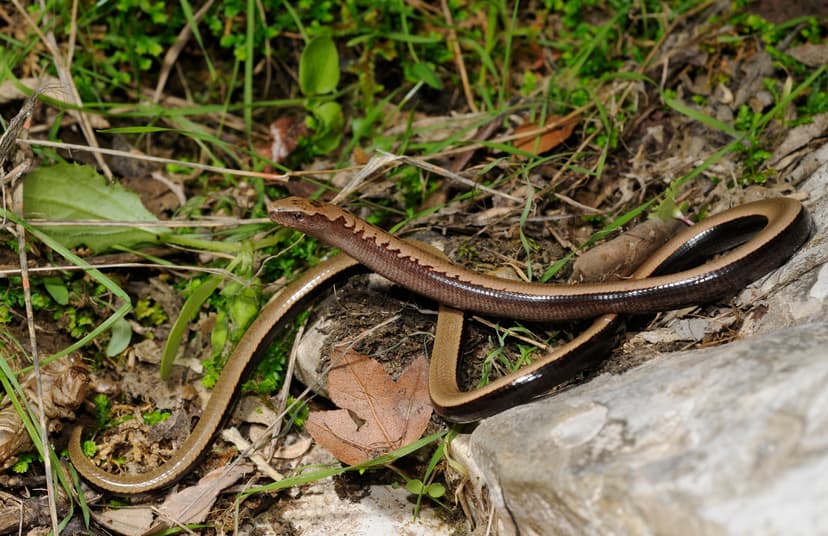
Peloponnese slowworm
The Peloponnese slow worm (Anguis cephallonica) is a legless lizard endemic to specific regions of Greece, including the Peloponnese peninsula and the Ionian islands of Cephalonia, Ithaca, and Zakynthos. This species is distinguished by a higher number of scale rows around its body and a unique chocolate-brown lateral stripe, and it gives birth to live young.
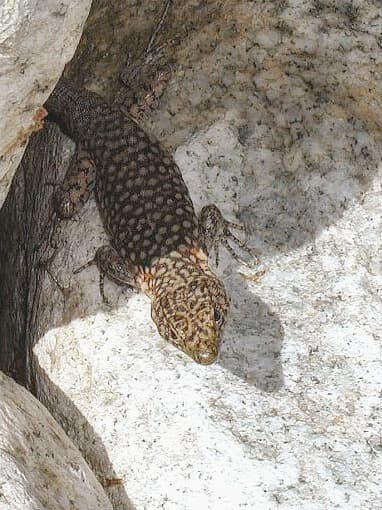
Archaeolacerta bedriagae
Bedriaga's rock lizard, scientifically known as Archaeolacterta bedriagae, is a species endemic to the islands of Corsica and Sardinia. This lizard is characterized by its brownish-grey coloration with a net pattern, which changes during the mating season, and juveniles are identifiable by their bright blue tails. It inhabits a variety of environments, including rocky areas, Mediterranean shrubland, and rural gardens, and is known for its ability to climb vertical surfaces and jump to catch flying insects.