
Lacerta andreanskyi
The Atlas dwarf lizard (Atlantolacerta andreanskyi), also known as Andreansky's lizard, is a species indigenous to the High Atlas mountain range in north-western Africa. It is characterized by its adaptability to alpine meadows, scree, and rocky areas, often remaining well-hidden within vegetation. This species is notable for its long hibernation periods and its reproductive strategy of laying multiple small clutches of eggs annually.
Key Facts
- ›Endemic to the High Atlas mountains of Morocco.
- ›Found at elevations between 2,400 and 2,800 meters.
- ›Inhabits alpine meadows, scree, boulders, thorn cushion vegetation, and thickets.
- ›Females lay three clutches of 1-3 eggs per year.
- ›Known for long hibernation periods.

Andreansky's Lizard, Atlas Dwarf Lizard
Morocco
Alpine Meadows, Scree, Rocky Areas, Thorn Cushion Vegetation, Thickets
Small Lizard Species., Typically Found Well-Hidden In Vegetation.
Insects, Other Small Invertebrates
Well-Hidden In Vegetation, Long Hibernation Periods
Accessibility To Hikers
About Lacerta andreanskyi
The Atlas Dwarf Lizard: A High-Altitude Specialist
The Atlas dwarf lizard, scientifically classified as Atlantolacerta andreanskyi and also known as Andreansky's lizard, is the sole representative of its genus, Atlantolacerta, within the diverse wall lizard family, Lacertidae. This species is a unique inhabitant of the High Atlas mountain range in north-western Africa, specifically Morocco. It has adapted to a challenging environment, thriving at elevations between 2,400 and 2,800 meters.
Habitat and Ecology
These lizards are often found in rugged terrains, preferring habitats such as alpine meadows, scree slopes, and areas characterized by boulders. They also seek shelter and sustenance among thorn cushion vegetation and thickets. Despite sometimes being perceived as rare, Atlantolacerta andreanskyi can be quite common in suitable conditions, often remaining well-concealed within the dense vegetation. A notable characteristic of their life cycle is the extended period they spend hibernating, a crucial adaptation to the harsh mountain climate.
Reproduction and Conservation
The reproductive strategy of the Atlas dwarf lizard involves multiple breeding events within a single year. Females are capable of laying up to three clutches annually, with each clutch typically containing one to three eggs. While the species is not currently considered threatened, its presence in readily accessible areas, particularly those frequented by hikers, highlights a potential vulnerability that warrants observation for future conservation considerations.
Source: Wikipedia ↗
Frequently Asked Questions
What is the Atlas dwarf lizard?
The Atlas dwarf lizard, scientifically known as Atlantolacerta andreanskyi, is the sole species within its genus, Atlantolacerta. It belongs to the wall lizard family, Lacertidae, and is native to north-western Africa.
Where is Atlantolacerta andreanskyi found?
This lizard species is exclusively found in Morocco, specifically within the High Atlas mountain range. Its habitat is restricted to elevations ranging from 2,400 to 2,800 meters above sea level.
What kind of environment does the Atlas dwarf lizard live in?
Atlantolacerta andreanskyi thrives in rugged mountain environments. It can be found in alpine meadows, among scree and boulders, and in areas covered by thorn cushion vegetation and thickets.
How does the Atlas dwarf lizard reproduce?
Females of this species are prolific breeders, laying up to three clutches of eggs each year. Each clutch typically contains between one and three eggs.
Is the Atlas dwarf lizard endangered?
The Atlas dwarf lizard does not currently appear to be under threat of endangerment. However, it inhabits areas that are easily accessible, particularly to hikers, which could potentially pose future risks.
What is the scientific classification of the Atlas dwarf lizard?
The Atlas dwarf lizard is classified within the genus Atlantolacerta and the family Lacertidae. Its scientific name is Atlantolacerta andreanskyi, and it was formerly known as Lacerta andreanskyi.
Related Lizards
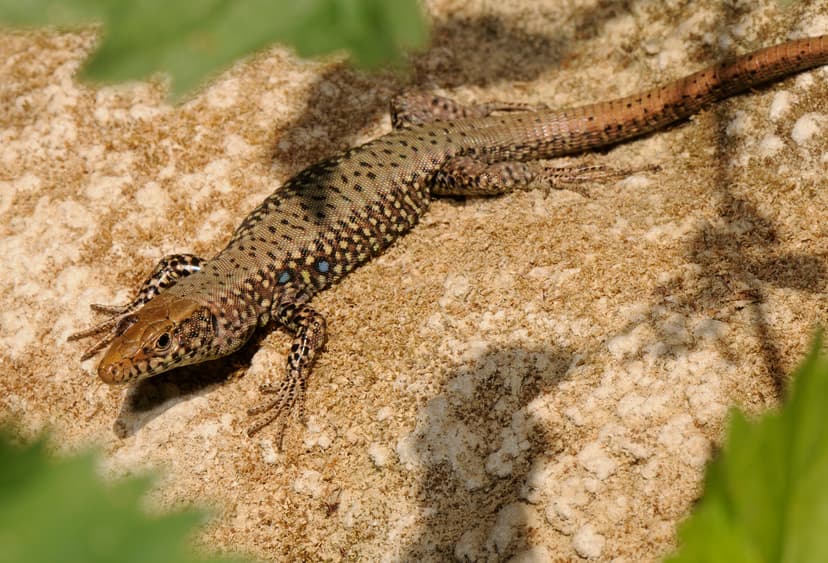
Greek rock lizard
The Greek rock lizard is a medium-sized lizard endemic to southern Greece, characterized by its glossy greyish-brown coloration and a tail at least twice its body length. It inhabits temperate forests, Mediterranean shrubland, rocky areas, and pastures, often near water sources. This agile species is known for its climbing abilities and a unique defense mechanism of spitting acid when threatened.

Darevskia
Darevskia, commonly known as rock lizards or meadow lizards, are a genus of small lizards native to the Caucasus, Iran, and Turkey. They are characterized by their flattened bodies, pointed heads, and long legs with sharp claws, adapted for climbing rocky terrains. These lizards inhabit a variety of environments, from mountain steppes to anthropogenic structures, and exhibit diverse coloration patterns.
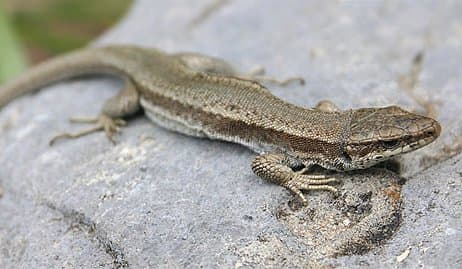
Iberolacerta bonnali
The Pyrenean rock lizard, scientifically known as Iberolacerta bonnali, is a species of lizard endemic to the high-altitude regions of the Pyrenees Mountains. Distinguished by its greyish-brown dorsal coloration and a tail approximately twice its snout-to-vent length, this species inhabits rocky terrains and is only active during the summer months.