
Sand lizard
The sand lizard (Lacerta agilis) is a sexually dimorphic lacertid lizard found across much of Europe and into Russia. Males are known for their vibrant green coloration during the mating season and aggressive territorial behavior, while females are typically a more subdued brown or grey. They inhabit dry, open areas and rely on warm sand for thermoregulation and egg incubation, facing threats from habitat loss and degradation.
Key Facts
- ›Distributed across most of Europe and into Russia, with a patchy distribution.
- ›Males display bright green flanks during the mating season, a trait sometimes present year-round in eastern subspecies.
- ›Females lay clutches of 6-15 eggs in warm sand, which is crucial for incubation.
- ›Can self-amputate their tails (autotomy) as a defense mechanism against predators.
- ›Lifespan averages 5-6 years, but can exceed ten years.
- ›Faces threats from habitat destruction, degradation, fragmentation, and climate change.
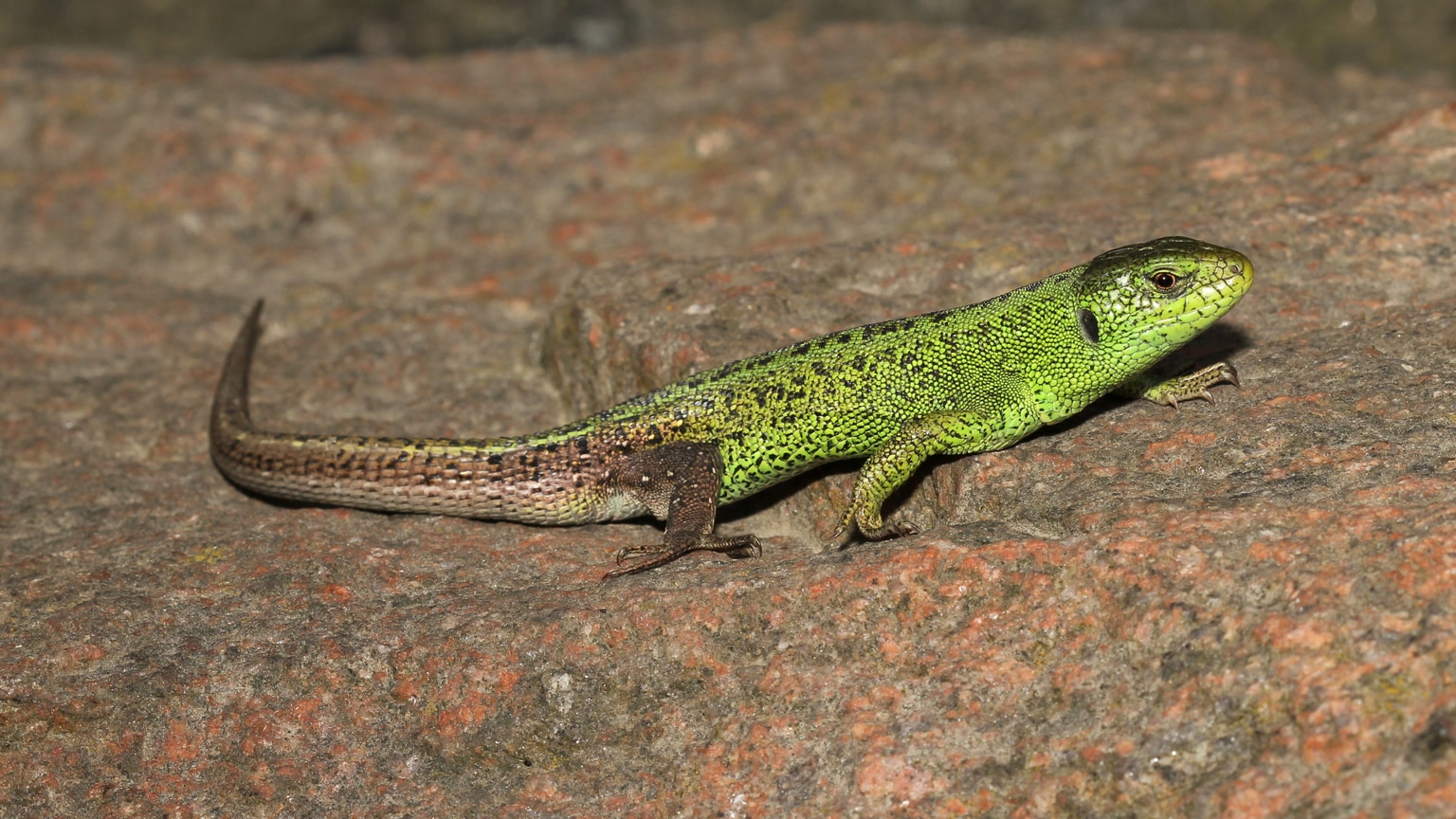
Sand Lizard
Europe, Russia
Heathland, Sand Dunes, Beaches, Fields, Hills, Rock Gardens, Coastal Habitats
- Sexually Dimorphic Legged Lizard.
- Characterized By Lateral and Dorsal Strips of Ocellated Markings.
- Coloration Varies Across Their Range, With Males Having Finer Markings Than Females.
- Males' Flanks Turn Bright Green During the Spring Mating Season.
- Eastern Subspecies Males Can Be Wholly Green, Even Outside the Breeding Season.
- Females Are Grey To Brown and May Have Bulging Bellies When Carrying Eggs.
- Males May Reach A Total Body Length of 19.3 cm, Females Up To 18.5 cm.
Insects, Forages For Resources
- Spend Extended Periods Basking and Foraging.
- Largely Solitary Outside of Mating Season.
- Males Have Larger Territories and Compete Aggressively.
- Females Are More Amicable and May Share Habitats.
- Males Are Highly Selective For Larger Females.
- Can Self-Amputate Tails As A Defense Mechanism .
- Engage In Ritualistic Displays and Combat During Male-Male Competition.
Mustelids, Foxes, Badgers, Birds of Prey, Snakes, Pheasants, Chickens, Cats
Habitat Destruction, Habitat Degradation, Habitat Fragmentation, Lack of Habitat Management, Climate Change, Inappropriate Habitat Management, Inbreeding Due To Fragmented Populations
About Sand lizard
Sand Lizard (Lacerta agilis)
The sand lizard, scientifically known as Lacerta agilis, is a striking lacertid lizard species found across a broad swathe of Europe and extending into Russia. Its distribution is marked by fragmentation, with populations often being patchy. This species is characterized by its sexual dimorphism; males are renowned for their vibrant green coloration, particularly during the spring mating season, a trait that can persist year-round in some eastern subspecies like L. a. exigua. Females typically exhibit a more subdued grey or brown coloration.
Sand lizards are primarily diurnal and spend significant portions of their day basking to thermoregulate, a behavior crucial for their survival and for incubating their eggs. They prefer dry, open habitats such as heathlands, sand dunes, and fields, where the sun's warmth can be readily utilized. In colder regions like Great Britain, their reliance on warm sand for egg incubation restricts them to coastal environments.
Outside of the brief mating season, sand lizards are largely solitary creatures. Males tend to maintain larger territories and engage in aggressive competition for females, often through ritualistic displays and combat. Females, by contrast, are more tolerant of each other and may share habitats. A notable defense mechanism is autotomy, the ability to shed their tail to escape predators. The sand lizard faces significant conservation challenges, including habitat loss, degradation, and fragmentation, leading to its classification as threatened in many parts of its range.
Biology and Behavior
The physical description of the sand lizard includes characteristic lateral and dorsal stripes with eye-shaped markings. While males can reach a total body length of up to 19.3 cm, females are slightly smaller, reaching about 18.5 cm. Their diet consists mainly of insects and other small invertebrates foraged from their environment. The mating season is notably short, and males invest heavily in guarding females after copulation to ensure reproductive success. Females lay clutches of 6 to 15 eggs, typically once a year, in warm, loose sand.
Lifespan and Reproduction
Sand lizards have an average lifespan of 5 to 6 years, though individuals can live over a decade. This longevity, combined with male polygyny, increases the risk of inbreeding, which can lead to malformed offspring. To mitigate this, females exhibit a degree of sperm selection, favoring sperm from less related males. Reproductive success generally increases with age, likely due to larger body size enabling larger clutch sizes. Clutch size can vary, with smaller clutches producing larger offspring and larger clutches producing more, smaller offspring, influenced by resource availability and physical space for egg-laying.
Conservation Concerns
Across its range, the sand lizard is considered threatened, with strict legal protections in countries like the UK. Major threats include habitat destruction, degradation, fragmentation, and inadequate habitat management, alongside climate change. Conservation efforts often involve captive breeding programs and habitat restoration to ensure the survival of this species. In regions such as Sweden, populations have declined significantly, partly due to fragmentation leading to increased inbreeding and reduced genetic diversity.
Source: Wikipedia ↗
Frequently Asked Questions
What is the scientific name for the sand lizard?
The scientific name for the sand lizard is Lacerta agilis. It belongs to the genus Lacerta, which includes several other lizard species.
Where do sand lizards live?
Sand lizards are found across much of Europe, extending eastward to Lake Baikal in Russia. Their distribution is often fragmented, and they prefer dry habitats like heathlands, sand dunes, and fields.
What do sand lizards eat?
Sand lizards are primarily insectivores, foraging for resources within their habitat. They also spend time under vegetation, presumably to find prey.
How long do sand lizards live?
The average lifespan of a sand lizard is between 5 and 6 years. However, they are known to live for over ten years in some cases.
Are sand lizards endangered?
The sand lizard is considered threatened and is strictly protected under UK law and throughout most of Europe. They face significant threats from habitat loss and degradation.
What are the distinguishing features of male sand lizards?
Male sand lizards are sexually dimorphic, often displaying brighter coloration than females. During the spring mating season, their flanks turn bright green, and in some eastern subspecies, this green coloration can be present year-round.
How do sand lizards reproduce?
Female sand lizards lay clutches of 6 to 15 eggs in loose, sunny sand, relying on the ground's warmth for incubation. They typically lay only one clutch per year.
What are the main predators of sand lizards?
Sand lizards are preyed upon by a variety of animals, including mustelids, foxes, badgers, birds of prey, snakes, and even domestic animals like cats and pheasants.
Related Lizards

Darevskia
Darevskia, commonly known as rock lizards or meadow lizards, are a genus of small lizards native to the Caucasus, Iran, and Turkey. They are characterized by their flattened bodies, pointed heads, and long legs with sharp claws, adapted for climbing rocky terrains. These lizards inhabit a variety of environments, from mountain steppes to anthropogenic structures, and exhibit diverse coloration patterns.

European copper skink
The European copper skink, also known as the European snake-eyed skink, is a small, slender lizard native to Eastern Europe and Southwestern Asia. It is characterized by its bronze coloration with dark sides and immovable eyelids. This shy species prefers dry, open habitats and is primarily active during twilight hours, feeding on insects and small snails.
European snake-eyed skink
The European snake-eyed skink, also known as the European copper skink, is a small, slender lizard native to Eastern Europe and Southwestern Asia. It is characterized by its bronze coloration and immovable eyelids, a feature distinguishing it from many other skinks. This shy species inhabits dry, open areas, preferring to live under stones and leaves, and is primarily active during twilight hours.