
Diplodactylus stenodactylus
The crowned gecko, scientifically known as *Lucasium stenodactylum* (formerly *Diplodactylus stenodactylus*), is a species of gecko native to Australia. It is characterized by its reddish-brown to brown coloration, often featuring a cream or white vertebral stripe, and pale spots on its limbs and body. This nocturnal lizard inhabits sandy soil, savannah woodlands, and shrubby stony areas.
Key Facts
- ›Also known as the crowned gecko or pale-snouted ground gecko.
- ›Found in specific locations within New South Wales, Australia.
- ›Inhabits red sandy soils, savannah woodlands, and shrubby stony areas.
- ›Forages on insects at night.
- ›Classified as vulnerable in New South Wales.
- ›Threatened by introduced predators like foxes and cats.

Crowned Gecko, Pale-Snouted Ground Gecko
Australia
Sandy Soil, Savannah Woodland, Shrubby Stony Areas
- Coloration Varies From Reddish Brown To Brown.
- Typical Length of Individuals Is Approximately 90 mm .
- Often Found With A Cream Or White Vertebral Stripe That Starts At Each Eye and Joins At the Back of the Neck.
- Vertebral Stripe May Be Pale Or Absent In Some Individuals.
- May Have Large and Small Pale Spots On Limbs and Sides of the Body.
- Underside Is Whitish.
- Tail Is Slender and Comprises About 80 Percent of Snout-Vent Length.
- Possesses Homogeneous Dorsal and Flank Scales.
Insects
Nocturnal, Forages On Insects
Foxes, Cats
Grazing From Introduced Animals, Predation By Foxes and Cats, Population Fragmentation, Genetic Effects, Chance Events
About Diplodactylus stenodactylus
What is a Crowned Gecko?
The crowned gecko, scientifically known as Lucasium stenodactylum and previously classified as Diplodactylus stenodactylus, is a species of gecko native to Australia. This reptile is characterized by its variable reddish-brown to brown coloration, often adorned with a cream or white vertebral stripe running from its eyes to the back of its neck, though this stripe can be faint or absent in some individuals. Small or large pale spots may also be present on its limbs and the sides of its body, contrasting with its whitish underside. The tail of the crowned gecko is slender and notably long, constituting approximately 80 percent of its snout-vent length.
Source: Wikipedia ↗
Frequently Asked Questions
What are the common names for *Lucasium stenodactylum*?
This species is commonly known as the crowned gecko or the pale-snouted ground gecko. Its scientific name was previously *Diplodactylus stenodactylus*.
Where is the crowned gecko found?
The crowned gecko is distributed in four separate locations within New South Wales, Australia, including Sturt National Park and Mutawintji National Park. Its habitat is not extensively documented but includes red and sandy soils, savannah woodlands, and shrubby stony areas.
What does the crowned gecko look like?
Adult crowned geckos typically reach about 90 mm (3.5 inches) in length. Their coloration ranges from reddish brown to brown, often featuring a cream or white vertebral stripe that can be pale or absent in some individuals. They may also have pale spots on their limbs and body with a whitish underside.
What is the diet of *Lucasium stenodactylum*?
The crowned gecko is an insectivore, meaning its diet primarily consists of insects. It forages for these food sources during its active nocturnal periods.
What is the conservation status of the crowned gecko?
In New South Wales, the crowned gecko is classified as a vulnerable species under the Threatened Species Act 1995. In Queensland and the Northern Territory, it is listed as 'least concern'.
What are the main threats to the crowned gecko?
Major threats include predation by introduced animals such as foxes and cats. Grazing by introduced animals also poses a risk. Fragmentation of populations can increase the risk of extinction due to genetic effects and chance events like drought and fire.
Related Lizards
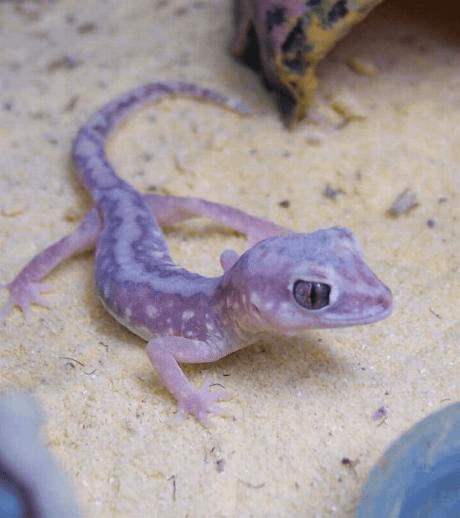
Lucasium damaeum
The beaded gecko (Lucasium damaeum) is a small, terrestrial lizard endemic to Australia, known for its distinctive bead-like markings. It inhabits dry, arid to semi-arid regions across mainland Australia, seeking shelter in insect and spider holes during the day and emerging at night to hunt for insects. Its physical features include a reddish-brown coloration with cream "beads" along its vertebral strip and large eyes with a vertical slit pupil.

Bridled skink
The bridled skink (Heremites vittatus), also known as the bridled mabuya, is a species of skink found across North Africa and the Middle East. These lizards typically inhabit open, sandy or stony areas with sparse vegetation, often near water sources like wetlands and oases. They are characterized by their smooth, shiny bodies, cone-shaped heads, and easily breakable, tapering tails.

Chalarodon madagascariensis
Chalarodon madagascariensis is a terrestrial lizard species native to Madagascar, primarily found in coastal, semi-arid to arid regions with sandy soil. It is an insectivore that occasionally consumes plant matter. A key distinguishing feature is its keeled gular and ventral scales.