
Diploderma luei
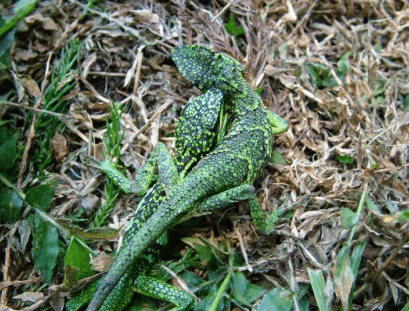
Diploderma luei is an arboreal lizard species endemic to the mountainous regions of Yilan and Hualien Counties in Taiwan. It is characterized by its relatively small size, with a snout-to-vent length reaching up to 10 cm and a total length of approximately 27 cm. The species is oviparous and is recognized as a rare and valuable species within Taiwan.
Key Facts
- ›Endemic to Taiwan, specifically found in Yilan and Hualien Counties.
- ›Prefers forest habitats at elevations between 500 and 2,000 meters.
- ›Arboreal, meaning it primarily lives in trees.
- ›Oviparous, reproducing by laying eggs.
- ›Snout-to-vent length can reach up to 10 cm, with a total length up to 27 cm.
- ›Listed as a rare and valuable species in Taiwan.
Taiwan
- Snout-To-Vent Length May Reach 10 cm .
- Total Length, Including the Tail, May Reach 27 cm .
Arboreal
About Diploderma luei
Diploderma luei is a species of lizard belonging to the subfamily Draconinae within the family Agamidae. This species is notable for being endemic to the island of Taiwan, meaning it is found nowhere else in the world.
Geographic Range and Habitat
The natural distribution of Diploderma luei is restricted to the mountainous regions of Yilan County and Hualien County in Taiwan. Its preferred habitat is forest environments, where it is typically found at elevations ranging from 500 to 2,000 meters (approximately 1,600 to 6,600 feet) above sea level.
Physical Characteristics and Behavior
Adult Diploderma luei lizards can reach a snout-to-vent length of up to 10 cm (3.9 inches). Including their long tails, their total length can extend to approximately 27 cm (11 inches). Behaviorally, Diploderma luei is an arboreal species, indicating that it spends most of its time living in trees.
Reproduction and Conservation
Diploderma luei reproduces by laying eggs, a method known as being oviparous. The species holds a special status within Taiwan; it is listed as a rare and valuable species under the Taiwan Wildlife Conservation Act, highlighting its protected nature and the importance of its conservation.
Etymology
The specific name, "luei," was chosen to honor Kuang-Yang Lue, a Taiwanese herpetologist, in recognition of his significant contributions to the study of reptiles and amphibians in Taiwan.
Source: Wikipedia ↗
Frequently Asked Questions
Where can Diploderma luei be found?
Diploderma luei is endemic to Taiwan and has been observed in the mountainous areas of Yilan County and Hualien County.
What type of habitat does Diploderma luei prefer?
This lizard species prefers forest environments. It is typically found at elevations ranging from 500 to 2,000 meters above sea level.
How large does Diploderma luei get?
The snout-to-vent length of Diploderma luei can reach up to 10 cm. Including its long tail, the total length of the lizard can extend to approximately 27 cm.
What is the reproductive method of Diploderma luei?
Diploderma luei is oviparous, which means it reproduces by laying eggs.
Is Diploderma luei considered endangered?
Diploderma luei is classified as a rare and valuable species under Taiwan's Wildlife Conservation Act, indicating a protected status due to its limited population or habitat.
Related Lizards

Adolfus jacksoni
Adolfus jacksoni, also known as Jackson's forest lizard, is a species of lizard belonging to the Lacertidae family, native to East Africa. It prefers forest habitats at significant altitudes and exhibits diurnal and semi-arboreal behaviors. This oviparous species lays clutches of three to five eggs, and communal nesting sites have been observed.

Amphisbaena ridleyi
Amphisbaena ridleyi, also known as Ridley's worm lizard or the Noronha worm lizard, is a species unique to the island of Fernando de Noronha off the coast of Brazil. This legless reptile possesses a stout head with a broad snout and a tail that resembles its head, allowing it to move effectively in both directions. Its diet consists primarily of snails and other invertebrates, though it has also been observed climbing trees to feed on nectar during droughts.

Anolis fuscoauratus
Anolis fuscoauratus, commonly known as the slender anole, is a lizard species native to northern South America and Panama. This arboreal species prefers forest habitats and is oviparous, meaning it reproduces by laying eggs. Its diet consists of spiders, insects, and insect larvae.