
Anolis fuscoauratus
Anolis fuscoauratus, commonly known as the slender anole, is a lizard species native to northern South America and Panama. This arboreal species prefers forest habitats and is oviparous, meaning it reproduces by laying eggs. Its diet consists of spiders, insects, and insect larvae.
Key Facts
- ›Native to northern South America and Panama.
- ›Arboreal, meaning it lives in trees.
- ›Prefers forest habitats from sea level to 1,800 meters.
- ›Diet includes spiders, insects, and insect larvae.
- ›Reproduces by laying eggs (oviparous).

Slender Anole, Slender Amazon Anole, Brown-Eared Anole, Tai Tsjõ
Northern South America, Panama, Brazil
Has A Dark Gold Skin Colour.
Spiders, Insects, Insect Larvae
Arboreal
About Anolis fuscoauratus
Anolis fuscoauratus, known commonly as the slender anole, slender Amazon anole, or brown-eared anole, is a species of lizard belonging to the family Dactyloidae. This widespread species is native to northern South America and Panama.
Habitat and Distribution
The preferred natural habitat of A. fuscoauratus is forest, where it can be found at altitudes ranging from sea level up to 1,800 meters (5,910 ft). Its geographic range has been documented to extend as far south as Rio de Janeiro State in Brazil.
Behavior and Diet
As an arboreal species, Anolis fuscoauratus spends its life in trees. Its diet consists of spiders, insects, and insect larvae, making it an insectivore.
Reproduction
Anolis fuscoauratus reproduces by laying eggs, a method known as being oviparous. The specific name, fuscoauratus, is derived from Latin roots meaning "dark gold," referencing the lizard's coloration.
Nomenclature
In addition to its common English names, A. fuscoauratus is called tai tsjõ in the Kwaza language spoken in Rondônia, Brazil.
Source: Wikipedia ↗
Frequently Asked Questions
What is Anolis fuscoauratus commonly called?
Anolis fuscoauratus is commonly known by several names, including the slender anole, slender Amazon anole, and brown-eared anole. In the Kwaza language of Rondônia, Brazil, it is referred to as tai tsjõ.
What is the meaning of the scientific name Anolis fuscoauratus?
The specific name, fuscoauratus, is derived from Latin roots. 'Fuscus' means 'dark' and 'auratus' means 'golden', referring to the lizard's dark gold skin color.
Where does Anolis fuscoauratus live?
This species is native to northern South America and Panama. Its geographic range extends south to Rio de Janeiro State in Brazil, and it is found in forest habitats from sea level up to 1,800 meters.
What does Anolis fuscoauratus eat?
The diet of Anolis fuscoauratus primarily consists of spiders, insects, and insect larvae. They are insectivores, preying on these small invertebrates found within their forest habitat.
How does Anolis fuscoauratus reproduce?
Anolis fuscoauratus is oviparous, which means it reproduces by laying eggs. This is a common reproductive strategy among many lizard species.
Is Anolis fuscoauratus a tree-dwelling lizard?
Yes, Anolis fuscoauratus is an arboreal species. This indicates that it spends most of its life in trees, which is consistent with its forest habitat preference.
Related Lizards

Amphisbaena ridleyi
Amphisbaena ridleyi, also known as Ridley's worm lizard or the Noronha worm lizard, is a species unique to the island of Fernando de Noronha off the coast of Brazil. This legless reptile possesses a stout head with a broad snout and a tail that resembles its head, allowing it to move effectively in both directions. Its diet consists primarily of snails and other invertebrates, though it has also been observed climbing trees to feed on nectar during droughts.

Broadhead skink
The broadhead skink (Plestiodon laticeps) is a large lizard species endemic to the southeastern United States, notable for its semi-arboreal lifestyle and preference for live oak trees. Adult males develop striking orange heads during the spring mating season, while females and juveniles display longitudinal stripes. These skinks are diurnal hunters, feeding on a variety of invertebrates and occasionally smaller vertebrates.
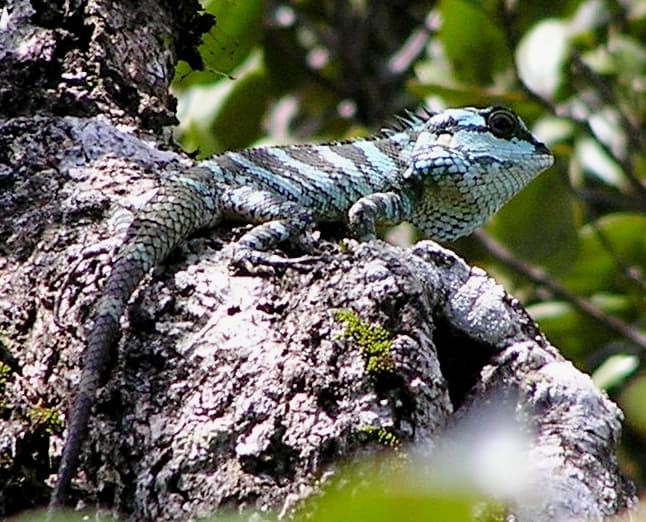
Crestless lizard
The Crestless lizard, also known as the spineless forest lizard or lionhead agama, is an agamid lizard endemic to Sri Lanka. It is characterized by its cryptic coloration, which aids in camouflage among treetops, and the notable absence of spines above its ear, distinguishing it from related species. This arboreal species is diurnal and feeds primarily on insects and other small animals.