
Hardwick's spiny-tailed lizard
Hardwicke's spiny-tailed lizard, also known as the Indian spiny-tailed lizard, is a herbivorous reptile found in arid regions of India and Pakistan. It is characterized by its flattened body, wrinkled skin, and a tail adorned with spiny scales. This species is known to live in colonies and excavates complex burrows for shelter and hibernation.
Key Facts
- ›Primarily herbivorous, with a diet including flowers, fruits, beans, and grasses, but will consume locusts when available.
- ›Males can reach a total length of up to 49 cm, while females are slightly smaller.
- ›They excavate elaborate burrows that can be over 2 meters long with a terminal chamber.
- ›The species hibernates through winter, storing fat reserves to survive.
- ›Females lay 8-15 pigeon-sized, white eggs.
- ›Historically, its fat has been sought after for perceived aphrodisiac and medicinal properties.

Hardwicke's Spiny-Tailed Lizard, Indian Spiny-Tailed Lizard, Sandho, Sana, Gaar, Sanda, Khadmai, Patt Machi
India, Pakistan
Desert, Arid Zones, Firm Ground Habitats, Elevated Patches of Land
- Rounded Head With A Flat Snout.
- Coloration Usually Yellowish Brown, Sandy, Or Olive, Sometimes With Black Spots and Vermiculations.
- Distinctive Black Spot On the Front of the Thigh.
- Dorso-Ventrally Flattened Body With Wrinkled Skin.
- Tail Has Whorls of Spiny Scales With Large Spines On the Sides.
- Tail Color Varies From Bluish-Grey To Sand-Colored.
- Darker Colors Are Observed During Colder Seasons.
- Males Have Longer Tails and More Pronounced Femoral Pores Than Females.
- Males Range From 40-49 cm In Total Length; Females Range From 34-40 cm.
Flowers of Kair, Fruits of Kair, Beans of Khejri, Fruit of Salvadora Persica, Grass, Locust Nymphs, Locust Adults, Insects
- Lives In Colonies In Some Areas.
- Excavates Long, Complex Burrows.
- Solitary In Its Burrow, Though Hatchlings May Stay With the Mother.
- Basks Close To the Burrow Entrance.
- Very Alert and Quickly Retreats Into Its Burrow When Sensing Danger.
- Hibernates Through the Winter.
- Forages More In the Mornings During Summer.
Raptors, Saker Falcon, Tawny Eagle, Laggar Falcon, Eagles, Falcons, Cattle Egret
- Poaching For Meat and Fat
- Agricultural Growth Leading To Habitat Decline
- Habitat Loss
About Hardwick's spiny-tailed lizard
Hardwicke's Spiny-Tailed Lizard
Hardwicke's spiny-tailed lizard, scientifically known as Saara hardwickii and also called the Indian spiny-tailed lizard, is a notable reptile inhabiting the arid landscapes of India and Pakistan. It is primarily found in the Thar Desert, Kutch, and other dry regions, often congregating in loose colonies. This species is largely herbivorous, subsisting on a diet of flowers, fruits, beans, and grasses, though it will supplement its diet with insects and locusts when available.
Physical Characteristics and Habitat
The lizard possesses a distinctive appearance with a rounded head, a flat snout, and a dorso-ventrally flattened body covered in wrinkled skin. Its tail is a prominent feature, adorned with whorls of spiny scales, with large spines on the sides. The coloration typically ranges from yellowish-brown to sandy or olive, with darker shades appearing during colder seasons, and a characteristic black spot on the front of the thigh. Males are generally larger than females, with longer tails and more pronounced femoral pores. Hardwicke's spiny-tailed lizard prefers firm ground habitats and often excavates extensive, spiraling burrows that can exceed two meters in length, featuring a terminal chamber for shelter.
Behavior and Reproduction
This species is known for its alertness, quickly retreating into its burrow at the slightest sign of danger. It hibernates through the winter, a period during which it stores fat reserves along its backbone to sustain itself. Reproduction is oviparous, with females laying clutches of 8 to 15 white, pigeon-sized eggs between June and September.
Ecological and Economic Significance
Hardwicke's spiny-tailed lizard plays a role in its ecosystem as prey for various birds of prey, including falcons and eagles. Historically and currently, it faces significant threats from poaching, driven by the demand for its meat and the belief that its fat possesses aphrodisiac and medicinal properties. Projected agricultural expansion also poses a threat to its population by reducing available habitat.
Source: Wikipedia ↗
Frequently Asked Questions
What is Hardwicke's spiny-tailed lizard commonly known as?
Hardwicke's spiny-tailed lizard is also commonly referred to as the Indian spiny-tailed lizard. It has various local names across different regions of India and Pakistan.
Where does Hardwicke's spiny-tailed lizard live?
This lizard inhabits arid zones and desert tracts in India, including the Thar Desert, Kutch, and surrounding areas in states like Rajasthan, Gujarat, Uttar Pradesh, and parts of Madhya Pradesh. It is also found in Pakistan, particularly in the Sindh region.
What does Hardwicke's spiny-tailed lizard eat?
It is largely herbivorous, feeding on flowers and fruits of plants like kair and khejri, as well as Salvadora persica fruit and grass. During summer, it may also consume insects, and in locust-breeding areas, it has been known to eat locust nymphs and adults.
What are the predators of Hardwicke's spiny-tailed lizard?
Birds of prey are significant predators, including species like the saker falcon, tawny eagle, and laggar falcon. Cattle egrets have also been known to prey on them.
How does Hardwicke's spiny-tailed lizard prepare for winter?
Before hibernation, Hardwicke's spiny-tailed lizard stores long strips of fat on each side of its backbone. This fat reserve is believed to enable it to survive the long winter months.
What is the reproductive method of this lizard?
Hardwicke's spiny-tailed lizard is oviparous, meaning it reproduces by laying eggs. Females lay clutch sizes of 8 to 15 white, pigeon-sized eggs.
Why is this lizard poached?
Poaching occurs due to the belief that the fat extracted from the lizard has aphrodisiac and medicinal properties. It is also hunted for its meat, considered a delicacy by some communities.
Related Lizards

Uromastyx hardwickii
Saara hardwickii, also known as Hardwicke's spiny-tailed lizard or the Indian spiny-tailed lizard, is a herbivorous agamid lizard found in arid regions of India and Pakistan. It is characterized by its flattened body, wrinkled skin, and a tail adorned with spiny scales. These lizards are known to live in colonies and excavate deep burrows for shelter.
Diporiphora winneckei
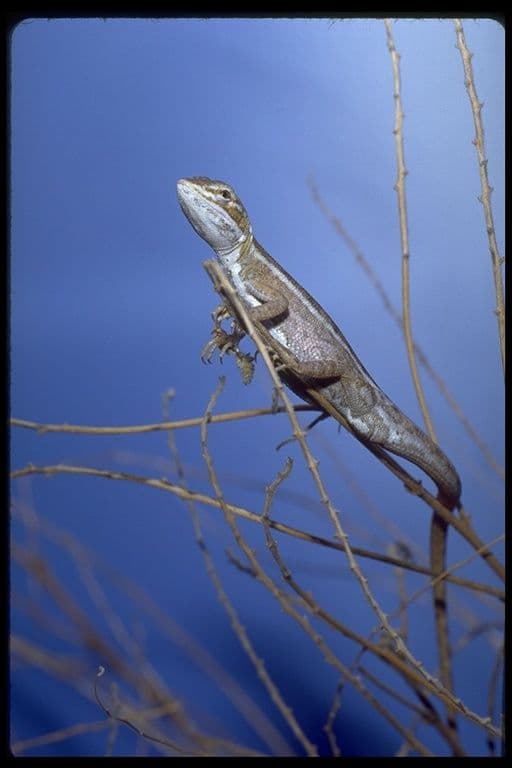
The Canegrass Dragon (Diporiphora winneckei) is a small, terrestrial lizard endemic to the arid zones of Australia. Characterized by its slim build, long tail and limbs, and distinctive grey or pale brown coloration with prominent ventral and lateral stripes, this diurnal species is well-camouflaged within its sandy habitat. It is an insectivore, though it may occasionally consume plant matter, and plays a role in the food web of its environment.

Diplodactylus jeanae
Diplodactylus jeanae, also known as the southern phasmid gecko or Jean's spiny-tailed gecko, is a species of gecko endemic to Australia. This slender reptile inhabits arid grasslands and shrublands, and when threatened, it can display a bright yellow mouth lining or eject a viscous orange fluid from its tail.