
European green lizard
The European green lizard is a large lizard found across European mid-latitudes, ranging from Slovenia to the Black Sea coasts. It is typically observed basking on rocks or lawns and seeking shelter in bushes. Males are characterized by a larger head and uniform green coloration with small spots, while females are more slender and often display light bands bordered by black spots.
Key Facts
- ›Reaches up to 15 cm in snout-to-cloaca length, with a tail that can be twice its body length, leading to a total length of up to 40 cm.
- ›Males have a uniform green color with small spots; females are more slender and may have two to four light bands outlined by black spots.
- ›Inhabits dense bushy vegetation in open woodlands, hedgerows, embankments, and bramble thickets, preferring damp locations in the south and bushy heathland in the north.
- ›Diet consists mainly of insects and other small invertebrates, supplemented with fruit, bird eggs, fledglings, small lizards, and mice.
- ›Females lay six to twenty eggs in spring, which hatch within two to four months.
- ›Listed as 'Least Concern' by the IUCN due to its wide range and adaptability, though pesticide use in Turkey poses a potential threat.

European Green Lizard
Slovenia, Austria, Hungary, Czech Republic, Slovakia, Italy, Croatia, Bosnia & Herzegovina, Serbia, Montenegro, Albania, North Macedonia, Greece, Ukraine, Romania, Bulgaria, Turkey
Open Woodland, Hedgerows, Field Margins, Embankments, Bramble Thickets, Bushy Heathland, Damp Locations
- Reaches Up To 15 cm With A Tail Up To Twice the Body Length, Totaling Up To 40 cm.
- Male Has A Larger Head and Uniform Green Color With Small Spots.
- Adult Male Throat Is Bluish.
- Female Is More Slender Than the Male.
- Female Is More Uniform In Color, Often Displaying Two To Four Light Bands Bordered By Black Spots.
- Can Shed Its Tail and Regrow It.
Insects, Other Small Invertebrates, Fruit, Bird Eggs, Fledglings, Small Lizards, Mice
- Basks In the Sun
- Shelters Amongst Bushes
- Lives On the Ground and In Low, Dense Vegetation
- Can Shed Its Tail To Evade Predators
Red Foxes, Badgers, Domestic Cats, Buzzards, Kestrels, Crows, Snakes
Pesticide Use
About European green lizard
The European Green Lizard (Lacerta viridis)
The European green lizard (Lacerta viridis) is a prominent reptile native to the mid-latitudes of Europe. Its range extends widely from countries like Slovenia and Austria eastward to the Black Sea coasts of Ukraine and Turkey. This lizard is commonly observed basking in sunny spots on rocks or lawns, and it often seeks refuge within dense bushes.
Physical Description and Characteristics
Adult European green lizards can reach an impressive size, typically measuring up to 15 cm from the tip of the muzzle to the cloaca. Their tails are notably long, capable of being up to twice the length of their body, leading to a maximum total length of around 40 cm. A distinctive feature is their ability to shed their tail, a defensive mechanism known as autotomy, which allows them to escape predators, with the tail later regrowing.
Males are generally characterized by a larger head and a vibrant, uniform green coloration that is punctuated by small spots, particularly noticeable on their backs. The throat of the adult male often displays a bluish hue. Females, in contrast, are more slender and tend to have a more uniform coloration. They frequently feature between two and four light bands that are bordered by black spots, providing a different visual signature.
Distribution and Habitat
The species' natural habitat spans southeastern Europe, encompassing regions from southern Germany and Austria across to Hungary, the Czech Republic, Slovakia, and extending through the Balkan Peninsula to Ukraine, Romania, Bulgaria, and western Turkey. These lizards can be found in diverse environments, often preferring dense bushy vegetation situated in open woodlands, along hedgerows, field margins, embankments, and within bramble thickets. While they can inhabit elevations up to 2,200 meters, their specific habitat preferences vary geographically; in the northern parts of their range, they might be found on bushy heathland, whereas in the southern areas, they lean towards damper locations.
Behavior, Diet, and Reproduction
European green lizards are primarily terrestrial and are often seen active on the ground or within low, dense vegetation. They are heliophilic, meaning they enjoy basking in the sun to regulate their body temperature, typically doing so early and late in the day. Their diet is varied, consisting mainly of insects and other small invertebrates. However, they are opportunistic feeders and will also consume fruit, bird eggs, fledglings, smaller lizards, and even mice.
Reproduction occurs seasonally, with females laying between six and twenty eggs during the spring. The incubation period for these eggs typically ranges from two to four months. Newly hatched juveniles are a pale brown color and measure about 3 to 4 cm in snout-to-vent length. They mature rapidly, usually doubling in size by the following year.
Conservation and Threats
The International Union for Conservation of Nature (IUCN) currently lists the European green lizard as a species of 'Least Concern'. This designation is attributed to its extensive geographic range and its common status within significant portions of that range. The species is considered adaptable, and no substantial threats have been identified across most of its distribution. Nevertheless, in certain regions, such as Turkey, the use of pesticides is noted as a potential threat to their populations.
Taxonomy
There is ongoing scientific discussion regarding the exact taxonomic classification of Lacerta viridis. Genetic data has provided some, albeit weak, support for separating it from Lacerta bilineata into two distinct species, indicating that further research is necessary to clarify their taxonomic relationship.
Source: Wikipedia ↗
Frequently Asked Questions
What is the scientific name of the European green lizard?
The scientific name for the European green lizard is *Lacerta viridis*. There is ongoing discussion regarding its taxonomic separation from *Lacerta bilineata*, with genetic data offering weak support for their distinction.
What are the main physical characteristics of the European green lizard?
Adult European green lizards can reach up to 15 cm from snout to cloaca, with a tail that can be up to twice the body length, resulting in a total length of around 40 cm. Males are distinguished by a larger head and a uniform green coloration, while females are more slender and often exhibit two to four light bands bordered by black spots.
Where is the European green lizard found?
This lizard is native to southeastern Europe, with its range extending from southern Germany and Austria eastward to the Black Sea coasts of Ukraine and Turkey. It can be found in various habitats, including open woodlands, hedgerows, and embankments.
What does the European green lizard eat?
The diet of the European green lizard primarily consists of insects and other small invertebrates. They are also known to consume fruit, bird eggs, fledglings, smaller lizards, and even mice.
How do European green lizards reproduce?
In the spring, female European green lizards lay between six and twenty eggs. These eggs typically hatch within two to four months after being laid.
What is the conservation status of the European green lizard?
The European green lizard is listed as 'Least Concern' by the IUCN. This status reflects its wide distribution and common occurrence in parts of its range, along with its adaptability. However, potential threats like pesticide use in Turkey are noted.
Are there any notable behaviors of the European green lizard?
The European green lizard spends time basking in the sun, usually early and late in the day, and seeks shelter among dense vegetation. They also possess the ability to shed their tail (autotomy) to escape predators, with the tail regrowing later.
Related Lizards

Iberolacerta horvathi
Horvath's rock lizard (Iberolacerta horvathi) is a reptile endemic to Europe, distinguished by its pale greyish-brown upper body, dark brown sides, and unspotted white or yellowish belly. It inhabits temperate forests, shrublands, and rocky areas, often at higher altitudes. This agile lizard is a rock specialist, noted for its ability to leap while hunting small invertebrates.
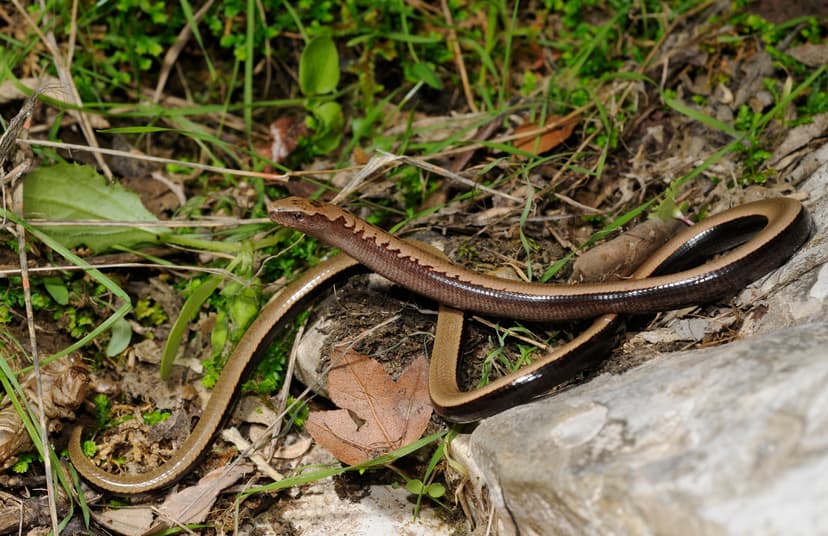
Peloponnese slowworm
The Peloponnese slow worm (Anguis cephallonica) is a legless lizard endemic to specific regions of Greece, including the Peloponnese peninsula and the Ionian islands of Cephalonia, Ithaca, and Zakynthos. This species is distinguished by a higher number of scale rows around its body and a unique chocolate-brown lateral stripe, and it gives birth to live young.

Chalcides chalcides
The Italian three-toed skink (Chalcides chalcides), also known as the cylindrical skink, is a lizard species characterized by its long, snake-like body, reduced limbs with three-toed feet, and a length of up to 48 cm. It inhabits sunny areas with dense, low vegetation across Italy and North Africa. This diurnal species primarily feeds on insects and gives birth to live young.