
Peloponnese slowworm
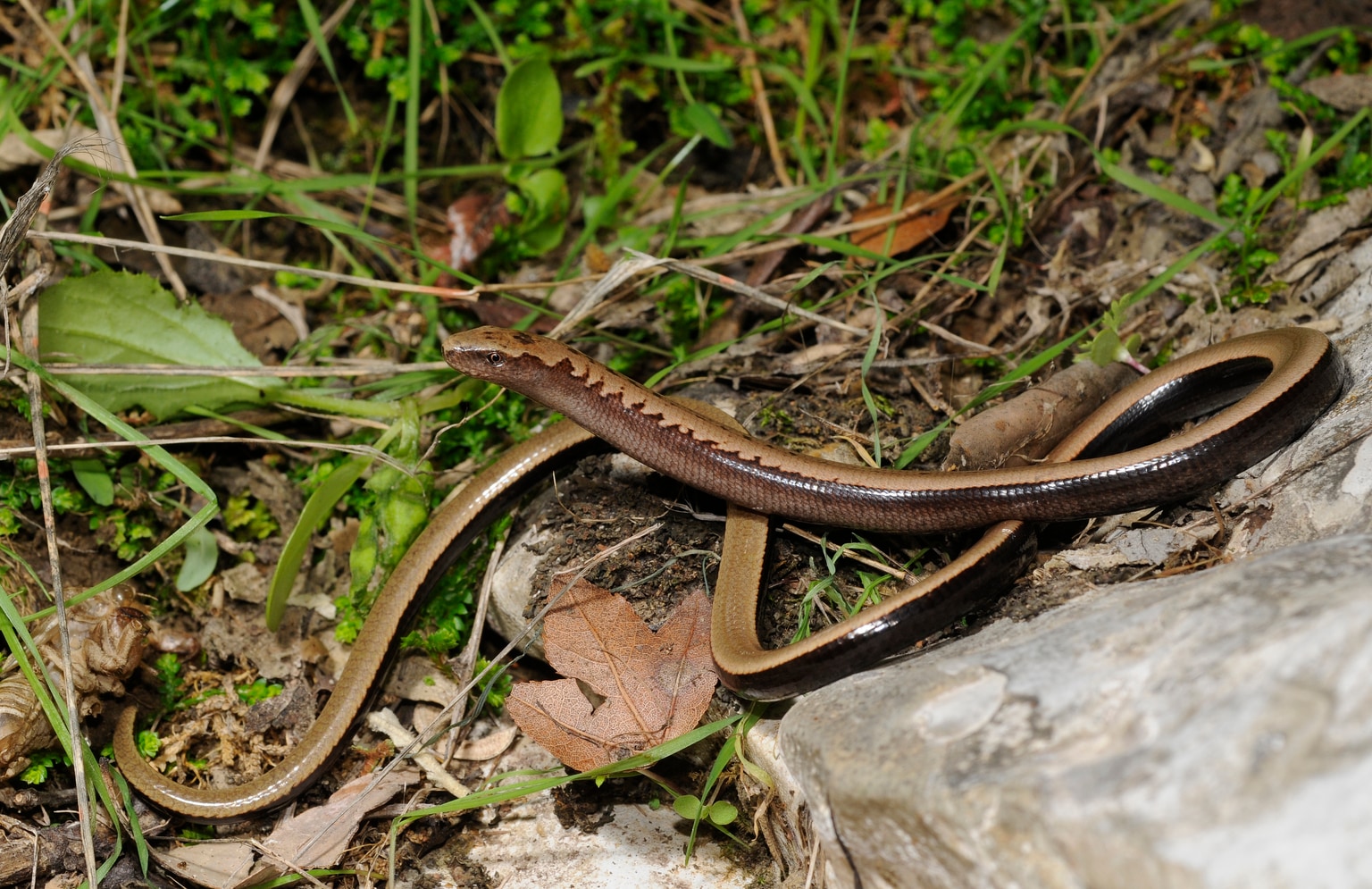
The Peloponnese slow worm (Anguis cephallonica) is a legless lizard endemic to specific regions of Greece, including the Peloponnese peninsula and the Ionian islands of Cephalonia, Ithaca, and Zakynthos. This species is distinguished by a higher number of scale rows around its body and a unique chocolate-brown lateral stripe, and it gives birth to live young.
Key Facts
- ›Endemic to Greece, found in the Peloponnese and Ionian islands.
- ›Distinguished by 34-36 scale rows around the body, more than other slow worms.
- ›Features a distinctive undulating chocolate-brown line along its sides.
- ›Gives birth to live litters, with 3 to 26 young per litter.
- ›Listed as a species of Least Concern on the IUCN Red List.
- ›Inhabits temperate forests, shrubland, grasslands, and human-modified areas.
Peloponnese Slow Worm
Greece, Peloponnese, Cephalonia, Ithaca, Zakynthos
Temperate Forests, Temperate Shrubland, Mediterranean-Type Shrubby Vegetation, Temperate Grassland, Arable Land, Pastureland, Plantations, Rural Gardens, Wooded Streams, Meadows, Scrubland, Hedgerows, Farms
- Legless Lizard.
- Distinguished By A Greater Number of Scale Rows Around the Body .
- Has A Distinctive Color Pattern On Its Side, Featuring An Undulating Chocolate-Brown Line Along the Front of Its Body.
Unknown
Viviparous .
Killed By Humans When Encountered.
About Peloponnese slowworm
Peloponnese Slow Worm
The Peloponnese slow worm, scientifically known as Anguis cephallonica, is a species of legless lizard endemic to Greece. It is found in the Peloponnese peninsula and on the Ionian islands of Cephalonia, Ithaca, and Zakynthos, inhabiting elevations up to 1,340 meters. This species is recognized by its unique physical characteristics, including a greater number of scale rows around its body—typically 34 to 36—compared to other slow worms. It also displays a distinctive undulating chocolate-brown line along its sides.
Habitat and Ecology
The natural habitats of the Peloponnese slow worm are diverse, ranging from temperate forests, shrublands, and grasslands to more human-modified environments such as arable land, pastures, plantations, and rural gardens. They are often found in humid locations near wooded streams, meadows, scrubland, and hedgerows. This species reproduces by giving birth to live litters, with each brood containing between 3 and 26 young.
Conservation Status
Despite not being very common, the Peloponnese slow worm benefits from a large range and its ability to adapt to various habitats. Consequently, it is listed as a species of Least Concern on the IUCN Red List, though it was categorized as Near-Threatened in a 2008 assessment. A notable factor affecting its population is that individuals are typically killed if encountered by humans. The species does, however, benefit from its presence within several protected areas.
Source: Wikipedia ↗
Frequently Asked Questions
What are the key physical differences of the Peloponnese slow worm?
The Peloponnese slow worm can be identified by a greater number of scale rows around its body, typically 34 to 36, which is more than other slow worm species. It also possesses a unique color pattern on its side, characterized by an undulating chocolate-brown line along the front of its body.
Where is the Peloponnese slow worm found?
This species is endemic to Greece, primarily inhabiting the Peloponnese peninsula. It is also found on the Ionian islands of Cephalonia, Ithaca, and Zakynthos, at elevations reaching up to 1,340 meters.
What kind of habitats does the Peloponnese slow worm prefer?
Peloponnese slow worms are found in a variety of temperate environments. These include forests, shrubland, temperate grasslands, and also human-influenced areas such as arable land, pastures, plantations, and rural gardens.
How does the Peloponnese slow worm reproduce?
Like other slow worms, the Peloponnese slow worm is viviparous, meaning it gives birth to live young. Litters typically range from 3 to 26 offspring.
What is the conservation status of the Peloponnese slow worm?
The Peloponnese slow worm is currently listed as a species of Least Concern on the IUCN Red List. While not abundant, its wide range and adaptability contribute to its status, though it was listed as Near-Threatened in 2008.
Are there any specific threats to the Peloponnese slow worm?
While not extensively detailed, the species is noted to be typically killed if encountered by humans. It does, however, occur within several protected natural areas.
Related Lizards

Chalcides striatus
The western three-toed skink (Chalcides striatus) is a lizard found in the Iberian Peninsula, southern France, and northwestern Italy. It superficially resembles a snake due to its tiny limbs, but possesses smooth, glossy skin with a silvery or bronze coloration marked by longitudinal dark lines. This secretive species inhabits damp, sunny areas with dense low vegetation and feeds on invertebrates.

Chalcides chalcides
The Italian three-toed skink (Chalcides chalcides), also known as the cylindrical skink, is a lizard species characterized by its long, snake-like body, reduced limbs with three-toed feet, and a length of up to 48 cm. It inhabits sunny areas with dense, low vegetation across Italy and North Africa. This diurnal species primarily feeds on insects and gives birth to live young.

Podarcis waglerianus
The Sicilian wall lizard (Podarcis waglerianus) is a species of lizard endemic to Sicily and the Aegadian Islands in Italy. It inhabits temperate forests, shrublands, grasslands, and cultivated areas, often found in gardens. This lizard is characterized by its green to olive or brownish dorsal surface, typically featuring dorsolateral stripes and a more uniform coloration in females, while males display more speckled markings and brighter underparts.