
Chalcides chalcides
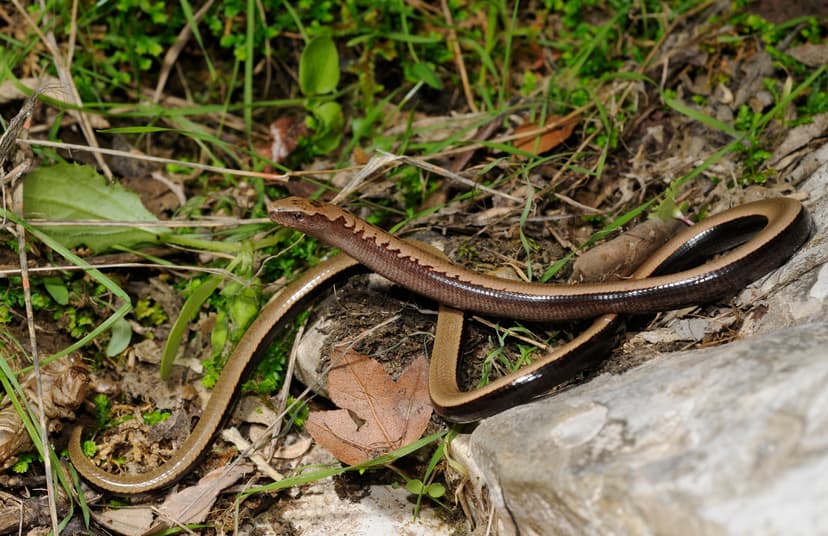
The Italian three-toed skink (Chalcides chalcides), also known as the cylindrical skink, is a lizard species characterized by its long, snake-like body, reduced limbs with three-toed feet, and a length of up to 48 cm. It inhabits sunny areas with dense, low vegetation across Italy and North Africa. This diurnal species primarily feeds on insects and gives birth to live young.
Key Facts
- ›Reaches approximately 48 cm (19 in) in total length, with the tail comprising more than half.
- ›Possesses highly reduced limbs, each with three fingers.
- ›Found in Italy (including Sardinia and Sicily) and across North Africa (Algeria, Libya, Morocco, Tunisia).
- ›Prefers damp, sunny environments with dense, low vegetation like meadows and stream verges.
- ›Active during the day and feeds mainly on insects.
- ›Females are viviparous, giving birth to live young.

Italian Three-Toed Skink, Cylindrical Skink
Italy, Sicily, Sardinia, Elba, Algeria, Libya, Morocco, Tunisia
Sunny Areas With Dense Vegetation, Meadows, Stream Verges, Marshes, Grassy Slopes, Hedgerows, Arid Areas With Low Scrub, Degraded Slopes
- Superficially Resembles A Snake With Tiny Limbs.
- Highly Reduced Legs, Each With Three Toes.
- Middle Toe of the Hind Foot Is Longer Than the Other Two.
- Small Head and Thick Neck.
- Grows To About 48 cm In Length.
- Tail Constitutes More Than Half of the Total Length.
- Coloration Is Usually Brown To Olive.
- May Have Dark Stripes On the Back.
- Some Individuals Are Plain Silvery-Grey.
- Some Have Four To Six Narrow Lengthwise Lines Along the Body.
- Some Have These Lines Plus A Pale Longitudinal, Lateral Band.
Insects
- Active During the Daytime .
- Prey On Insects.
- Tolerant To Some Degree of Habitat Modification.
Urbanization, Degradation of Habitat By Coastal Development
About Chalcides chalcides
The Italian Three-Toed Skink: A Unique Reptile of the Mediterranean and North Africa
The Italian three-toed skink, scientifically classified as Chalcides chalcides and also known as the cylindrical skink, is a fascinating lizard species found across a range that spans from Italy, including its islands like Sardinia and Sicily, to the northern regions of Algeria, Libya, Morocco, and Tunisia. This species is notable for its distinctive appearance, often mistaken for a snake due to its long, slender body and highly reduced limbs, each equipped with only three toes.
Physical Characteristics and Habitat
Adult Italian three-toed skinks typically reach lengths of up to 48 centimeters (19 inches), with their tail accounting for more than half of their total body length. Their coloration varies, commonly appearing in shades of brown or olive, and may be adorned with dark stripes or pale lateral bands. They prefer sunny environments characterized by dense, low vegetation such as meadows, stream verges, marshes, and grassy slopes. While often found in damper areas, they can also adapt to drier, more arid landscapes with low scrub.
Behavior and Diet
These skinks are diurnal, meaning they are active during daylight hours. Their diet primarily consists of insects, making them important insectivores within their ecosystems. A unique reproductive trait of the Italian three-toed skink is that females give birth to live young, a characteristic known as viviparity.
Conservation Status
Despite facing threats from urbanization and habitat degradation, particularly due to coastal development, the Italian three-toed skink exhibits some tolerance to habitat modification. Consequently, the International Union for Conservation of Nature (IUCN) has classified its conservation status as 'Least Concern.' Although populations are observed to be slowly declining, the rate of decrease is not rapid enough to warrant a higher threat category. This designation reflects its relatively widespread distribution and commonality in suitable habitats across its extensive range.
Source: Wikipedia ↗
Frequently Asked Questions
What is the Italian three-toed skink?
The Italian three-toed skink, scientifically known as Chalcides chalcides, is a species of lizard native to Italy and North Africa. It is characterized by its long, snake-like body and reduced limbs, which give it a unique appearance.
Where does the Italian three-toed skink live?
This species is found in Italy, including the islands of Sardinia and Sicily, as well as in North Africa, encompassing Morocco, Algeria, Tunisia, and Libya. It thrives in sunny locations with dense, low vegetation.
What does the Italian three-toed skink look like?
It has a long, snake-like body that typically measures up to 48 cm in length, with more than half of that being its tail. Its limbs are very small, and each foot has only three toes. Coloration varies from silvery-grey to brown or olive, sometimes featuring dark stripes or pale lateral bands.
What does the Italian three-toed skink eat?
The Italian three-toed skink is a diurnal predator that primarily feeds on insects. Its diet consists mainly of arthropods found within its habitat.
How does the Italian three-toed skink reproduce?
Females of the Italian three-toed skink species give birth to live young, meaning they are viviparous. This method of reproduction differs from many other lizard species that lay eggs.
What is the conservation status of the Italian three-toed skink?
The Italian three-toed skink is listed as 'Least Concern' by the IUCN. While its population is experiencing a slow decline, it is not considered to be at a high enough risk to warrant a more threatened category.
Related Lizards

Chalcides striatus
The western three-toed skink (Chalcides striatus) is a lizard found in the Iberian Peninsula, southern France, and northwestern Italy. It superficially resembles a snake due to its tiny limbs, but possesses smooth, glossy skin with a silvery or bronze coloration marked by longitudinal dark lines. This secretive species inhabits damp, sunny areas with dense low vegetation and feeds on invertebrates.
Peloponnese slowworm
The Peloponnese slow worm (Anguis cephallonica) is a legless lizard endemic to specific regions of Greece, including the Peloponnese peninsula and the Ionian islands of Cephalonia, Ithaca, and Zakynthos. This species is distinguished by a higher number of scale rows around its body and a unique chocolate-brown lateral stripe, and it gives birth to live young.

European green lizard
The European green lizard is a large lizard found across European mid-latitudes, ranging from Slovenia to the Black Sea coasts. It is typically observed basking on rocks or lawns and seeking shelter in bushes. Males are characterized by a larger head and uniform green coloration with small spots, while females are more slender and often display light bands bordered by black spots.