
Flat-tail horned lizard
The flat-tail horned lizard is a medium-sized, flat-bodied reptile endemic to the Sonoran Desert of the southwestern United States and northwestern Mexico. It is distinguished by its wide, oval shape, numerous specialized scales, and eight horns extending from the back of its head, with the two central horns being long and sharp. This species has evolved sophisticated camouflage techniques, including a flattened body that minimizes shadow and specialized color-creating cells, to blend with its desert surroundings.
Key Facts
- ›Named for Colonel George a. M'Call, who collected the first specimen in California.
- ›Possesses a flattened body with fringed side scales to minimize shadow.
- ›Uses specialized skin cells to match its coloration to local soil and rock backgrounds.
- ›Endemic to a small range within the Sonoran Desert of California, Arizona, and northern Mexico.
- ›Threatened by human activities such as agriculture and development.
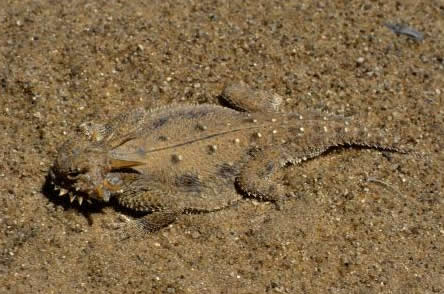
Flat-Tailed Horned Lizard
United States, Mexico
- Medium-Sized, Flat-Bodied Lizard With A Wide Oval-Shaped Body.
- Scattered Enlarged Pointed Scales On the Upper Body and Tail.
- Smooth Back Skin With Small Spines.
- Eight Horns Extending From the Back of the Head, With the Two Central Horns Being Long and Slender.
- Long and Narrow Spines On the Lower Jaw.
- Two Rows of Fringe Scales On the Sides of the Body, With the Bottom Row Scales Being Smaller Than the Upper.
Ants, Nests of the Black Harvester Ant
- Habitually Presses Its Body To the Ground To Minimize Shadow.
- Uses Camouflage To Blend With Local Backgrounds.
- Populations Vary In Coloration Based On Local Environments.
Not Specified In Text
Development, Agriculture, Man-Made Intrusions, Suburban Development, Off-Road Recreation, Activities Along the International Border
About Flat-tail horned lizard
The Flat-tail Horned Lizard
The flat-tail horned lizard (Phrynosoma mcallii), also known as the flat-tailed horned lizard, is a distinctive reptile found in the arid landscapes of the Sonoran Desert in the southwestern United States and northwestern Mexico. This species is named in honor of United States Army Colonel George A. M'Call, who collected the first known specimen in California during the 19th century.
Description and Adaptations
This medium-sized lizard is characterized by its remarkably flat, wide, and oval-shaped body, which it habitually presses to the ground. This posture, combined with specialized fringed scales along its sides, serves to minimize its shadow and enhance its camouflage. The dorsal scales are generally smooth with small spines, and the back of the head is adorned with eight horns, the two central ones being particularly long and sharp. Its coloration can vary between populations, with individuals from different dune systems exhibiting different hues to match their specific local backgrounds. This is achieved through a sophisticated interplay of melanophores, chromatophores, and iridophores within its dorsal scales, allowing it to blend seamlessly with the desert soil and rocks.
Habitat and Distribution
The flat-tail horned lizard occupies a restricted range within the Sonoran Desert, primarily found in southeastern California, southwestern Arizona, and the northernmost regions of Mexico, specifically in the states of Baja California and Sonora. Its preferred habitat consists of sandy soils, often found in areas with specific vegetation like galleta grass and in proximity to colonies of ants, such as the black harvester ant, which form a significant part of its diet.
Conservation Concerns
The species faces significant threats due to its limited geographic range and the increasing pressure from human activities. Development, agriculture, and other man-made intrusions into its habitat are major concerns. The presence of natural gas, oil, geothermal energy, and mineral resources within its range also presents potential conflicts. In recognition of these threats, the flat-tail horned lizard has been afforded special protection in both California and Arizona, prohibiting its collection. In 1982, it was designated a "Candidate 2 Category" by the U.S. Fish and Wildlife Service, highlighting concerns over potential habitat diminishment and population decline.
Source: Wikipedia ↗
Frequently Asked Questions
What is the flat-tail horned lizard known for?
The flat-tail horned lizard is known for its remarkable camouflage adaptations, including a flattened body and specialized scales that minimize its shadow. It is also recognized for the eight horns on the back of its head, with two central ones being particularly long and sharp.
Where does the flat-tail horned lizard live?
This lizard is endemic to the Sonoran Desert, found in southeastern California, southwestern Arizona, and the northernmost parts of Mexico in the Baja California and Sonora states. Its range is relatively small and faces pressure from human activities.
How does the flat-tail horned lizard camouflage itself?
It has evolved several methods to minimize its shadow, including a flattened body that presses close to the ground and fringed side scales that disrupt any remaining shadow. Additionally, it can change its coloration using specialized cells in its dorsal scales to match the local soil or rock.
What are the main threats to the flat-tail horned lizard?
The primary threats to the flat-tail horned lizard are human-induced, including habitat loss due to development and agriculture, as well as other man-made intrusions into its limited range. Activities like off-road recreation and border activities also pose risks.
Is the flat-tail horned lizard endangered?
The flat-tail horned lizard is considered threatened. It was designated a "Candidate 2 Category" for threatened and endangered species status in 1982 due to concerns about its habitat. It also holds special protected status in California and Arizona, prohibiting its collection.
Related Lizards
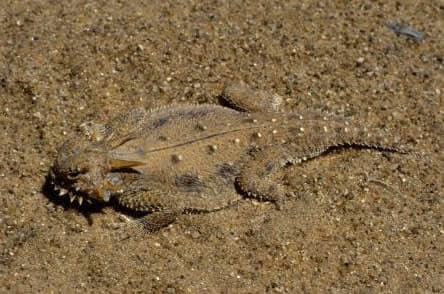
Phrynosoma mcallii
The flat-tail horned lizard (Phrynosoma mcallii) is a species of reptile endemic to the Sonoran Desert of the southwestern United States and northwestern Mexico. It is known for its flattened body, fringed sides, and elaborate camouflage techniques that minimize its shadow. This species is threatened by human activities and is specially protected in the United States.

Lacerta schreiberi
The Iberian emerald lizard, scientifically known as Lacerta schreiberi, is a large lizard species endemic to the Iberian Peninsula. Characterized by its impressive size, it inhabits temperate forests, shrublands, and areas near water. Primarily an insectivore, it also preys on smaller reptiles and is known for its oviparous reproduction.
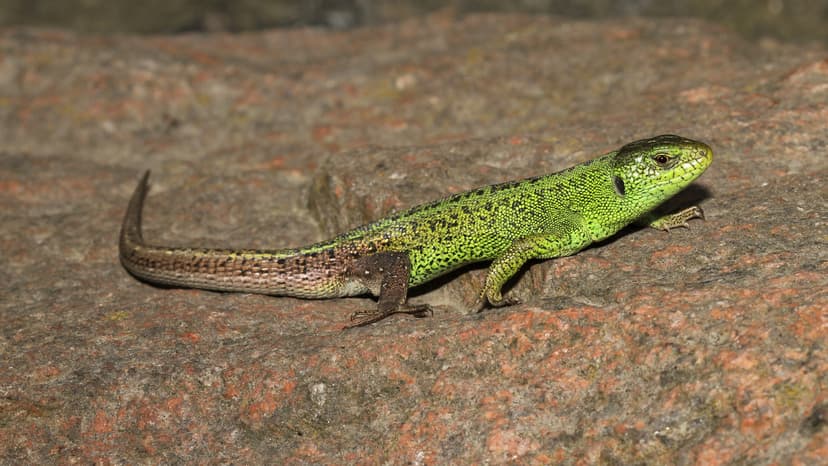
Sand lizard
The sand lizard (Lacerta agilis) is a sexually dimorphic lacertid lizard found across much of Europe and into Russia. Males are known for their vibrant green coloration during the mating season and aggressive territorial behavior, while females are typically a more subdued brown or grey. They inhabit dry, open areas and rely on warm sand for thermoregulation and egg incubation, facing threats from habitat loss and degradation.