
Lacerta schreiberi
The Iberian emerald lizard, scientifically known as Lacerta schreiberi, is a large lizard species endemic to the Iberian Peninsula. Characterized by its impressive size, it inhabits temperate forests, shrublands, and areas near water. Primarily an insectivore, it also preys on smaller reptiles and is known for its oviparous reproduction.
Key Facts
- ›Endemic to Portugal and Spain.
- ›Measures up to 38 cm in total length.
- ›Primarily insectivorous, also consuming small lizards.
- ›Lays between 11 and 28 eggs per clutch.
- ›Inhabits temperate forests, shrublands, and areas near water.

Iberian Emerald Lizard, Schreiber's Green Lizard, Lagarto-De-áGua, Lagarto Verdinegro
Portugal, Spain
Large Species, Approximately 13.5 cm Snout-To-Vent, Up To 38 cm Total Length Including Tail
Mainly Insectivorous, Preys On Small Lizards
Habitat Loss
About Lacerta schreiberi
Iberian Emerald Lizard (Lacerta schreiberi)
The Iberian emerald lizard, scientifically known as Lacerta schreiberi and sometimes referred to as Schreiber's green lizard, is a notable species within the Lacertidae family. This lizard is endemic to the Iberian Peninsula, with its natural range encompassing both Portugal and Spain. It is recognized for its substantial size among lizards, typically measuring around 13.5 cm from snout to vent, and can reach a total length of approximately 38 cm when including its tail.
Habitat and Ecology
Lacerta schreiberi thrives in a variety of temperate environments. Its preferred habitats include temperate forests and shrublands, as well as Mediterranean-type shrubby vegetation. The species is also found in proximity to water sources, inhabiting areas along rivers and in pasturelands. This diverse habitat preference allows it to occupy different ecological niches within its native range.
Diet and Reproduction
The diet of the Iberian emerald lizard is predominantly insectivorous, forming the bulk of its food intake. However, it is also an opportunistic predator, preying on smaller reptiles such as the Iberian wall lizard and larger species of Psammodromus. Reproduction in Lacerta schreiberi is oviparous, meaning the females lay eggs. A single clutch can contain a significant number of eggs, typically ranging from 11 to 28.
Conservation
Sadly, Lacerta schreiberi faces threats to its population, primarily due to habitat loss. The ongoing reduction and degradation of its natural environments pose a significant challenge to the species' long-term survival and underscore the importance of conservation efforts.
Source: Wikipedia ↗
Frequently Asked Questions
What is the scientific name of the Iberian emerald lizard?
The scientific name of the Iberian emerald lizard is Lacerta schreiberi. This binomial nomenclature identifies it within the scientific classification of species.
Where is Lacerta schreiberi found?
Lacerta schreiberi is found exclusively in Portugal and Spain, making it endemic to the Iberian Peninsula. Its distribution is tied to specific habitat types within these countries.
What does the Iberian emerald lizard eat?
The diet of Lacerta schreiberi is primarily insectivorous. It also supplements its diet by preying on smaller lizards, such as the Iberian wall lizard and large psammodromus.
How large does Lacerta schreiberi get?
Lacerta schreiberi is a relatively large lizard species. Adults can measure approximately 13.5 cm from snout to vent, with a total length reaching up to 38 cm, including the tail.
What is the conservation status of Lacerta schreiberi?
The Iberian emerald lizard is currently threatened by habitat loss. This is a significant concern for the long-term survival of the species.
How does Lacerta schreiberi reproduce?
Lacerta schreiberi is oviparous, meaning it reproduces by laying eggs. The clutch size can vary significantly, typically ranging from 11 to 28 eggs.
Related Lizards
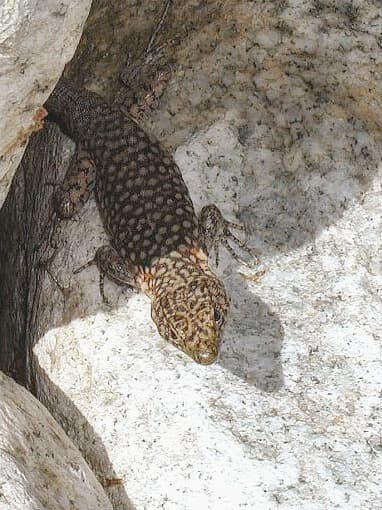
Archaeolacerta bedriagae
Bedriaga's rock lizard, scientifically known as Archaeolacterta bedriagae, is a species endemic to the islands of Corsica and Sardinia. This lizard is characterized by its brownish-grey coloration with a net pattern, which changes during the mating season, and juveniles are identifiable by their bright blue tails. It inhabits a variety of environments, including rocky areas, Mediterranean shrubland, and rural gardens, and is known for its ability to climb vertical surfaces and jump to catch flying insects.

Algyroides marchi
The Spanish algyroides, also known as Valverde's lizard, is a species of lizard endemic to southeastern Spain. It inhabits temperate forests, riverbanks, and rocky areas at moderate to high altitudes. This oviparous lizard faces threats primarily from habitat loss.

Brown basilisk
The Brown basilisk (Basiliscus vittatus), also known as the striped basilisk, is a lizard species native to Mexico, Central America, and northwestern Colombia, with introduced populations in Florida. It is distinguished by its ability to run across water for short distances, a feat enabled by specialized flaps on its hind feet. Males are generally larger than females and possess a more prominent dorsal crest.