
Furcifer balteatus
The Furcifer balteatus, also known as the two-banded chameleon or the rainforest chameleon, is a chameleon species native to southeast Madagascar. It is characterized by its green coloration with darker diagonal stripes and paler bands, often featuring a buff-colored diagonal streak, and males possess distinctive horny projections on their heads. This arboreal species inhabits rainforests at elevations between 800 and 1,050 meters.
Key Facts
- ›Endemic to southeast Madagascar.
- ›Possesses green coloration with darker diagonal stripes and paler bands.
- ›Males have two horny projections on their heads.
- ›Inhabits rainforests at elevations of 800-1,050 meters.
- ›Listed as Endangered by the IUCN.
- ›Export from Madagascar is banned due to its desirability in the pet trade.

Two-Banded Chameleon, Rainforest Chameleon
Madagascar
- Basically Green Coloration With Darker Green Diagonal Stripes and Paler Bands.
- Often Has A Characteristic Buff-Colored Diagonal Streak.
- Body Length Can Be As Much As 24 cm.
- Tail Is At Least As Long As the Body.
- Males Have A Pair of Horny Projections On Their Heads, Approximately 1.5 cm Long.
Arboreal, Meaning It Lives In Trees.
Habitat Degradation, Illegal Pet Trade
About Furcifer balteatus
Furcifer balteatus: The Two-Banded Chameleon
The Furcifer balteatus, commonly known as the two-banded chameleon or the rainforest chameleon, is a species of chameleon endemic to the island of Madagascar. It was first described by scientists André Marie Constant Duméril and Gabriel Bibron in 1851.
Distribution and Habitat
This species is found in the southeastern region of Madagascar. It inhabits rainforest environments, particularly in areas like Ranomafana, where average temperatures range from 14 to 20 degrees Celsius and rainfall is substantial, around 4,000 millimeters annually. Most sightings have occurred at elevations between 800 and 1,050 meters above sea level, though some have been recorded at lower altitudes. The species has a patchy distribution across an estimated area of 1,971 square kilometers and is considered rare, with most observations being of single individuals.
Physical Characteristics
Fundamentally green, the Furcifer balteatus exhibits variable coloration that aids in its camouflage within its arboreal surroundings. It typically displays darker green diagonal stripes interspersed with paler bands, and often features a characteristic buff-colored diagonal streak. Adult body length can reach up to 24 cm, with a tail that is at least as long. A distinctive feature of the males is the presence of a pair of horny projections, approximately 1.5 cm in length, located on their heads.
Conservation Status and Threats
The Furcifer balteatus is listed as an Endangered species by the International Union for Conservation of Nature (IUCN). Its population is believed to be in decline, primarily due to the degradation of its forest habitat. The species is also listed under CITES, with export from Madagascar banned since 1994. Despite these protective measures, its desirability in the pet trade continues to make illegal exports a significant threat.
Source: Wikipedia ↗
Frequently Asked Questions
What are the common names for Furcifer balteatus?
Furcifer balteatus is commonly referred to as the two-banded chameleon or the rainforest chameleon. These names reflect its distinctive markings and preferred habitat.
Where is the Furcifer balteatus found?
This species is endemic to southeast Madagascar. It has been recorded in areas like Ranomafana, typically found at elevations between 800 and 1,050 meters above sea level.
What does the Furcifer balteatus look like?
The Furcifer balteatus is primarily green and well-camouflaged, often displaying darker green diagonal stripes with paler bands. A characteristic buff-colored diagonal streak is also common. Males are distinguished by a pair of 1.5 cm long horny projections on their heads.
What is the habitat of the Furcifer balteatus?
It inhabits rainforest environments in southeast Madagascar. Sightings have occurred at elevations ranging from lower altitudes up to 1,050 meters, in areas with high rainfall and moderate temperatures.
What is the conservation status of the Furcifer balteatus?
The Furcifer balteatus is classified as Endangered by the IUCN. Its population is believed to be decreasing due to habitat degradation and threats from the illegal pet trade.
What are the main threats to the Furcifer balteatus?
The primary threat to this species is the degradation of its forest habitat. Despite being a CITES-listed species with export bans since 1994, illegal exports for the pet trade also pose a significant risk.
Related Lizards
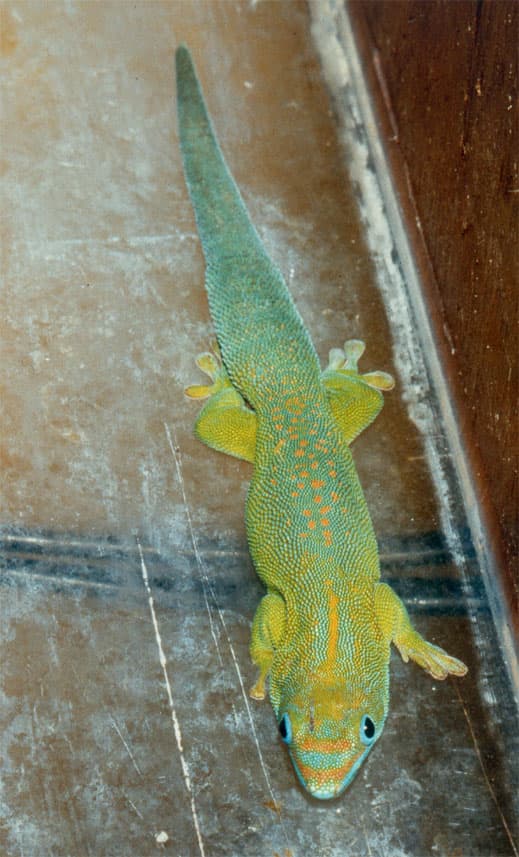
Phelsuma flavigularis
The yellow-throated day gecko (Phelsuma flavigularis) is an endangered, diurnal gecko native to eastern Madagascar's rainforests. This medium-sized species is characterized by its bluish-green body, red snout bars, and a distinctive yellow throat. It primarily inhabits trees and feeds on insects and nectar.

Phelsuma seippi
Phelsuma seippi, also known as Seipp's day gecko, is a medium-sized, diurnal lizard native to the rainforests of northern Madagascar. Characterized by its slender, long-snouted body, it exhibits green or yellowish-green coloration with distinctive red or rust-colored spots and markings, including a rust-colored eye stripe and potential v-shaped stripes on the throat. This arboreal species primarily feeds on insects and nectar, and is considered endangered.
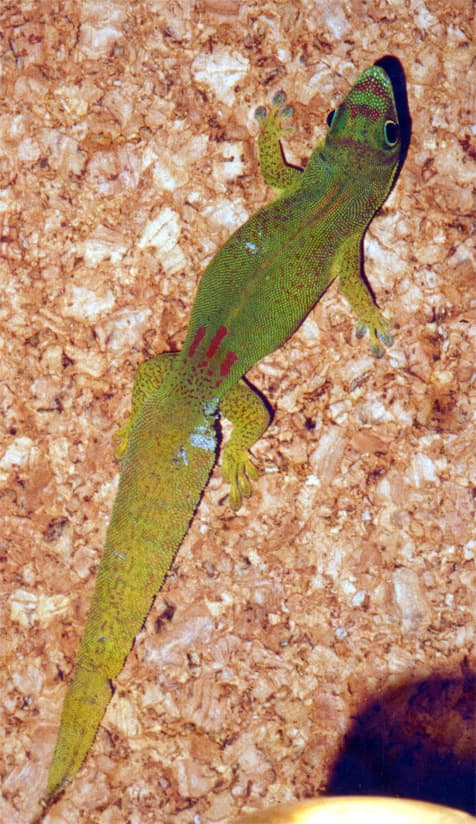
Phelsuma serraticauda
The flat-tailed day gecko (Phelsuma serraticauda) is a diurnal lizard native to the rainforests of eastern Madagascar. This species is characterized by its dark green or yellowish-green coloration and a distinctive broad, flattened tail with serrated edges. It faces endangerment primarily due to illegal collection for the international pet trade.