
Phelsuma flavigularis
The yellow-throated day gecko (Phelsuma flavigularis) is an endangered, diurnal gecko native to eastern Madagascar's rainforests. This medium-sized species is characterized by its bluish-green body, red snout bars, and a distinctive yellow throat. It primarily inhabits trees and feeds on insects and nectar.
Key Facts
- ›Endangered diurnal gecko species from eastern Madagascar.
- ›Inhabits rainforests and lives on trees, particularly banana trees and palms.
- ›Adult males reach about 15 cm total length; females are smaller.
- ›Body color is dark green or bluish green with red snout bars and brownish/reddish back spots.
- ›Diet consists of insects, invertebrates, soft fruits, pollen, and nectar.
- ›Known to be quarrelsome, especially males with other males.
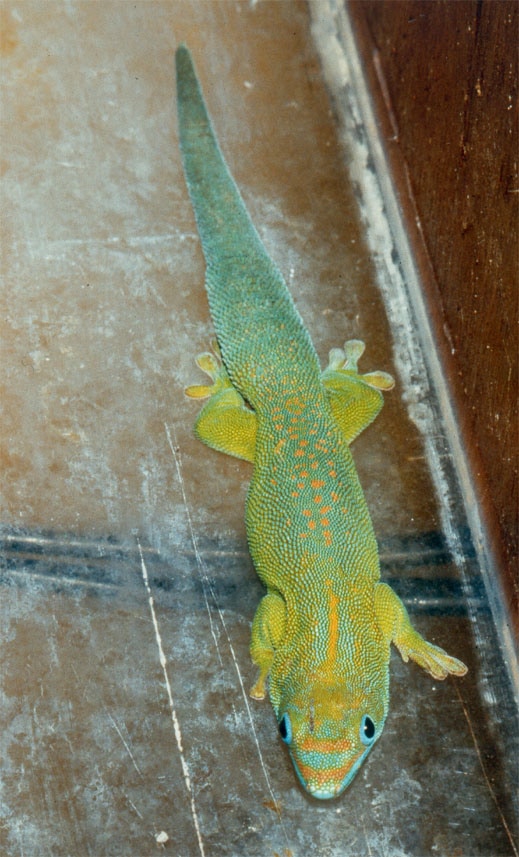
Yellow-Throated Day Gecko
Madagascar
- Medium-Sized Day Gecko.
- Males Reach About 15 cm Total Length; Females Are Smaller.
- Body Color Is Dark Green Or Bluish Green.
- Two Red Transversal Bars On the Snout.
- One To Three Rust-Colored Stripes May Be Present On the Neck.
- Small Brownish Or Reddish Dots and Spottings On the Back.
- Light Yellow Throat.
- Beige Ventral Side.
- Blue Eye Rings.
Insects, Invertebrates, Soft, Sweet Fruit, Pollen, Nectar
- Diurnal.
- Quarrelsome, Especially Males With Other Males.
- Males Can Injure Females During Courtship In Captivity.
About Phelsuma flavigularis
Phelsuma flavigularis: The Yellow-Throated Day Gecko
The yellow-throated day gecko, scientifically known as Phelsuma flavigularis, is a striking diurnal reptile endemic to the eastern rainforests of Madagascar. This species is currently categorized as endangered, highlighting the need for conservation efforts to protect its dwindling population and habitat.
Description and Characteristics
Belonging to the medium-sized day geckos, Phelsuma flavigularis exhibits distinct physical traits. Adult males typically reach a total length of around 15 centimeters (5.9 inches), while females are generally much smaller. The gecko's body is a vibrant dark green or bluish-green, often adorned with two prominent red transversal bars on its snout. Additional rust-colored stripes may appear on the neck, and the back is speckled with small brownish or reddish dots and spottings. A defining feature is its bright yellow throat, which contrasts with a beige ventral side. The eyes are further accentuated by blue rings.
Distribution and Habitat
The geographical range of Phelsuma flavigularis is notably restricted. It is exclusively known from the region surrounding Andasibe, situated on the eastern coast of Madagascar, approximately 100 kilometers east of the capital city, Antananarivo. The species thrives in humid and warm climates characteristic of the east coast. Its preferred habitat consists of rainforests, where it is commonly found dwelling on trees, particularly on banana trees and palms.
Diet and Behavior
As a diurnal species, Phelsuma flavigularis is active during the day. Its diet is varied, consisting of insects and other invertebrates. They also supplement their diet by licking soft, sweet fruits, pollen, and nectar. Behaviorally, like many geckos in the Phelsuma genus, P. flavigularis can be quite quarrelsome. Males are known to be territorial and do not tolerate the presence of other males in their vicinity. In captive situations, this territoriality can sometimes lead to males seriously wounding females during courtship, necessitating separation.
Conservation Status
The classification of Phelsuma flavigularis as endangered underscores its vulnerability. Factors such as habitat loss and its limited range are significant concerns for the long-term survival of this species. Understanding its ecological role and protecting its specific rainforest environment are crucial for its conservation.
Source: Wikipedia ↗
Frequently Asked Questions
Where is the yellow-throated day gecko found?
The yellow-throated day gecko has a very limited distribution. It is known only from the area around Andasibe, located on the east coast of Madagascar, approximately 100 kilometers east of the capital city, Antananarivo.
What does the yellow-throated day gecko eat?
This species has a varied diet. It feeds on various insects and other invertebrates. Additionally, they are known to consume soft, sweet fruits, pollen, and nectar.
What are the physical characteristics of Phelsuma flavigularis?
Phelsuma flavigularis is a medium-sized day gecko. Males can grow up to 15 cm in total length, with females being considerably smaller. Its body is typically dark green or bluish green, marked with two red transversal bars on the snout, and may have rust-colored stripes on the neck. The back features small brownish or reddish dots and spottings, and it has blue eye rings. The throat is a striking light yellow, contrasting with a beige ventral side.
What is the habitat of the yellow-throated day gecko?
The yellow-throated day gecko is primarily found in rainforest environments. It typically inhabits and dwells on trees, with a noted presence on banana trees and palms in its native range.
What is the conservation status of Phelsuma flavigularis?
The yellow-throated day gecko is classified as an endangered species. Its limited distribution and specific habitat requirements contribute to its vulnerable status.
How do yellow-throated day geckos behave?
Like many geckos in the Phelsuma genus, this species can be quite quarrelsome and territorial, particularly males who do not tolerate the presence of other males in their vicinity. In captive environments, males may sometimes injure females during courtship if not properly managed.
Related Lizards

Phelsuma seippi
Phelsuma seippi, also known as Seipp's day gecko, is a medium-sized, diurnal lizard native to the rainforests of northern Madagascar. Characterized by its slender, long-snouted body, it exhibits green or yellowish-green coloration with distinctive red or rust-colored spots and markings, including a rust-colored eye stripe and potential v-shaped stripes on the throat. This arboreal species primarily feeds on insects and nectar, and is considered endangered.
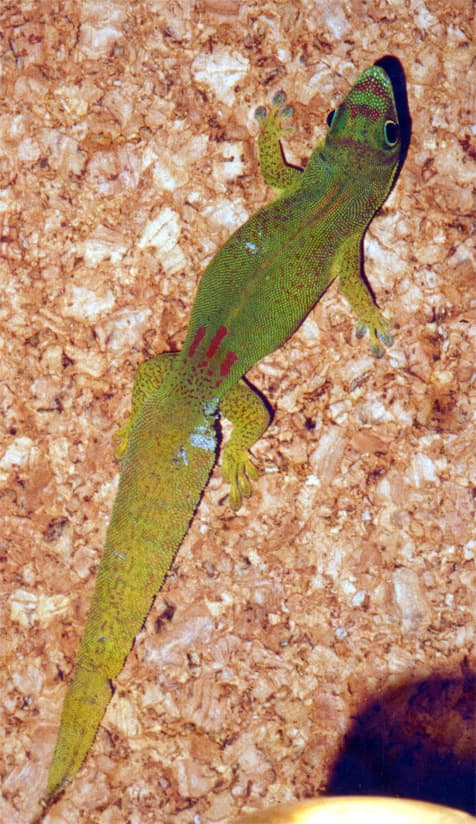
Phelsuma serraticauda
The flat-tailed day gecko (Phelsuma serraticauda) is a diurnal lizard native to the rainforests of eastern Madagascar. This species is characterized by its dark green or yellowish-green coloration and a distinctive broad, flattened tail with serrated edges. It faces endangerment primarily due to illegal collection for the international pet trade.
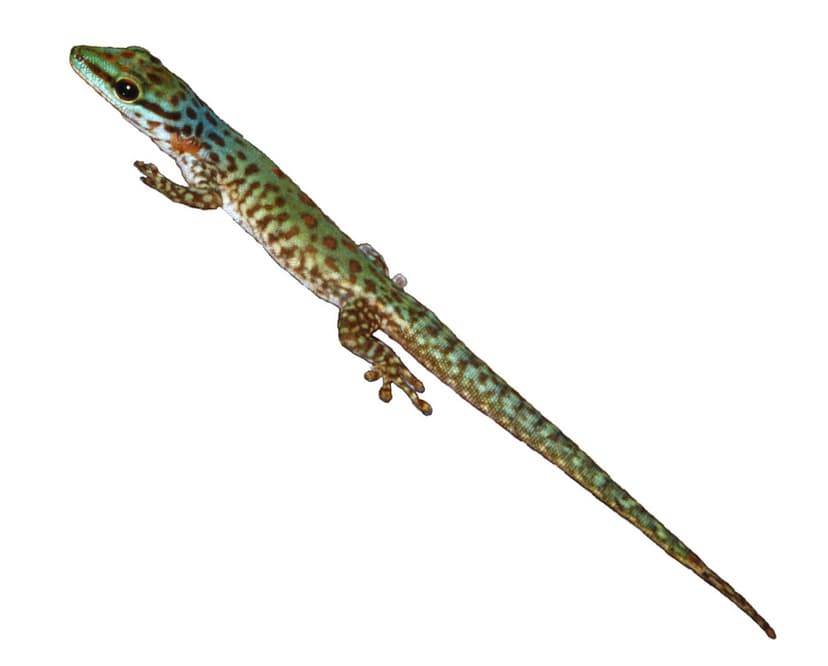
Phelsuma guttata
The speckled day gecko (Phelsuma guttata) is a medium-sized, diurnal lizard found in eastern Madagascar's rainforests. Characterized by its dark green body with orange spots and a distinctive black eye stripe, it inhabits trees and bushes. This species feeds on insects, nectar, and soft fruits, and is often observed in pairs.