
Furcifer lateralis
The carpet chameleon (Furcifer lateralis) is a small chameleon species endemic to eastern Madagascar. Known for its striking coloration, especially in females, it inhabits a variety of environments from forests to gardens. This species is relatively fast-maturing and short-lived, capable of breeding within months of hatching.
Key Facts
- ›Found exclusively in eastern Madagascar.
- ›Males are primarily green with whitish or yellowish markings.
- ›Females exhibit brighter, more varied colors including blackish, white, blue, yellow, and orange.
- ›Can reach a total length of 17 to 25 cm.
- ›Breeds at approximately three months of age and typically lives for less than three years.
- ›Females lay 8-23 eggs per clutch, potentially up to three times a year.

Carpet Chameleon, Jewel Chameleon, White-Lined Chameleon
Eastern Madagascar
- Total Length of 17 To 25 cm For Both Sexes.
- Males Are Largely Green With Whitish, Yellowish, and Dark Markings.
- Females Are Heavier-Bodied and Darker With Markings In Blackish, White, Blue, Yellow, and Orange.
- Both Sexes Have Stripy Throats and Lips.
- A Lateral Line and Several Ring-Like Markings Are Present On the Side of the Body.
- Can Change Color Based On Mood and Environmental Factors; Pregnant Females Are Strongly Marked.
- Typically Start the Day With A Dark Color For Rapid Warming In Sunlight.
Insects, Other Small Invertebrates
- Fast-Maturing
- Short-Lived
- Capable of Changing Color Based On Mood and Environmental Factors.
- Begin the Day With A Dark Color To Absorb Sunlight For Warmth.
Pet Trade
About Furcifer lateralis
Carpet Chameleon (Furcifer lateralis)
The carpet chameleon, scientifically known as Furcifer lateralis, is a small and vibrantly colored lizard species native to the eastern regions of Madagascar. This chameleon is recognized for its distinctive patterns and its ability to change colors, with females often displaying a more extensive and varied palette than the predominantly green males. They inhabit a range of environments, from dense forests and scrublands to more open grasslands and even well-maintained gardens.
Life Cycle and Reproduction
Furcifer lateralis is characterized by its relatively rapid maturation and short lifespan, typically living for less than three years. Individuals can begin breeding as early as three months after hatching. Females are prolific, laying between eight and twenty-three eggs per clutch and capable of producing up to three clutches annually. These eggs require a consistent incubation temperature of approximately 24°C and will hatch after about six months.
Appearance and Habitat
Adult carpet chameleons generally reach a total length of 17 to 25 centimeters. Males exhibit a coloration primarily of green complemented by whitish or yellowish hues, alongside darker markings. Females, on the other hand, are typically more robust and darker, featuring blackish or sometimes reddish tones. Their markings are more diverse and can include shades of black, white, blue, yellow, and orange. Both sexes possess striped throats and lips, and a notable lateral line runs along their bodies, often accompanied by ring-like markings. Their ability to alter their color serves as a means of communication, reflecting their mood and responding to environmental stimuli, with pregnant females often displaying particularly striking patterns.
Distribution and Conservation
The carpet chameleon's range spans over 130,000 square kilometers in eastern Madagascar, found at elevations between 120 and 1,925 meters. Although it inhabits various environments and tolerates some habitat disturbance, its population is considered stable. The species is classified as Least Concern by the IUCN, with an established annual quota to manage the collection of individuals for the pet trade, indicating a balance between human interests and the species' conservation.
Source: Wikipedia ↗
Frequently Asked Questions
What are the common names for Furcifer lateralis?
Furcifer lateralis is also commonly known as the carpet chameleon, the jewel chameleon, or the white-lined chameleon. These names reflect its varied coloration and distinct markings.
Where is the carpet chameleon found?
The carpet chameleon is native to eastern Madagascar. Its range extends across various altitudes, from 120 to 1,925 meters above sea level.
What kind of habitats does Furcifer lateralis prefer?
This species inhabits a diverse range of environments including forests, shrubby areas, grasslands, and well-vegetated gardens. It can tolerate some degree of habitat degradation.
How large do carpet chameleons get?
Both male and female carpet chameleons can reach a total length of 17 to 25 centimeters (6.7 to 9.8 inches). Females tend to be heavier-bodied than males.
What is the typical lifespan of a Furcifer lateralis?
Carpet chameleons are short-lived, rarely exceeding an age of three years. They are a relatively fast-maturing species.
How do carpet chameleons reproduce?
Females lay between eight and twenty-three eggs per clutch, and can produce up to three clutches annually. The eggs require a stable temperature of around 24°C and hatch after six months.
What is the conservation status of the carpet chameleon?
The carpet chameleon is classified as Least Concern by the IUCN. Its population is widespread, and there is an annual quota for individuals collected for the pet trade.
Related Lizards

Günther's cylindrical skink
Günther's cylindrical skink is a limbless species of skink native to the Near East, specifically found in parts of Israel, Lebanon, Jordan, and Syria. It inhabits wooded or shrubby areas, often burrowing in grasses, and is known for giving birth to live young. The species faces significant threats from habitat loss due to agriculture.

Budak's snake-eyed skink
Budak's snake-eyed skink is a species of lizard in the family Scincidae, endemic to the Near East. It prefers the leaf litter of shrubby or forested areas for its habitat. The species was elevated to full species status from a subspecies of Ablepharus kitaibelii in 1997 and is named in honor of herpetologist Abidin Budak.
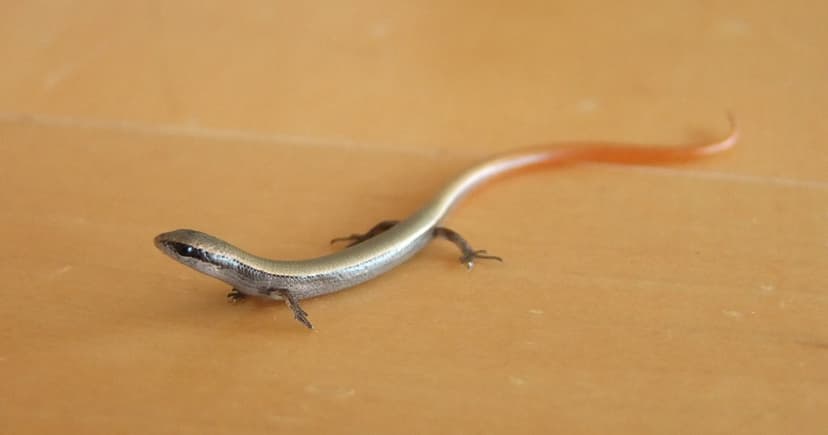
Ablepharus rueppellii
Ablepharus rueppellii, commonly known as Rüppell's snake-eyed skink, is a species of skink native to the Middle East, including Israel, Lebanon, Jordan, and Egypt's Sinai Peninsula. This species is characterized by its preference for leaf litter in forested or shrubby areas, and can also be found in oases and even urban environments in Israel. While generally uncommon, it is protected by legislation in Israel.