
Furcifer minor
The lesser chameleon (Furcifer minor) is a species of lizard endemic to Madagascar. This chameleon inhabits dry, arboreal environments fragmented by grasslands and is known for its solitary and often aggressive nature. Notably, the female is the more colorful sex, displaying vibrant bands, while males possess a distinctive rostral appendage on their snout.
Key Facts
- ›Endemic to Madagascar, inhabiting dry, arboreal habitats.
- ›Females are more colorful than males, with gravid females showing distinct banding.
- ›Males are characterized by a prominent rostral appendage on their snout.
- ›Oviparous, laying 4 to 16 eggs per clutch with an incubation period of 8-9 months.
- ›Threatened by habitat loss due to mining, logging, and agricultural practices.

Minor Chameleon, Lesser Chameleon
Madagascar
Arboreal, Tapia Forest, Humid Montane Habitats, Pastureland, Coffee Plantations, Cocoa Plantations
- Males May Be Up To 24 cm In Size; Females Are Approximately 16 cm.
- Males Have Shades of Brown, Black, White, and Reddish-Orange Patterning.
- Males Display A Darker Black and White Banded Coloration During Display.
- Males Have A Rostral Appendage Protruding From the End of Their Snout.
- Gravid Females Have Alternating Greenish-Black and Yellow Bands and Yellow Speckling Highlighting Darker Areas.
- Females Have Blue-Violet and Red-Black Spots On Each Side of Their Chest.
- the Lower Jaw of Females Is Covered In Red.
- Females Have Yellowish Banding While Resting.
Hunts Opportunistically
- Generally Leads A Solitary Lifestyle.
- Often Aggressive Towards Other Members of Its Own Species.
- Hunts Opportunistically.
- Females Display New Coloration and Act Extremely Aggressively Towards Males After Mating.
- Habitat Loss Due To Quartz and Tourmaline Mining
- Habitat Loss Due To Logging
- Habitat Loss Due To Slash-and-Burn Techniques For Subsistence Agriculture
- Collection For Pet Market
About Furcifer minor
The Lesser Chameleon: An Endemic Marvel of Madagascar
The lesser chameleon, scientifically known as Furcifer minor, is a distinctive lizard species native to the island of Madagascar. It is characterized by its arboreal lifestyle, predominantly inhabiting dry forest environments, particularly the tapia forests dominated by the Uapaca bojeri tree. These habitats are often fragmented by open grasslands, which the lesser chameleon sometimes colonizes along with agricultural areas like coffee and cocoa plantations.
Key Characteristics and Behavior
This species generally leads a solitary existence and can exhibit aggressive behavior towards its own kind. It hunts opportunistically to sustain itself. A notable distinction between the sexes is their coloration; the female is typically the more vibrant, with gravid females displaying striking alternating greenish-black and yellow bands, complemented by yellow speckling and red markings on the lower jaw and chest. In contrast, males are adorned with a mix of brown, black, white, and reddish-orange patterns, and are most recognizable by a prominent rostral appendage on their snout. Males can reach up to 24 cm in length, while females are generally around 16 cm.
Reproduction and Life Cycle
The lesser chameleon is oviparous, laying between 4 and 16 eggs in a single clutch. These eggs require a significant incubation period of 8 to 9 months at a consistent temperature of 23 degrees Celsius. The species reaches sexual maturity relatively quickly, typically between 5 and 8 months of age. Post-courtship, females undergo a color change and become highly aggressive towards males. Gestation lasts for 2 to 3 months, and there is a recorded risk of females dying from egg binding during their first egg-laying event.
Conservation Concerns
The lesser chameleon faces significant threats primarily from habitat loss. This destruction is driven by mining for quartz and tourmaline, logging activities, and the clearing of land for subsistence agriculture using slash-and-burn techniques. While the species shows some tolerance for altered habitats, there is a lack of comprehensive ecological data to confirm the suitability of these new environments for breeding. Although collection for the Western pet market has occurred, with exports documented in the past, its current impact is considered localized and unlikely to be a major threat. The lesser chameleon is listed in Appendix II of CITES, which regulates its trade, and parts of its range are undergoing protection efforts.
Source: Wikipedia ↗
Frequently Asked Questions
What are the key physical differences between male and female lesser chameleons?
The female lesser chameleon is typically the more colorful sex, displaying alternating greenish-black and yellow bands, especially when gravid. Males are adorned with shades of brown, black, white, and reddish-orange patterning, and most notably possess a rostral appendage protruding from their snout.
What kind of habitat does the lesser chameleon prefer?
The lesser chameleon mainly inhabits the arboreal habitat of tapia forests, dominated by the Uapaca bojeri tree. They can also be found in humid montane habitats and have been known to colonize pastureland, coffee, and cocoa plantations.
How does the lesser chameleon reproduce?
The lesser chameleon is oviparous, meaning it lays eggs. Females lay between 4 and 16 eggs in a single clutch, which require an incubation period of 8 to 9 months at a constant temperature of 23 degrees Celsius. Sexual maturity is typically reached between 5 and 8 months of age.
What are the primary threats to the lesser chameleon population?
The species is threatened by habitat loss resulting from quartz and tourmaline mining, logging, and slash-and-burn agriculture. While collection for the pet trade has occurred, its impact is considered unlikely to be a major threat due to its localized nature.
What is the typical size of a lesser chameleon?
Males of the species can reach up to 24 cm in size, while females tend to be approximately 16 cm in size.
Related Lizards
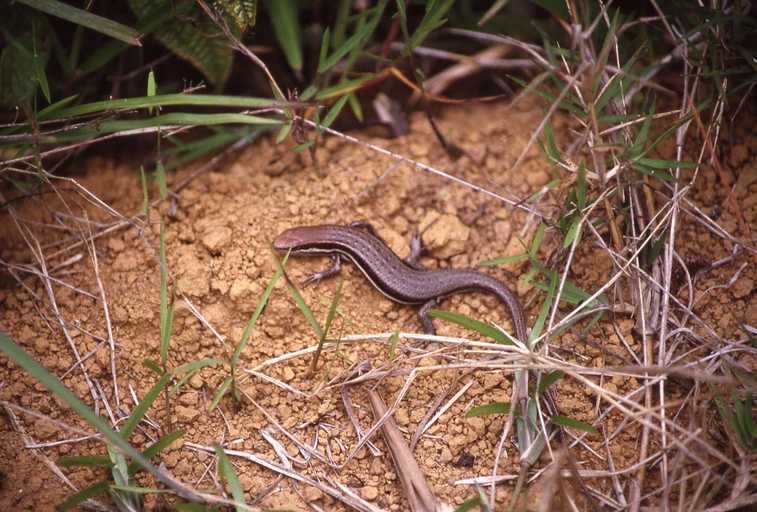
Trachylepis gravenhorstii
Trachylepis gravenhorstii, commonly known as Gravenhorst's mabuya, is a species of skink endemic to Madagascar. This lizard prefers rocky areas, grasslands, shrublands, and forests, but can also be found in plantations. It is oviparous and reaches a modest size, with a snout-to-vent length of up to 7 cm.

Teira dugesii
The Madeiran wall lizard (Teira dugesii) is a common species endemic to the Madeira Archipelago, Portugal, notable for its variable coloration that often camouflages it with its surroundings. It inhabits a wide range of environments, from coastal areas to altitudes of 1,850 meters, and has also become naturalized in the Azores. This lizard is characterized by its small size, easily shed tail, and insectivorous-herbivorous diet.

Phelsuma dubia
Phelsuma dubia, also known as the dull day gecko, is a diurnal gecko species reaching about 15 cm in length. It inhabits trees and areas near human dwellings along the west coast of Madagascar, the Comoros, and the coast of East Africa. Its diet consists of insects and nectar, and it is known to live in small groups.