
Trachylepis gravenhorstii
Trachylepis gravenhorstii, commonly known as Gravenhorst's mabuya, is a species of skink endemic to Madagascar. This lizard prefers rocky areas, grasslands, shrublands, and forests, but can also be found in plantations. It is oviparous and reaches a modest size, with a snout-to-vent length of up to 7 cm.
Key Facts
- ›Endemic to Madagascar.
- ›Prefers rocky areas, grasslands, shrublands, and forests.
- ›Also found in coffee and ylang-ylang plantations.
- ›Oviparous reproduction method.
- ›Can reach a snout-to-vent length of up to 7 cm.
- ›Total length can reach up to 18 cm.
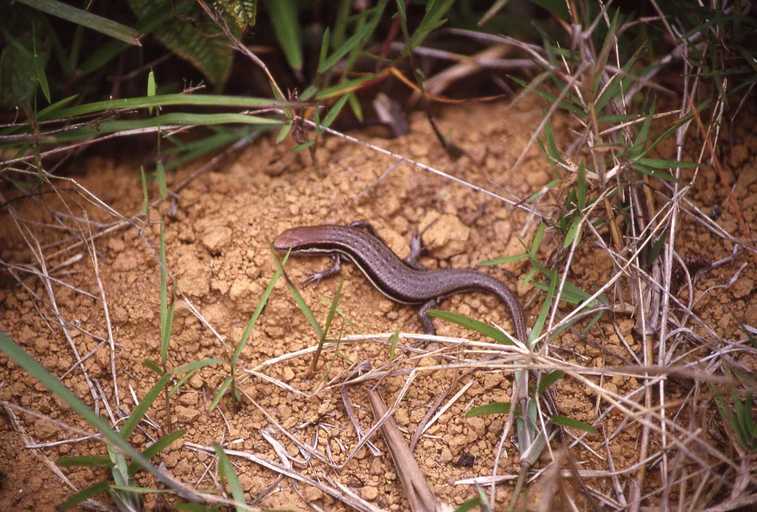
Gravenhorst's Mabuya
Madagascar
Rocky Areas, Grassland, Shrubland, Forest, Coffee Plantations, Ylang-Ylang Plantations
- May Attain A Snout-To-Vent Length of 7 cm .
- Total Length, Including Tail, Can Reach 18 cm .
About Trachylepis gravenhorstii
Trachylepis gravenhorstii, commonly referred to as Gravenhorst's mabuya, is a species of skink native to the island of Madagascar. It belongs to the family Scincidae, a diverse group of lizards known for their smooth scales and often elongated bodies.
Habitat and Distribution
The preferred natural environments for Trachylepis gravenhorstii include a variety of terrestrial habitats such as rocky areas, grasslands, shrublands, and forests. Notably, this adaptable species has also been documented in human-modified landscapes, including coffee plantations and ylang-ylang plantations, indicating a degree of resilience to habitat alteration.
Physical Characteristics
This skink species is of moderate size. Adults can typically reach a snout-to-vent length (SVL) of up to 7 centimeters (approximately 2.8 inches). When its tail is included, the total length of Trachylepis gravenhorstii can extend to about 18 centimeters (roughly 7.1 inches).
Reproduction
Trachylepis gravenhorstii exhibits oviparous reproduction, meaning that females lay eggs. This is a common reproductive strategy among many lizard species worldwide.
Source: Wikipedia ↗
Frequently Asked Questions
What is Trachylepis gravenhorstii?
Trachylepis gravenhorstii, also known as Gravenhorst's mabuya, is a species of skink, a type of lizard belonging to the family Scincidae. It is native to the island of Madagascar.
Where can Trachylepis gravenhorstii be found?
This skink species is endemic to Madagascar. Its preferred natural habitats include rocky areas, grasslands, shrublands, and forests.
Does Trachylepis gravenhorstii live in human-modified environments?
Yes, Trachylepis gravenhorstii has been observed in human-modified landscapes. It can be found in coffee plantations and ylang-ylang plantations, in addition to its natural habitats.
What is the typical size of Trachylepis gravenhorstii?
Trachylepis gravenhorstii can reach a snout-to-vent length of up to 7 centimeters (2.8 inches). Including its tail, the total length of the lizard can extend to approximately 18 centimeters (7.1 inches).
How does Trachylepis gravenhorstii reproduce?
Trachylepis gravenhorstii is oviparous, meaning it reproduces by laying eggs. This is characteristic of many lizard species.
Related Lizards

Furcifer minor
The lesser chameleon (Furcifer minor) is a species of lizard endemic to Madagascar. This chameleon inhabits dry, arboreal environments fragmented by grasslands and is known for its solitary and often aggressive nature. Notably, the female is the more colorful sex, displaying vibrant bands, while males possess a distinctive rostral appendage on their snout.

Delma fraseri
Fraser's delma (Delma fraseri), also known as Fraser's scalyfoot, is a species of legless lizard found in Western Australia. It inhabits diverse environments including forests, shrublands, grasslands, and rocky areas. This oviparous species is named in honor of botanist Charles Fraser.
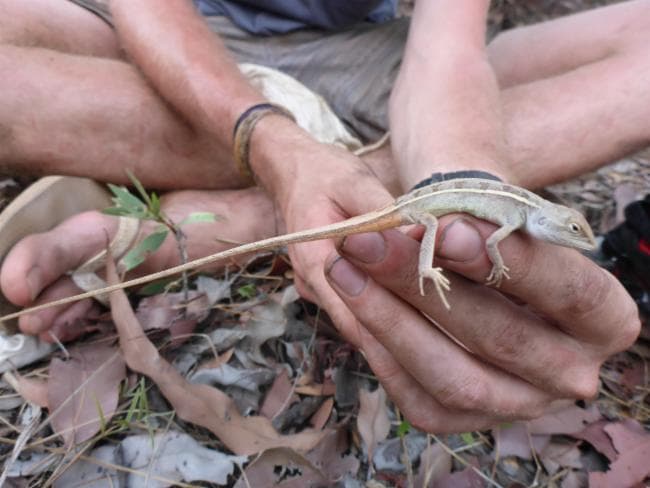
Diporiphora lalliae
Diporiphora lalliae, also known as Lally's two-line dragon, is a species of lizard endemic to northern Australia. This agamid lizard is characterized by its long tail, a gular fold, and strongly keeled dorsal scales. It inhabits a variety of environments including forests, shrublands, grasslands, and rocky areas.