
Furcifer nicosiai
Furcifer nicosiai is a large chameleon species endemic to western Madagascar, specifically found within the Tsingy de Bemaraha National Park. Distinguished by its high parietal crest and lack of snout appendages, it shares similarities with Furcifer verrucosus but can be identified by its smaller size and different color patterns. It is currently classified as an endangered species due to habitat loss and degradation.
Key Facts
- ›Endemic to western Madagascar, primarily found in Tsingy de Bemaraha National Park.
- ›Characterized by a high parietal crest and the absence of snout appendages.
- ›Similar to Furcifer verrucosus but generally smaller with distinct color patterns.
- ›Classified as an endangered species by the IUCN.
- ›Major threats include habitat fragmentation, loss, and degradation from human activities.

Madagascar
- Large Species of Chameleon.
- High Parietal Crest.
- Lacks Appendages On Its Snout .
- Separated Canthi Rostrales.
- Poorly Developed Gular Crest.
- Distinctive Rostral Profile.
- Complete Ventral Crest .
- Poorly Developed Dorsal Crest From Neck To Tail.
- Sexually Dimorphic, Similar In Appearance To Furcifer Verrucosus.
- Smaller Size Compared To Furcifer Verrucosus.
- Different Color Patterns Compared To Furcifer Verrucosus.
Habitat Fragmentation, Habitat Loss, Habitat Degradation, Agriculture, Logging, Clearing of Land By Fire
About Furcifer nicosiai
What is known about Furcifer nicosiai
Furcifer nicosiai is a species of chameleon endemic to the western region of Madagascar. This relatively large lizard is recognized for its distinctive physical characteristics, including a prominent high parietal crest and the absence of appendages on its snout. It shares some similarities with Furcifer verrucosus, but can be differentiated by its smaller size, unique color patterns, and specific anatomical features such as the orientation of its hemipenis.
Distribution and Habitat
The natural habitat of Furcifer nicosiai is restricted to the limestone outcrops within a limited area of western Madagascar, specifically in the Melaky Region, north of the Manambolo River. It has been documented exclusively within the Tsingy de Bemaraha National Park, at elevations ranging from 57 to 571 meters above sea level. While the park covers a significant area, not all of it provides the forest habitat suitable for this species.
Conservation Status and Threats
Furcifer nicosiai has been classified as an endangered species by the International Union for Conservation of Nature (IUCN). Its population is believed to be in decline, primarily due to substantial threats to its environment. The fragmentation, loss, and degradation of its forest habitat are considered the major issues, exacerbated by damaging human activities such as agriculture, logging, and land clearing through fire.
Source: Wikipedia ↗
Frequently Asked Questions
What is Furcifer nicosiai?
Furcifer nicosiai is a large species of chameleon, a type of lizard belonging to the family Chamaeleonidae. It is notable for its distinctive physical features and its restricted distribution.
Where is Furcifer nicosiai found?
This chameleon species is endemic to western Madagascar. It has been specifically recorded within the Tsingy de Bemaraha National Park, inhabiting limestone outcrops at elevations ranging from 57 to 571 meters above sea level.
What are the distinctive physical characteristics of Furcifer nicosiai?
Furcifer nicosiai is a relatively large chameleon with a prominent high parietal crest. It lacks appendages on its snout and has separated canthi rostrales. It also features a complete ventral crest and a poorly developed dorsal crest.
How does Furcifer nicosiai differ from similar species like Furcifer verrucosus?
While sharing some similarities, Furcifer nicosiai can be distinguished from Furcifer verrucosus by its smaller size and different color patterns. The orientation of its hemipenis also serves as a distinguishing feature.
What is the conservation status of Furcifer nicosiai?
Furcifer nicosiai is ranked as an endangered species by the International Union for Conservation of Nature (IUCN). Its population is believed to be in decline due to significant threats.
What are the primary threats to Furcifer nicosiai?
The major threats to this species are habitat fragmentation, loss, and degradation. Damaging human activities such as agriculture, logging, and land clearing by fire contribute significantly to these threats.
Related Lizards
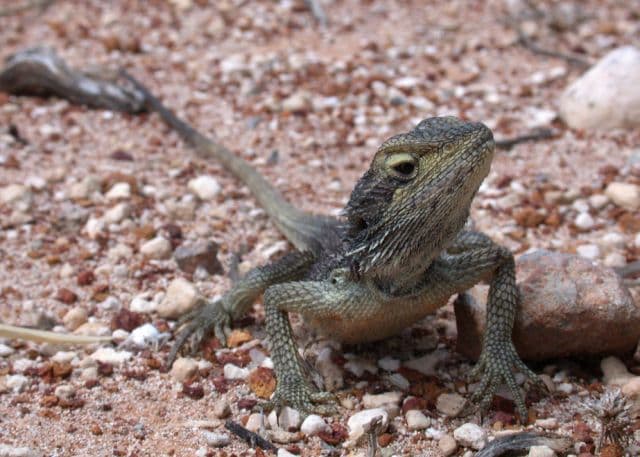
Abrolhos bearded dragon
The Abrolhos bearded dragon (Pogona minor minima) is a small agamid lizard endemic to the islands of the Houtman Abrolhos archipelago off the coast of Western Australia. It is characterized by its smaller size compared to related bearded dragons and inhabits sandy or limestone outcrop environments.

Mosor rock lizard
The Mosor rock lizard (Dinarolacerta mosorensis) is a flattened lizard characterized by a long head and slender tail, typically reaching about 7 cm in snout-to-vent length. Its dorsal surface is brown, greyish-brown, or olive-brown with dark mottling, while its underparts are unspotted and yellow or orange in adults. This species inhabits high-rainfall limestone outcrops and karst regions above the treeline in southern Croatia, Bosnia and Herzegovina, and Montenegro.

Brookesia dentata
The toothed leaf chameleon, *Brookesia dentata*, is a species of chameleon native to northwestern Madagascar. Known for its small size and leaf-like camouflage, it inhabits forests and areas affected by human activity. This species is currently classified as endangered due to habitat decline.