
Furcifer viridis
Furcifer viridis·Chamaeleonidae·Not specified
The Furcifer viridis, commonly known as the green chameleon, is a species found in forests, scrub, and grasslands across western and northern Madagascar. Males are larger and predominantly green, while females are smaller with mottled pink and green patterns. They are arboreal, utilizing their prehensile tails and specialized feet for climbing, and rely on camouflage and a sticky tongue to hunt.
Key Facts
- ›Found in forest, scrub, and grasslands of western and northern Madagascar.
- ›Males reach up to 28 cm (11 in) in total length, females up to 19 cm (7.5 in).
- ›Males are mostly greenish with pale mouth edging and a pale horizontal body stripe.
- ›Females typically have mottled or banded pinkish and green coloration.
- ›Possess a prehensile tail for gripping branches.
- ›Use camouflage and a long, sticky tongue for hunting.
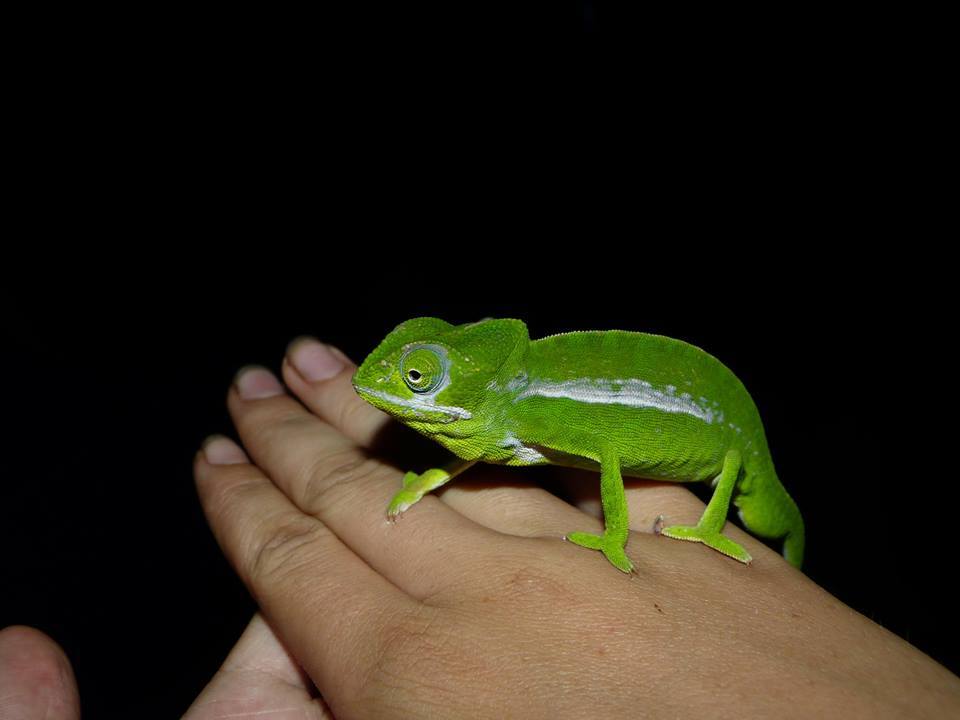
Green Chameleon
Madagascar
- Males Are Up To 28 cm In Total Length.
- Females Are Up To 19 cm In Total Length.
- Males Are Mostly Greenish, Typically With Pale Edging To Their Mouth and A Pale Horizontal Stripe Along the Middle of Their Body.
- Females Are Typically Mottled Or Banded In Pinkish and Green.
- Possess Specialized Feet With Toes Fused In Groups of Three and Two.
- Have A Prehensile Tail That Can Curl Like A Spiral.
Insects
Arboreal, Relies On Camouflage For Hunting, Uses A Long, Sticky Tongue To Catch Food
About Furcifer viridis
Furcifer viridis: The Green Chameleon
The Furcifer viridis, commonly referred to as the green chameleon, is a species of chameleon found throughout the diverse landscapes of western and northern Madagascar. This reptile inhabits a range of environments, including forests, scrublands, and grasslands, where it expertly navigates its surroundings.
Physical Characteristics and Adaptations
Distinctive sexual dimorphism is observed in Furcifer viridis. Males tend to be larger, reaching up to 28 cm (11 inches) in total length, and are predominantly green in coloration. They often exhibit pale edging around their mouths and a subtle pale horizontal stripe running along the middle of their bodies. Females are smaller, with a maximum total length of 19 cm (7.5 inches), and display a more varied coloration, typically mottled or banded in shades of pinkish and green. Like many chameleons, they possess a prehensile tail, which can curl like a spiral, allowing them to firmly grip branches. Their feet are uniquely adapted for arboreal life, with toes fused into two groups—three on one side and two on the other—providing a secure hold on vegetation.
Behavior and Diet
Furcifer viridis is an arboreal species, meaning it spends the majority of its life climbing in trees. Its primary hunting strategy relies on its remarkable camouflage, allowing it to blend seamlessly with its environment. Once prey is within range, it deploys a long, sticky tongue with incredible speed and accuracy to capture its meal. While the specific diet is not detailed, their hunting method suggests they are insectivores.
Taxonomy and Recognition
This species was formerly considered part of Furcifer lateralis. However, in 2012, Furcifer viridis was recognized as a distinct species, highlighting ongoing research and understanding of chameleon diversity.
Source: Wikipedia ↗
Frequently Asked Questions
What is the Furcifer viridis?
The Furcifer viridis, also known as the green chameleon, is a species of chameleon native to Madagascar. It inhabits forests, scrublands, and grasslands in the western and northern parts of the island.
What are the physical differences between male and female Furcifer viridis?
Males of the species are generally larger, reaching up to 28 cm in total length, and are primarily greenish with pale edging around their mouths and a pale horizontal stripe along their bodies. Females are smaller, growing up to 19 cm, and typically display mottled or banded patterns of pinkish and green.
How does the Furcifer viridis move and hunt?
As an arboreal species, the Furcifer viridis climbs trees using its specialized feet, which have three toes fused on one side and two on the other. It relies on its camouflage to blend into its surroundings and uses a long, sticky tongue to catch its prey.
What is the habitat of the Furcifer viridis?
The green chameleon is found in a variety of environments across western and northern Madagascar, including forests, scrub, and grasslands. They are adept climbers, spending most of their time in trees.
Is the Furcifer viridis a new species?
The Furcifer viridis was recognized as a separate species in 2012. Previously, it was considered to be part of the species Furcifer lateralis.
Related Lizards

Heloderma suspectum
The Gila monster (Heloderma suspectum) is a venomous lizard native to the Southwestern United States and northwestern Mexico. Known for its heavy, slow-moving nature and striking black and pink or yellow coloration, it is the only venomous lizard in the United States. Despite its fearsome reputation and potent venom, it is generally not dangerous to humans and is protected by state law.

Trioceros bitaeniatus
The side-striped chameleon, scientifically known as Trioceros bitaeniatus, is a species of chameleon native to several East African countries. It is characterized by its habitat in high-altitude timberline forests and its diurnal activity pattern, sheltering in dense bushes at night. This species is found in mountainous regions, often living among giant heathers.

Ablepharus
Ablepharus, commonly known as snake-eyed skinks, are small lizards distinguished by fused eyelids that prevent blinking, similar to snakes. They inhabit dry fields, hills, and rocky areas, often concealed within leaf litter. These skinks possess shiny, bronze scales and a characteristic dark stripe along their sides, feeding primarily on small insects and mollusks.