
Hemidactylus fasciatus
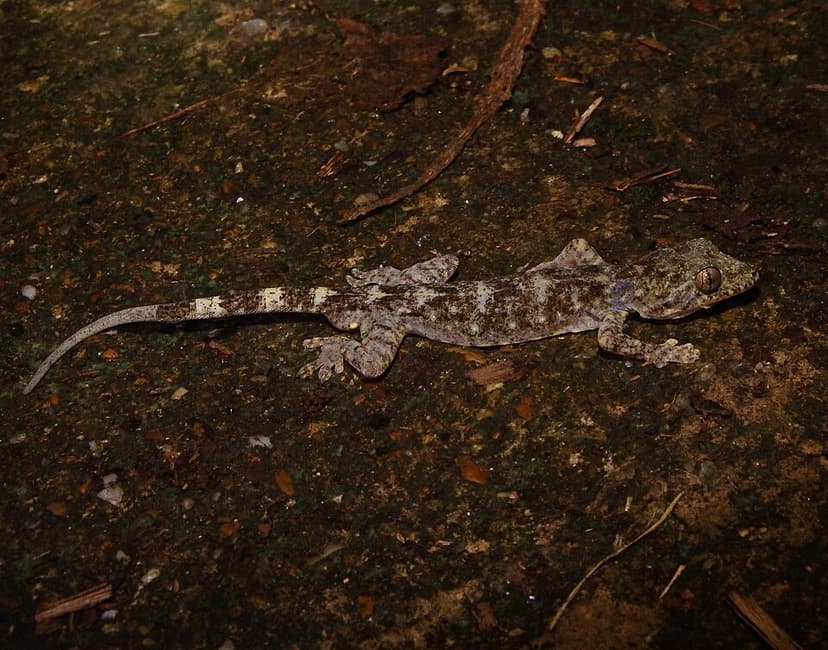
The banded leaf-toed gecko (Hemidactylus fasciatus) is a species of gecko found in West Africa. It is characterized by a broad dark band extending from between its eyes to its neck, and a pale upper lip. Typically inhabiting forests, this relatively large gecko seeks shelter during daylight hours in tree stumps and rock crevices.
Key Facts
- ›Endemic to West Africa, west of the Dahomey Gap, from southern Guinea to Togo.
- ›Recognizable by a broad dark band between the eyes and the neck.
- ›Features a pale upper lip.
- ›Can reach a snout-to-vent length of up to 95 mm (3.7 inches).
- ›Total length can be around 172 mm (6.8 inches).
- ›Inhabits forest environments, hiding in tree stumps or rock crevices during the day.

Banded Leaf-Toed Gecko
West Africa, Southern Guinea, Togo
- Fairly Large Gecko.
- Broad Dark Band Between the Eyes and the Neck.
- Pale Upper Lip.
- Snout-To-Vent Length Up To 95 mm .
- Total Length Around 172 mm .
- Hides During the Day In Tree Stumps Or Rock Crevices.
About Hemidactylus fasciatus
Banded Leaf-Toed Gecko (Hemidactylus fasciatus)
The banded leaf-toed gecko, scientifically known as Hemidactylus fasciatus, is a species of gecko native to West Africa. Its natural range spans from southern Guinea westward to Togo, generally found to the west of the Dahomey Gap.
Physical Characteristics
This gecko is distinguished by several key physical traits. It is considered a fairly large species within its genus. A prominent feature is the broad, dark band that extends across its head, situated between its eyes and its neck. Additionally, it possesses a pale upper lip, which provides a visual contrast to other markings. In terms of size, Hemidactylus fasciatus can reach a snout-to-vent length of up to 95 mm (3.7 inches), with its total length, including the tail, often measuring around 172 mm (6.8 inches).
Habitat and Behavior
The banded leaf-toed gecko primarily inhabits forest environments. During the daylight hours, it seeks shelter and safety by hiding within natural refuges. These typically include the hollows of tree stumps or the secluded spaces found within rock crevices. Little is documented about its specific diet or reproductive behaviors.
Source: Wikipedia ↗
Frequently Asked Questions
Where is the banded leaf-toed gecko found?
The banded leaf-toed gecko is endemic to West Africa. Its range extends west of the Dahomey Gap, covering areas from southern Guinea all the way to Togo.
What are the distinctive physical features of Hemidactylus fasciatus?
This gecko is easily identified by a prominent broad dark band that runs between its eyes and its neck. It also possesses a pale upper lip, which contrasts with its darker markings.
How large can Hemidactylus fasciatus grow?
Hemidactylus fasciatus is considered a fairly large gecko. It can measure up to 95 mm (3.7 inches) in snout-to-vent length, with a total length reaching approximately 172 mm (6.8 inches).
What kind of habitat does the banded leaf-toed gecko prefer?
The banded leaf-toed gecko is typically found in forest environments. During the day, it seeks refuge and hides within tree stumps or in the confines of rock crevices.
Related Lizards
Adler's gecko
Adler's gecko is a moderately-sized lizard native to the forest habitats of southern China and northern Vietnam. Distinguished by its moderate size within its genus, adults typically do not exceed a snout-to-vent length of 8 cm. The species was named in honor of American herpetologist Kraig Adler.

Amphiglossus alluaudi
Flexiseps alluaudi is a skink species found exclusively on the island of Madagascar. Its preferred natural habitat is forest environments. The specific mode of reproduction for this lizard remains unknown.

Amphiglossus crenni
Flexiseps crenni, also known as Crenni's skink, is a species of lizard endemic to Madagascar. It is characterized by its very short legs and reduced number of digits. The preferred habitat for this skink is forest environments.