
Iberolacerta bonnali
The Pyrenean rock lizard, scientifically known as Iberolacerta bonnali, is a species of lizard endemic to the high-altitude regions of the Pyrenees Mountains. Distinguished by its greyish-brown dorsal coloration and a tail approximately twice its snout-to-vent length, this species inhabits rocky terrains and is only active during the summer months.
Key Facts
- ›Endemic to the Pyrenees Mountains in France and Spain.
- ›Found at altitudes ranging from 1,700 to 3,000 meters.
- ›Characterized by greyish-brown dorsal color and a tail twice its snout-to-vent length.
- ›Inhabits rocky crags, screes, and areas near alpine meadows.
- ›Oviparous, meaning it reproduces by laying eggs.
- ›Currently assessed as 'near Threatened' by the IUCN.
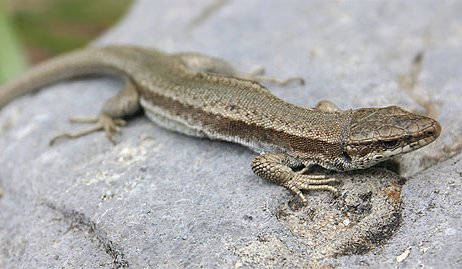
Pyrenean Rock Lizard
France, Spain
Rocky Crags, Screes, Limestone Areas, Slate Areas, Schist Areas, Alpine Meadows, Near Torrents, Near Glacial Lakes
- Snout-To-Vent Length Up To 6 cm .
- Tail Approximately Twice Svl.
- Dorsal Coloration Is Greyish-Brown, Sometimes Finely Flecked With Dark Markings.
- Lacks Significant Dorsal Striping.
- Flanks Are Dark, Occasionally With Slight Pale Flecking.
- Underparts Are White, Greyish, Or Greenish.
Only Active During Summer.
Skiing Developments, Building of Tracks, Overgrazing of Cattle, Climate Change
About Iberolacerta bonnali
Pyrenean Rock Lizard (Iberolacerta bonnali)
The Pyrenean rock lizard, scientifically known as Iberolacerta bonnali, is a distinct species of lizard found exclusively in the high-altitude regions of the Pyrenees Mountains, spanning across France and Spain. Its natural habitat consists of rugged, rocky terrains, including crags and screes, often situated in areas with limestone, slate, or schist geology. These lizards are frequently observed near alpine meadows and bodies of water such as torrents and glacial lakes.
Physical Characteristics and Behavior
This species typically reaches a snout-to-vent length of up to 6 centimeters, with its tail being approximately twice this length. The dorsal coloration of the Pyrenean rock lizard is generally greyish-brown, sometimes exhibiting fine dark flecking but without prominent striping. Its flanks are dark, occasionally showing faint pale speckling, and its underparts can vary from white to greyish or greenish hues. A notable behavioral trait is its limited activity period; Iberolacerta bonnali is only active during the summer months, likely due to the harsh conditions at its high-altitude home.
Taxonomy and Conservation
The specific name, bonnali, honors the Count of Bonnal, who was instrumental in collecting regional amphibians and reptiles. While the Aran rock lizard was once considered a subspecies, it is now recognized as a separate species. The Pyrenean rock lizard is classified as 'Near Threatened' by the International Union for Conservation of Nature (IUCN). This classification is attributed to its vulnerability to habitat disturbances, including those caused by skiing developments and infrastructure projects, as well as overgrazing by cattle. Future impacts from climate change are also a concern for the long-term survival of this species.
Source: Wikipedia ↗
Frequently Asked Questions
What is the scientific name for the Pyrenean rock lizard?
The scientific name for the Pyrenean rock lizard is Iberolacerta bonnali. It was named in honor of the Count of Bonnal, who collected amphibians and reptiles in the region.
Where can the Pyrenean rock lizard be found?
This lizard species is endemic to the Pyrenees Mountains, specifically in France and Spain. It inhabits high-altitude areas, typically between 1,700 and 3,000 meters above sea level.
What are the typical habitats of Iberolacerta bonnali?
Iberolacerta bonnali prefers natural habitats that include rocky crags and screes, often found in areas with limestone, slate, and schist. They are frequently observed on rocks close to alpine meadows and in proximity to torrents and glacial lakes.
What does the Pyrenean rock lizard look like?
The Pyrenean rock lizard has a snout-to-vent length of up to 6 cm, with a tail that is about twice its body length. Its dorsal coloration is typically greyish-brown, sometimes with fine dark flecks but lacking significant striping. The flanks are dark, and the underparts can be white, greyish, or greenish.
How does the Pyrenean rock lizard reproduce?
Iberolacerta bonnali is oviparous, which means that females lay eggs. Further details on their reproductive cycle, such as clutch size or incubation period, are not extensively documented in available records.
What is the conservation status of the Pyrenean rock lizard?
The Pyrenean rock lizard is classified as 'Near Threatened' by the International Union for Conservation of Nature (IUCN). While its population appears stable, it faces threats from habitat disturbance.
What are the main threats to the Pyrenean rock lizard population?
Threats to the Pyrenean rock lizard include habitat disturbance from skiing developments and the construction of tracks. Overgrazing by cattle also poses a risk, and climate change may affect the species in the future.
Related Lizards

Darevskia
Darevskia, commonly known as rock lizards or meadow lizards, are a genus of small lizards native to the Caucasus, Iran, and Turkey. They are characterized by their flattened bodies, pointed heads, and long legs with sharp claws, adapted for climbing rocky terrains. These lizards inhabit a variety of environments, from mountain steppes to anthropogenic structures, and exhibit diverse coloration patterns.

Lacerta andreanskyi
The Atlas dwarf lizard (Atlantolacerta andreanskyi), also known as Andreansky's lizard, is a species indigenous to the High Atlas mountain range in north-western Africa. It is characterized by its adaptability to alpine meadows, scree, and rocky areas, often remaining well-hidden within vegetation. This species is notable for its long hibernation periods and its reproductive strategy of laying multiple small clutches of eggs annually.

East Canary gecko
The East Canary gecko, also known as the Canary wall gecko (Tarentola angustimentalis), is a species of lizard native to the eastern Canary Islands. This plump, dorsally flattened gecko is characterized by adhesive toe pads, small tubercles on its skin, and variable greyish-brown coloration with darker bars. It inhabits a wide range of environments, from rocky shores and shrubland to urban areas, and is commonly observed at night on walls and ceilings.