
Ichnotropis capensis
The Ichnotropis capensis, commonly known as the Cape rough-scaled lizard, is a small, terrestrial lizard native to the southern Afrotropics. It inhabits grasslands, deserts, and brush areas, characterized by its slender body, long tail, and distinctive uniform grey and yellowish-brown back with white lateral stripes. This species is insectivorous and an active diurnal hunter, with a short lifespan.
Key Facts
- ›Occurs in grassland, desert, and brush habitats in southern Africa.
- ›Possesses keeled or overlapping dorsal scales and smooth head shields.
- ›Adults have uniform grey and yellowish-brown backs with white lateral stripes, sometimes bordered by black spots.
- ›Primarily insectivorous, feeding on termites and other small insects.
- ›Has a short lifespan, typically 13 to 14 months.
- ›Females lay 3-9 eggs per clutch, potentially having up to two clutches in their lifetime.

Cape Rough-Scaled Lizard, Ornate Rough-Scaled Lizard, Smith's Rough-Scaled Sand Lizard
South Africa, Namibia, Botswana, Zimbabwe, Mozambique, Zambia
- Medium-Sized Lizards With Slender Bodies and Long Tails.
- Well-Developed Legs.
- Most Specimens Are Less Than 76 mm In Snout-To-Vent Length.
- Keeled Or Overlapping Dorsal Scales.
- Smooth To Slightly Rough Head Shields.
- Subocular Scales Border the Lip; No Collar Is Present.
- Smooth Or Tubular Lamellae Under the Toes; Toes Lack A Serrated Or Fringed Edge.
- Cylindrical Tail Lacks A Lateral Fringe.
- Hind Legs Do Not Reach the Underarm of the Forelimbs.
- Adults Have Uniform Grey and Yellowish-Brown Backs With White Lateral Stripes.
- White Lateral Stripes May Be Bordered With Dark Black Spots.
- Juveniles Have Pale Grey and Brown Backs With White Lateral Stripes.
Termites, Other Small Insects
- Terrestrial.
- Active Hunters During the Day.
- Semelparous, With Little Overlap of Adult and Juvenile Life Stages.
- Females Make Inclining Burrows For Egg-Laying.
Shikra, Secretarybird
About Ichnotropis capensis
Ichnotropis capensis: The Cape Rough-Scaled Lizard
The Ichnotropis capensis, commonly recognized as the Cape rough-scaled lizard, is a small, terrestrial reptile native to the southern Afrotropical region. It serves as the type species for the genus Ichnotropis and is also known by other common names such as the ornate rough-scaled lizard or Smith's rough-scaled sand lizard. This species is found in a variety of arid and semi-arid environments, including grasslands, deserts, and brush areas.
Description and Characteristics
Cape rough-scaled lizards are characterized by their slender bodies, long tails, and well-developed legs. Adult specimens typically measure less than 76 mm in snout-to-vent length. Distinctive physical features include keeled or overlapping dorsal scales, smooth to slightly rough head shields, and the absence of a neck collar. Their toes possess smooth or tubular lamellae but lack serrated edges, and their cylindrical tails are without a lateral fringe. A notable feature differentiating them from other members of their genus is that their hind legs do not reach the underarm of the forelimbs when extended. Adult coloration typically consists of uniform grey and yellowish-brown backs adorned with white lateral stripes, which may be accented by dark black spots. Juveniles exhibit a similar pattern but are generally paler.
Habitat and Distribution
This species primarily inhabits semi-arid shrub savannas across southern Africa. They are known to seek refuge in soft soil burrows, under rocks, and within dense brush. The geographic distribution of Ichnotropis capensis extends across several countries, including South Africa, Namibia, Botswana, Zimbabwe, Mozambique, and Zambia.
Biology and Behavior
The Cape rough-scaled lizard is an insectivore, with its diet predominantly consisting of termites and other small insects. They are diurnal and active hunters, often observed in proximity to termite mounds. Biologically, this species is semelparous, meaning they typically reproduce once in their lifetime, with minimal overlap between adult and juvenile life stages. Their lifespan is notably short, generally ranging from 13 to 14 months. Reproduction occurs in the spring, with hatchlings emerging in late summer between October and December. Females excavate burrows in soft soil, where they lay clutches of 3 to 9 eggs. While considered semelparous, some females may produce up to two clutches within their brief existence.
Taxonomy and Evolution
Morphological evidence suggests that the genus Ichnotropis, including the capensis species, diverged from a common ancestor shared with the North American genus Psammodromus during the Oligocene epoch, approximately 24 to 36 million years ago. This lineage is related to Lacerta lepida and Lacerta monticola.
Predators and Conservation
Natural predators of the Cape rough-scaled lizard include birds of prey native to Africa, such as the shikra and the secretarybird. Due to their small size, other predators are also likely. There is no current evidence to suggest that Ichnotropis capensis is endangered or subject to significant hunting by indigenous human populations in its habitat.
Source: Wikipedia ↗
Frequently Asked Questions
What are the common names for Ichnotropis capensis?
Ichnotropis capensis is most commonly referred to as the Cape rough-scaled lizard. It is also known as the ornate rough-scaled lizard or Smith's rough-scaled sand lizard.
What is the physical description of the Cape rough-scaled lizard?
These are medium-sized lizards with slender bodies, long tails, and well-developed legs. Adults typically have uniform grey and yellowish-brown backs marked by white lateral stripes, which may be bordered by dark black spots. Juveniles share a similar coloration but are generally paler.
Where does Ichnotropis capensis live?
The Cape rough-scaled lizard is found in semi-arid shrub savannas across southern Africa. Its range includes South Africa, Namibia, Botswana, Zimbabwe, Mozambique, and Zambia, where it seeks shelter in soft soil burrows, under rocks, and within brush.
What does the Ichnotropis capensis eat?
This species is insectivorous, with its diet consisting mainly of termites and other small insects. They are active hunters during the day and are often observed near termite mounds.
What is the lifespan of the Cape rough-scaled lizard?
Ichnotropis capensis has a notably short lifespan, typically ranging from 13 to 14 months. This is characteristic of its semelparous reproductive strategy, with limited overlap between adult and juvenile life stages.
How does the Cape rough-scaled lizard reproduce?
Reproduction occurs in the spring, with hatchlings appearing in late summer. Females create burrows to lay clutches of 3-9 eggs. While generally considered semelparous, females may lay up to two clutches in their short lifetime.
Are there any known predators of Ichnotropis capensis?
The Cape rough-scaled lizard is preyed upon by birds of prey such as the shikra and the secretarybird. Given their small size, it is likely they have other predators as well.
Related Lizards

Agama anchietae
Agama anchietae, commonly known as Anchieta's agama or the western rock agama, is a species of lizard native to southern Africa. It is characterized by its cryptic coloration, a wider head and longer tail in males due to sexual dimorphism, and a diet primarily consisting of insects, particularly ants. This species inhabits diverse environments including deserts, shrublands, and grasslands, and it reproduces by laying eggs.
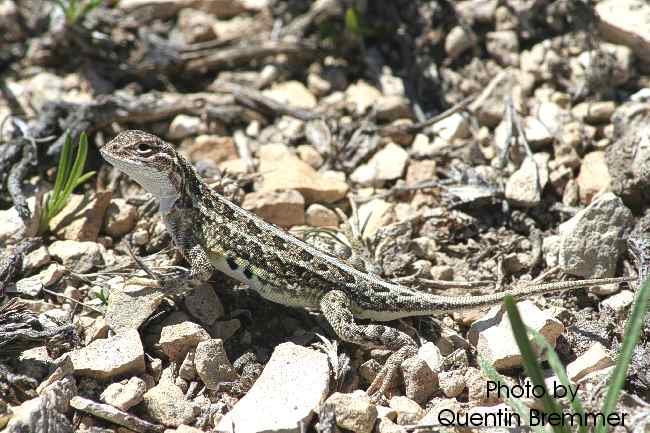
Lesser earless lizard
The lesser earless lizard (Holbrookia maculata) is a small reptile native to the southwestern and central United States and northern Mexico. Adults typically reach a total length of 4 to 5 inches, characterized by smooth, granular dorsal scales and the absence of external ear openings. This species primarily inhabits shrubland, grassland, and desert environments.

Lialis burtonis
Burton's legless lizard (Lialis burtonis) is a unique reptile native to Australia and Papua New Guinea, characterized by its complete lack of forelimbs and greatly reduced hind limbs, resembling a snake but distinct in its evolutionary lineage. This species is a visual predator with specialized adaptations for capturing and consuming other lizards, often found in diverse habitats from deserts to rainforest margins.