
Lesser earless lizard
The lesser earless lizard (Holbrookia maculata) is a small reptile native to the southwestern and central United States and northern Mexico. Adults typically reach a total length of 4 to 5 inches, characterized by smooth, granular dorsal scales and the absence of external ear openings. This species primarily inhabits shrubland, grassland, and desert environments.
Key Facts
- ›Adults have a total length of 4-5 inches (10-13 cm).
- ›Lacks external ear openings.
- ›Found in shrubland, grassland, and desert habitats.
- ›Feeds on insects and spiders.
- ›Reproduction is oviparous (egg-laying).
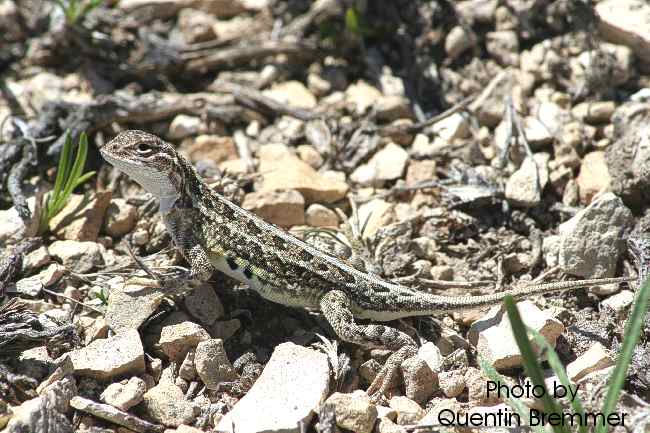
Lesser Earless Lizard, Northern Earless Lizard, Eastern Earless Lizard, Prairie Eastern Lizard, Bunker's Earless Lizard, Dickerson's Earless Lizard, Huachuca Earless Lizard, Bleached Earless Lizard
United States, Mexico
- Small Species of Lizard.
- Adults Have A Total Length of 4–5 Inches .
- Dorsal Scales Are Granular and Smooth.
- No External Ear Openings.
- Two Folds Across the Throat.
- Female's Throat Is Orange During Breeding Season.
- Underside of the Tail Has No Dark Spots.
Insects, Spiders
Active During the Day .
About Lesser earless lizard
The lesser earless lizard, scientifically known as Holbrookia maculata, is a small reptile native to the arid and semi-arid regions of the southwestern and central United States, as well as northern Mexico. This species is characterized by its modest size, with adult individuals typically measuring between 4 to 5 inches (10-13 cm) in total length. Its physical attributes include smooth, granular dorsal scales and a distinctive lack of external ear openings. During the breeding season, females may exhibit a notable orange coloration on their throats.
Habitat and Distribution
This lizard thrives in a variety of open, dry environments. Its preferred natural habitats are shrubland, grassland, and desert areas, where it can effectively find shelter and forage. The lesser earless lizard is distributed across numerous U.S. states, including Arizona, Kansas, Oklahoma, Texas, and Wyoming, and extends its range into several northern Mexican states such as Chihuahua and Sonora.
Behavior and Diet
The lesser earless lizard is oviparous, meaning it reproduces by laying eggs. Its diet primarily consists of insects and spiders, making it an insectivore that plays a role in controlling invertebrate populations. While specific behavioral patterns are not extensively detailed, its habitat preference suggests it is active during daylight hours to hunt and regulate its body temperature.
Source: Wikipedia ↗
Frequently Asked Questions
What is the scientific name of the lesser earless lizard?
The scientific name of the lesser earless lizard is Holbrookia maculata. This binomial nomenclature is used to classify this specific species within the animal kingdom.
What are the main physical characteristics of the lesser earless lizard?
The lesser earless lizard is a small species, with adults measuring 4 to 5 inches in total length. They have smooth, granular dorsal scales and notably lack external ear openings. Females may display an orange throat during the breeding season.
Where does the lesser earless lizard live?
This lizard species is found across the southwestern and central United States, including states like Arizona, Kansas, Oklahoma, and Texas. It also extends into northern Mexico, inhabiting states such as Chihuahua and Sonora.
What kind of environment does the lesser earless lizard prefer?
The preferred natural habitats for the lesser earless lizard include shrubland, grassland, and desert environments. These arid or semi-arid regions provide suitable conditions for its survival and foraging.
What does the lesser earless lizard eat?
The diet of the lesser earless lizard consists mainly of insects and spiders. They are insectivorous predators, actively seeking out these small invertebrates in their natural habitat.
How does the lesser earless lizard reproduce?
The lesser earless lizard is oviparous, meaning it reproduces by laying eggs. This is a common reproductive strategy among many reptile species.
Related Lizards

Agama anchietae
Agama anchietae, commonly known as Anchieta's agama or the western rock agama, is a species of lizard native to southern Africa. It is characterized by its cryptic coloration, a wider head and longer tail in males due to sexual dimorphism, and a diet primarily consisting of insects, particularly ants. This species inhabits diverse environments including deserts, shrublands, and grasslands, and it reproduces by laying eggs.

Mesalina olivieri
Mesalina olivieri, also known as Olivier's sand lizard, is a species of sand-dwelling lizard native to North Africa and the Middle East. Primarily inhabiting desert, grassland, and shrubland environments, this terrestrial and diurnal species feeds mainly on ants and other small arthropods. It reproduces by laying two to four eggs per clutch, with sexually mature females laying at least two clutches annually.
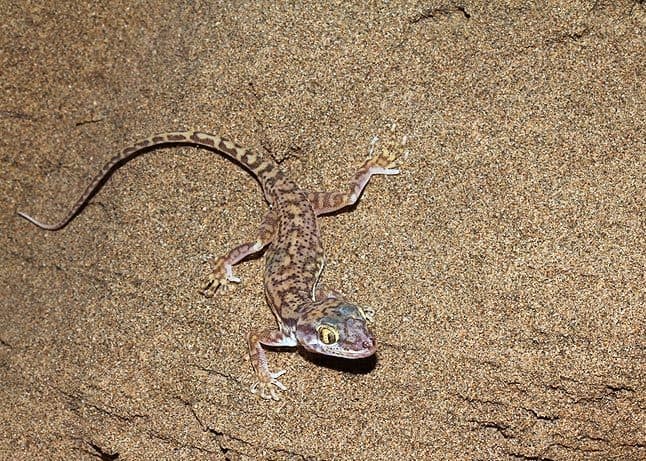
Crossobamon eversmanni
Crossobamon eversmanni, commonly known as the comb-toed gecko, is a species of Asian gecko found in desert, grassland, and shrubland habitats across Iran, Pakistan, and Central Asia. This terrestrial and nocturnal lizard is characterized by its burrowing behavior and oviparous reproduction, with females laying one to two eggs per clutch.