
Jackson's chameleon
Jackson's chameleon, scientifically known as Trioceros jacksonii, is a distinctive lizard species recognizable by the three horns present on the heads of males. Native to the woodlands and wet forests of East Africa, it has also been introduced to regions like Hawaii and Florida. This arboreal chameleon is known for its vibrant green coloration and its ability to change color based on mood, health, and temperature.
Key Facts
- ›Males possess three horns: one on the nose and one above each eye.
- ›Primarily inhabits woodlands and wet forests at high altitudes.
- ›They are ovoviviparous, giving birth to live young.
- ›Diet consists mainly of insects but can include other small invertebrates and occasionally small vertebrates.
- ›Coloration is typically bright green but can change based on environmental and physiological factors.
- ›Males generally live longer than females.

Jackson's Horned Chameleon, Three-Horned Chameleon, Kikuyu Three-Horned Chameleon
Kenya, Tanzania, Hawaii, Florida, California
- Males Possess Three Horns: One Rostral and Two Preocular .
- Females Generally Lack Horns Or Have Only Traces of the Rostral Horn.
- Typical Coloring Is Bright Green, With Potential For Blue and Yellow Markings.
- Color Can Change Rapidly Based On Mood, Health, and Temperature.
- Adult Males Reach Up To 38 cm Total Length, Females Up To 25 cm , With Typical Lengths Between 15-25 cm.
- Features A Saw-Tooth Shaped Dorsal Ridge.
- Lacks A Gular Crest.
Small Insects, Centipedes, Isopods, Millipedes, Spiders, Small Birds, Snails
- Cruise Forager .
- Less Territorial Than Most Chameleon Species.
- Males Assert Dominance Through Color Displays and Posturing Rather Than Physical Fights.
- Attains Sexual Maturity After Five Months.
Invasive Species Impacting Native Ecosystems, Pet Trade
About Jackson's chameleon
Jackson's chameleon, known scientifically as Trioceros jacksonii, is a remarkable lizard species recognized by the distinctive trio of horns found on the heads of adult males. These horns, one on the snout and one above each eye, are a key characteristic that sets them apart. The species is native to the humid woodlands and wet forests of East Africa, primarily in Kenya and Tanzania, thriving at elevations between 1,600 and 2,440 meters.
Physical Characteristics and Behavior
While males are adorned with horns, females typically lack them or possess only faint traces. Their usual coloration is a vibrant green, though their remarkable ability to change color allows them to display shades of blue and yellow depending on their mood, health, or ambient temperature. Adult males can reach a total length of up to 38 cm, with females being slightly smaller. Jackson's chameleons are arboreal, meaning they live in trees, and are considered cruise foragers, actively seeking out their prey rather than waiting in ambush. They are also notably less territorial than many other chameleon species, often resolving disputes through color displays and posturing.
Reproduction and Life Cycle
A unique aspect of Jackson's chameleon's biology is its reproductive method. Unlike most chameleons, which lay eggs (oviparous), Jackson's chameleons are ovoviviparous. This means that the eggs hatch internally, and the females give birth to live young. Litters typically range from eight to thirty offspring, with a specific subspecies, T. j. merumontanus, giving birth to five to ten live young. The gestation period lasts approximately five to six months. In captivity, Jackson's chameleons can live for five to ten years, with males generally having a longer lifespan than females.
Habitat and Distribution
Native to East Africa, Jackson's chameleon's natural range includes the higher altitude forests of Kenya and Tanzania. However, the species has also been introduced to other parts of the world, notably Hawaii, Florida, and California. In Hawaii, the subspecies T. j. xantholophus has become established and is considered an invasive species, posing a threat to native invertebrate populations. This introduction was partly due to its historical role as a source for the exotic pet trade, though exports from Hawaii are now prohibited to prevent further establishment of feral populations.
Source: Wikipedia ↗
Frequently Asked Questions
What is unique about the males of Jackson's chameleon?
Male Jackson's chameleons are distinguished by the presence of three horns on their heads. These include one on the nose and one above each eye, giving them a distinctive appearance.
Where is Jackson's chameleon naturally found?
Jackson's chameleon is native to East Africa, specifically in the woodlands and wet forests of south-central Kenya and northern Tanzania. It is found at altitudes between 1,600 and 2,440 meters.
How does Jackson's chameleon reproduce?
Unlike most chameleons which are oviparous, Jackson's chameleon is ovoviviparous. This means females give birth to live young after a gestation period, with the eggs hatching internally.
What do Jackson's chameleons eat?
Their diet primarily consists of small insects, but they are opportunistic feeders. They also prey on centipedes, spiders, millipedes, and occasionally small birds or lizards.
What is the typical lifespan of Jackson's chameleon?
In captivity, Jackson's chameleons can be expected to live between five and ten years. Males generally have a longer lifespan than females.
Is Jackson's chameleon invasive in any areas?
Yes, the subspecies T. j. xantholophus was introduced to Hawaii and has become an invasive species there. It has also been introduced to Florida and can pose a threat to native ecosystems.
What are the habitat requirements for Jackson's chameleon?
They are arboreal and prefer to live in woodlands and wet forests. They require high humidity and cooler night temperatures, especially in captivity.
Related Lizards

Chalcides sexlineatus
The Gran Canaria skink (Chalcides sexlineatus) is a species of skink endemic to the island of Gran Canaria in the Canary Islands. This lizard is characterized by its flattened body, wide head, and distinctive striping patterns, with variations between subspecies. It inhabits a wide range of environments across the island.
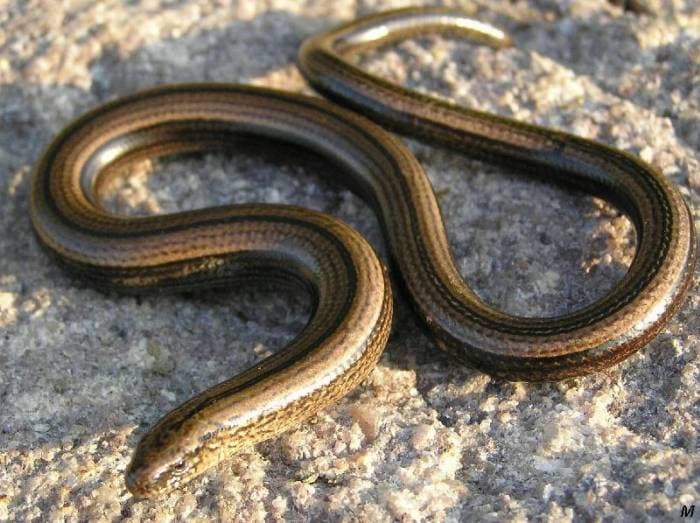
Common slowworm
The common slow worm (Anguis fragilis) is a legless lizard native to Europe, often mistaken for a snake or worm. It is characterized by its smooth, non-overlapping scales and functional, though small, eyes. These semifossorial reptiles are known for their long lifespan and inhabit environments like long grass and gardens, where they hide under objects.

Gran Canaria skink
The Gran Canaria skink (Chalcides sexlineatus) is a species of skink endemic to the Canary Island of Gran Canaria. This lizard is characterized by its flattened body, wide head, and strong legs, with distinct striping patterns and coloration that vary between its subspecies and geographic locations on the island. It inhabits a wide range of environments, from coastal areas to higher altitudes, and primarily feeds on invertebrates.