
Common slowworm
The common slow worm (Anguis fragilis) is a legless lizard native to Europe, often mistaken for a snake or worm. It is characterized by its smooth, non-overlapping scales and functional, though small, eyes. These semifossorial reptiles are known for their long lifespan and inhabit environments like long grass and gardens, where they hide under objects.
Key Facts
- ›The common slow worm is a legless lizard, not a snake or a worm.
- ›It has smooth, non-overlapping scales and functional, small eyes.
- ›Slow worms are semifossorial, spending much of their time hidden under objects.
- ›They are known for their exceptionally long lifespan, potentially exceeding 50 years in captivity.
- ›Their diet primarily consists of invertebrates like slugs, snails, and earthworms.
- ›The species exhibits caudal autotomy, shedding its tail to escape predators.
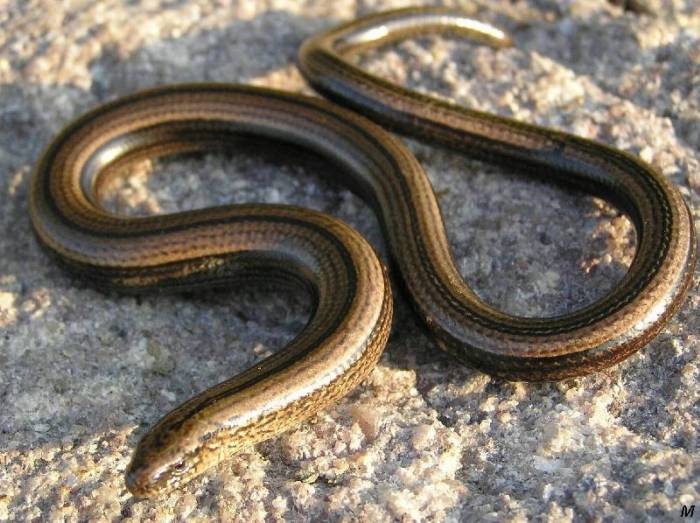
Deaf Adder, Blindworm, Long-Cripple, Steelworm, Hazelworm
Europe, Western Asia
Long Grass, Moist Environments, Gardens, Allotments, Under Objects
- Elongated Body With A Circular Cross-Section.
- Reaches A Maximum Length of Up To 57.5cm, With Adults Typically Between 40-45cm.
- No Visible Neck; Tail Is Continuous With the Trunk and Often Slightly Longer, Ending In A Horny Tip.
- Skin Is Smooth With Round To Hexagonal, Non-Overlapping Scales.
- Scales Are Similar In Shape On Dorsal and Ventral Sides, With Longitudinal Rows Along the Underside.
- Beneath Scales Are Bony Plates , Making Movement Stiffer Than Snakes.
- Head Scales Are Similar To Those of Snakes.
- Ear Openings Are Usually Hidden Under Scales.
- Relatively Small Eyes With Movable, Closable Eyelids and Round Pupils.
- Broad, Bilobed Tongue That Does Not End In Fine Points.
- Pointed Teeth Curved Backwards.
- Females Often Have A Spine Stripe and Dark Sides; Males May Have Blue Dorsal Spots.
- Juveniles Are Gold With Dark Brown Bellies and Sides and A Dark Spine Stripe.
Invertebrates, Slugs, Snails, Earthworms
- Semifossorial , Spending Much Time Hiding Under Objects.
- Warm Themselves Indirectly Under Sun-Warmed Objects Rather Than Basking Directly.
- Activity Pattern Is Irregular and Environmentally Determined, Often Active During First Sunlight Hours, Twilight, and After Rainfall.
- Detect Predators Using Their Tongues To Smell.
- Exhibit Caudal Autotomy To Escape Predators.
- Males May Fight Violently For Females During the Mating Season.
Adders, Badgers, Birds of Prey, Crows, Domestic Cats, Foxes, Hedgehogs, Pheasants, Smooth Snakes
About Common slowworm
Common Slow Worm (Anguis fragilis)
The common slow worm, scientifically known as Anguis fragilis, is a fascinating legless lizard native to Europe and parts of Western Asia. Despite its serpentine appearance, it is not a snake or a worm but a distinct lizard species. It is recognized by its smooth, non-overlapping scales and functional, albeit small, eyes, which have led to the moniker 'blindworm'.
Physical Characteristics and Habitat
Common slow worms possess an elongated body, typically reaching up to 57.5 cm in length, with adults usually measuring between 40 and 45 cm. They lack a visible neck, and their tail, which ends in a horny tip, is often slightly longer than the head and trunk combined. Their skin is covered in smooth, round to hexagonal scales, and beneath these scales lie bony plates (osteoderms) that contribute to a somewhat stiffer locomotion compared to snakes. Coloration varies, with females often displaying a spinal stripe and dark sides, while males may exhibit blue dorsal spots. Juveniles generally have a golden hue with dark undersides and a spinal stripe.
These lizards are semifossorial, meaning they spend a significant portion of their lives burrowing or hiding under objects such as rocks, logs, or tiles. They prefer habitats with long grass and moist environments, and are frequently found in gardens and allotments. Rather than basking directly in the sun, they warm themselves indirectly through objects that have absorbed solar heat.
Behavior and Reproduction
The activity patterns of common slow worms are largely dictated by their environment, often being most active during the early hours of sunlight, twilight, and following rainfall, likely correlating with the activity of their prey. They employ their forked tongues to detect predators by 'smelling' the air. A notable defense mechanism is caudal autotomy, where they can shed their tail to escape a predator's grasp, though the regrown tail is typically shorter.
Reproduction occurs between late April and June, often involving competitive fights between males for females. The species is ovoviviparous, meaning that eggs hatch internally, and live young are born. After a gestation period of 11 to 14 weeks, females typically give birth to eight to twelve offspring, each measuring 7 to 10 cm. These young are born encased in a thin, transparent eggshell, which they quickly break free from.
Diet and Lifespan
Common slow worms are primarily insectivores and carnivores, feeding mainly on invertebrates. Their diet consists of slugs, snails, and earthworms, which they forage for in their sheltered habitats. They are known for their exceptionally long lifespans, with individuals living around 30 years in the wild and recorded to have lived for at least 54 years in captivity, making them one of the longest-lived lizard species.
Source: Wikipedia ↗
Frequently Asked Questions
What is a common slow worm?
The common slow worm is a species of legless lizard native to Europe. Despite its appearance, it is not a snake or a worm. It is known for its smooth skin and long lifespan.
Why is it called a 'blindworm'?
The name 'blindworm' originates from the lizard's small eyes. However, these eyes are functional and not indicative of blindness, unlike some true blindsnakes.
What do common slow worms eat?
The diet of a common slow worm mainly consists of invertebrates. This includes prey such as slugs, snails, and earthworms, which they find in their habitats.
How long do common slow worms live?
Common slow worms are known for their longevity. In the wild, they can live for about 30 years, and in captivity, they have been recorded to live for at least 54 years.
Are common slow worms venomous?
No, common slow worms are not venomous. They are a non-venomous species of legless lizard.
Where do common slow worms live?
They are native to Europe and are often found in long grass and moist environments. In the UK, they are commonly encountered in gardens and allotments where they hide under objects.
What are the predators of the common slow worm?
Common slow worms have several natural predators. These include adders, badgers, birds of prey, crows, domestic cats, foxes, hedgehogs, pheasants, and smooth snakes.
Related Lizards
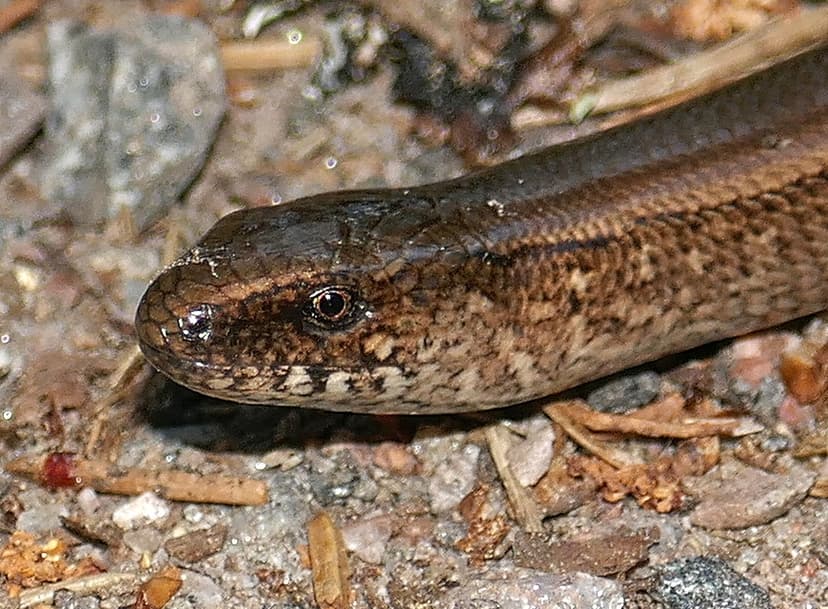
Slow worm
The common slow worm (Anguis fragilis) is a legless lizard native to Europe, often mistaken for a snake or worm. It is characterized by its smooth, non-overlapping scales, small, functional eyes with eyelids, and a long, slender body. These non-venomous reptiles are semifossorial, spending much of their time burrowing or hiding under objects in moist environments.
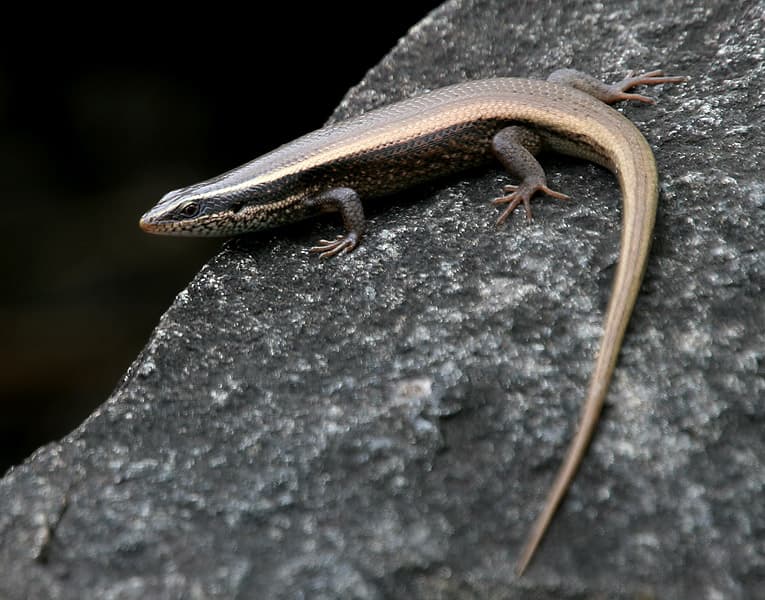
Bronze mabuya
The bronze grass skink, also known as the bronze mabuya or speckled forest skink, is a common but shy, ground-dwelling lizard found across South and Southeast Asia. It inhabits various environments including forests, grasslands, and rocky areas, and is characterized by its cylindrical body, keeled dorsal scales, and distinctive dorso-lateral bands. This skink is an insectivore, active both day and night, and plays a role in its ecosystem by consuming invertebrates.

Cyprus rock agama
The Cyprus rock agama is a species of agamid lizard endemic to the island of Cyprus. It inhabits a variety of rocky environments, from arid to Mediterranean habitats, and has adapted well to human presence in towns and agricultural areas. This diurnal lizard is primarily insectivorous but also consumes small vertebrates and fruits.