
Trioceros
Trioceros is a genus of chameleons native to various African regions, from Ethiopia to Mozambique and Ghana. These lizards exhibit significant diversity in appearance and size, with many species featuring unique cranial or dorsal ornaments like horns, crests, or spines, primarily in males. They are known for both oviparous and viviparous reproductive strategies, the latter likely an adaptation to cooler highland climates.
Key Facts
- ›Native to lowlands and highlands across mainland Africa.
- ›Many species possess unique ornaments such as horns, crests, or spines.
- ›Features both egg-laying (oviparous) and live-bearing (viviparous) species.
- ›Viviparity is possibly an adaptation to cooler highland environments.
- ›Was previously considered a subgenus of Chamaeleo before 2009.

Ethiopia, Mozambique, Ghana, African Mainland
- Vary Greatly In Appearance and Size.
- Many Species Possess Ornaments Such As One To Four Horns On the Head, Crests On the Nape Or Throat, Or Spines Or Sail-Like Structures On the Top of the Back Or Tail.
- Ornaments Are Primarily Found In Adult Males, Generally Reduced Or Absent In Females.
- Some Species Lack Conspicuous Ornaments In Both Sexes.
- Horns, When Present, Can Be Cylindrical, Annulated, and Bony.
About Trioceros
The genus Trioceros encompasses a diverse group of chameleons found across the African mainland. These lizards inhabit a range of environments, from lowlands to highlands, with their distribution extending from Ethiopia south to Mozambique and westward to Ghana. Historically considered a subgenus of Chamaeleo, Trioceros was elevated to full genus status in 2009.
Physical Characteristics and Diversity
A hallmark of the Trioceros genus is the significant variation in physical appearance and size among its species. Many exhibit striking adornments, predominantly in adult males, which can include one to four horns on the head, distinctive crests along the nape or throat, or impressive spines and sail-like structures along the back or tail. While these ornaments are often reduced or absent in females, some species lack conspicuous decorative features in both sexes. A unique characteristic within the chameleon family is the presence of cylindrical, annulated, and bony horn-like structures found in certain Trioceros species.
Reproduction and Adaptation
Trioceros displays a fascinating duality in reproductive strategies. Some species are oviparous, laying eggs like most other chameleons, while others are viviparous, giving birth to live young. This live-bearing trait is particularly notable and is believed to be an adaptation to the cooler temperatures found in the highland regions where these species often reside. By retaining eggs within the body until birth, females can actively regulate their temperature through sun-basking, thereby facilitating embryonic development in challenging climates.
Source: Wikipedia ↗
Frequently Asked Questions
What is the genus Trioceros?
Trioceros is a genus of lizards belonging to the chameleon family (Chamaeleonidae). They are found in various habitats across mainland Africa, from Ethiopia to Mozambique and west to Ghana.
What are some distinctive physical features of Trioceros lizards?
Trioceros species vary greatly in appearance and size. Many exhibit ornamental features like one to four horns on the head, crests on the nape or throat, or spines or sail-like structures on their back or tail, which are most prominent in adult males.
How do Trioceros lizards reproduce?
This genus includes species that lay eggs (oviparous) and species that give birth to live young (viviparous). The live-bearing strategy is thought to be an adaptation to the cooler temperatures found in highland environments.
Where are Trioceros lizards geographically distributed?
Trioceros lizards are found in lowlands and highlands across the African mainland. Their range extends from Ethiopia in the east, south to Mozambique, and west as far as Ghana.
Are there any unique characteristics of Trioceros horns?
While horn-like structures are found in other chameleon genera, Trioceros is unique in that its horns can be cylindrical, annulated, and bony.
Related Lizards
Phelsuma barbouri
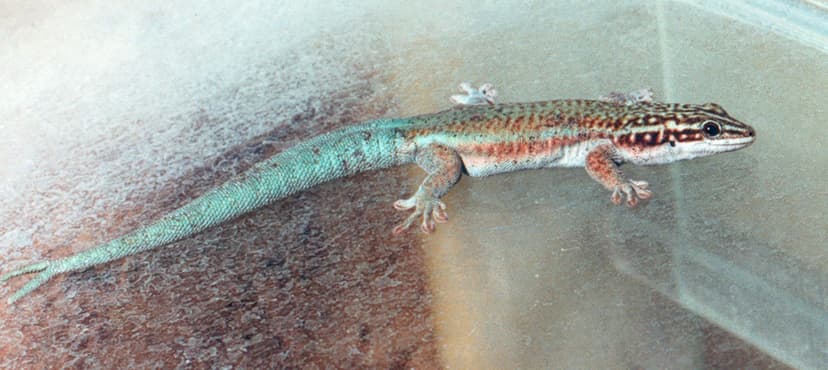
Barbour's day gecko (Phelsuma barbouri) is a middle-sized lizard endemic to central Madagascar. This diurnal species is characterized by its brownish-green to dark green body with distinct dark brown stripes and typically dwells on rocks in harsh highland environments. It feeds on insects and nectar and is known to live in small groups.

Phrynosomatidae
The Phrynosomatidae are a diverse family of lizards native to North America, ranging from Panama to southern Canada. Many species inhabit arid desert environments, particularly hot, sandy deserts, though some prefer rocky terrain or even moist forest edges. This family includes both egg-laying (oviparous) and live-bearing (viviparous) species, with the latter being more prevalent at higher altitudes.
Andaman day gecko
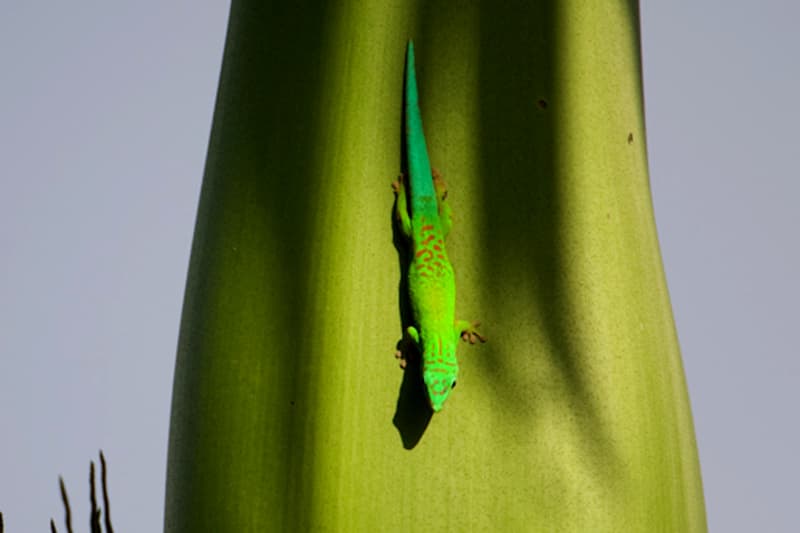
The Andaman day gecko is a small, slender lizard endemic to the Andaman Islands of India, recently introduced to the Nicobar Islands. It is characterized by its bright green coloration, red dots and stripes on its back, and a reddish-brown stripe from its nostrils to its ears. This generalist species thrives in domestic gardens and on various plants, demonstrating a rare benefit from human-induced environmental changes.