
Jerdon's snake-eye
Jerdon's snake-eye is a small lizard species native to South Asia, known for its distinctive pale golden lateral streaks bordered with black. This lacertid lizard inhabits arid and semi-arid regions, playing a role in the local ecosystem. It is oviparous, laying eggs as its primary method of reproduction.
Key Facts
- ›Native to India, Pakistan, and eastern Afghanistan.
- ›Characterized by coppery-brown coloration with two pale golden lateral streaks bordered by black.
- ›Possesses large, strongly keeled dorsal scales.
- ›Reproduction is oviparous, meaning they lay eggs.
- ›The hind limb length varies between males and females.

Jerdon's Cabrita, Jerdon's Snake-Eye, Punjab Snake-Eyed Lacerta
India, Pakistan, Afghanistan
- Head Is Moderate and Feebly Depressed.
- Upper Head-Shields Are Rugose, Keeled, and Striated.
- Dorsal Scales Are Large, Strongly Keeled, and Imbricate.
- Coloration Is Coppery-Brown Above With Two Pale Golden Lateral Streaks Bordered With Black.
- A Series of Large Black Spots May Be Present Between the Lateral Streaks.
- Lower Surfaces Are Yellowish White.
- Tail Is 1.5 To 2 Times the Length of the Head and Body.
- Snout To Vent Length Can Be Around 42 mm .
- Tail Length Can Be Around 81 mm .
Insects, Small Invertebrates
- Hind Limb Reaches the Shoulder Or Halfway To the Ear In Males, Not To the Axilla In Females.
About Jerdon's snake-eye
Jerdon's snake-eye, scientifically known as Ophisops jerdonii, is a species of lizard belonging to the Lacertidae family. This reptile is native to the arid and semi-arid regions of South Asia, with its natural range encompassing India, Pakistan, and parts of eastern Afghanistan. It is also recognized by common names such as Jerdon's cabrita and the Punjab snake-eyed lacerta.
Physical Characteristics and Habitat
The lizard is characterized by a coppery-brown coloration on its upper body, distinguished by two pale golden lateral streaks that are bordered with black. A distinguishing feature is the presence of large, strongly keeled dorsal scales, which are imbricate. The tail is notably long, typically measuring between one and a half to twice the length of the head and body combined. Adult specimens have been recorded with snout-to-vent lengths around 42 mm and tail lengths approximately 81 mm.
Reproduction and Behavior
Jerdon's snake-eye is oviparous, meaning it reproduces by laying eggs. The hind limb length exhibits sexual dimorphism, reaching the shoulder or halfway to the ear in males, but not extending to the axilla in females. While detailed behavioral traits are not extensively documented, its physical adaptations suggest it is well-suited to its terrestrial, dry habitat.
Taxonomy and Etymology
The species name, jerdonii, honors the British biologist Thomas C. Jerdon. It falls under the family Lacertidae, a diverse group of lizards commonly known as wall lizards or true lizards.
Source: Wikipedia ↗
Frequently Asked Questions
What are the common names for Ophisops jerdonii?
Jerdon's snake-eye is also commonly known as Jerdon's cabrita and the Punjab snake-eyed lacerta. These names reflect its appearance and geographical association.
Where is Jerdon's snake-eye found geographically?
This lizard species has a natural range that includes India, Pakistan, and extends into eastern Afghanistan. It is primarily found in South Asia.
What does Jerdon's snake-eye look like?
It typically has a coppery-brown upper body marked with two pale golden lateral streaks, each edged in black. The scales are large and strongly keeled, and the tail is significantly longer than the head and body.
How does Jerdon's snake-eye reproduce?
Jerdon's snake-eye is oviparous, which means it reproduces by laying eggs. This is a common reproductive strategy among many lizard species.
What are the dimensions of an adult Jerdon's snake-eye?
Adult specimens have been recorded with a snout-to-vent length of approximately 42 mm (1.65 inches) and a tail length of around 81 mm (3.2 inches).
Are there any unique features in its description?
The description notes specific details about its head shields, nostril placement, and the presence of femoral pores, with 7 to 11 pores on each side. The hind limb length also differs between males and females.
Related Lizards
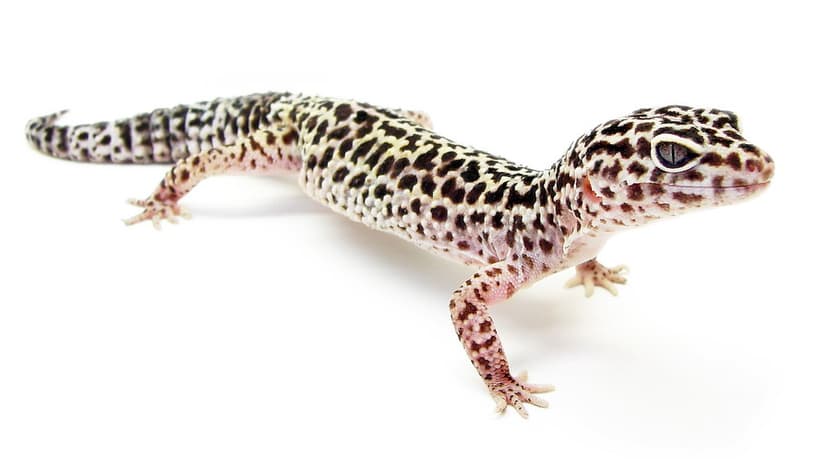
Common leopard gecko
The common leopard gecko (Eublepharis macularius) is a ground-dwelling lizard native to the arid regions of South Asia, including Afghanistan, Pakistan, India, and Nepal. Known for its distinctive spotted patterns and thick, fat-storing tail, it is a popular pet, often considered the first domesticated lizard species. These geckos are primarily nocturnal and opportunistic predators, feeding on invertebrates and small vertebrates.
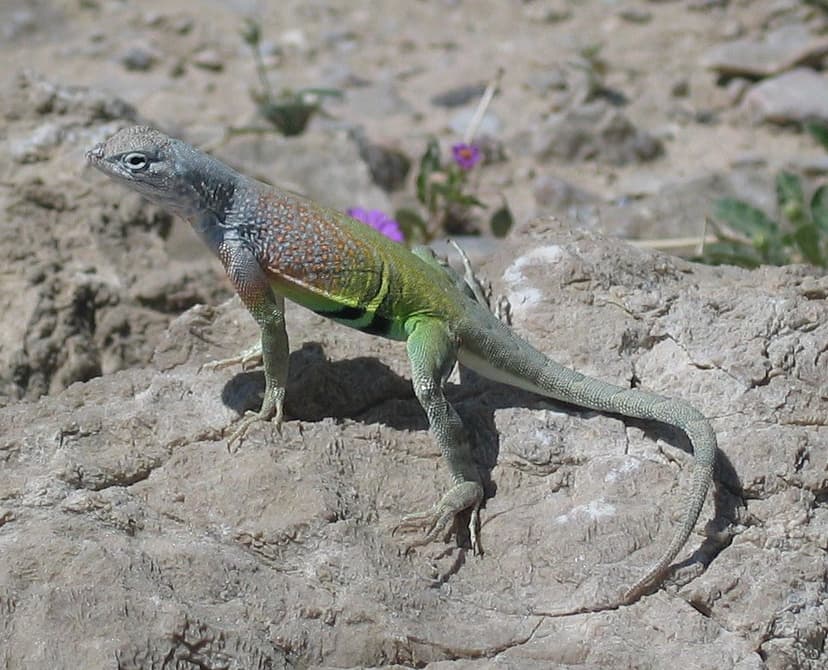
Cophosaurus texanus
The greater earless lizard (Cophosaurus texanus) is a medium-sized lizard native to arid and semi-arid regions of the southwestern United States and northern Mexico. It is distinguished by its lack of external ear openings, an adaptation for burrowing, and exhibits notable sexual dimorphism, with males being larger and more vibrantly colored than females. These lizards are primarily insectivores and rely on camouflage and speed to evade predators.

Ctenotus pantherinus
The leopard ctenotus (Ctenotus pantherinus) is a skink species found in the arid and semi-arid regions of central and western Australia. It is characterized by its brown or grey coloration with distinctive yellow/white spots outlined in black, and a tail nearly as long as its body. This fast-growing species is an insectivore, primarily feeding on termites and their larvae, and is oviparous, laying clutches of 4-7 eggs.