
Kinyongia xenorhina
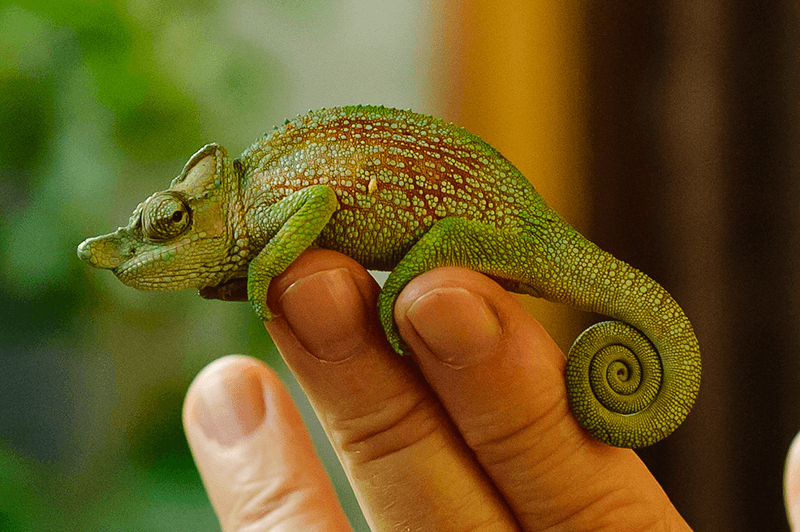
The strange-horned chameleon (Kinyongia xenorhina) is a distinctive species found in the rainforests of the Rwenzori Mountains. It is easily recognized by a prominent, plate-like protuberance on its snout, especially in males, and a high casque. These chameleons are typically olive to brown and possess exceptionally long claws and sharp "teeth".
Key Facts
- ›Native to the Rwenzori Mountains in Uganda and the Democratic Republic of the Congo.
- ›Males have a prominent, plate-like protuberance on their snout.
- ›Possesses a very high casque and scales on the head and casque are enlarged and plate-like.
- ›Coloration ranges from olive to brown, with males tending towards olive and females towards brown.
- ›Can reach a total length of up to 28 cm (11 inches).
- ›Features among the sharpest "teeth" and longest claws of any chameleon.
Rwenzori Plate-Nosed Chameleon, Single Welded-Horn Chameleon
Uganda, Democratic Republic of the Congo
- Large Protuberance Extending From the Top of the Snout, Particularly Prominent In Males.
- Snout Protuberance Composed of Two Separate Plates Extending Outwards and Merging At the End.
- Very High Casque .
- Head and Casque Covered With Enlarged, Plate-Like Scales.
- Olive To Brown In Color, With Males Tending Towards Olive and Females Towards Brown.
- Can Reach A Total Length of 28 cm .
- Possesses Among the Sharpest "Teeth" and Longest Claws of Any Chameleon Species.
Insectivorous .
Rarely Bred In Captivity.
Habitat Loss, Overcollection For Live Animal Trade
About Kinyongia xenorhina
The Strange-Horned Chameleon
The strange-horned chameleon, scientifically known as Kinyongia xenorhina, is a remarkable species of chameleon native to the humid rainforests of the Rwenzori Mountains, straddling the borders of western Uganda and eastern Democratic Republic of the Congo. This reptile is most readily identified by its extraordinary facial appendage: a prominent, horn-like protuberance extending from its snout. This feature is particularly pronounced in males and is composed of two distinct plates that fuse at their extremities, a characteristic that has also earned it the common name "single welded-horn chameleon."
Physical Characteristics
Beyond its distinctive nasal horn, the strange-horned chameleon possesses a very high casque, a helmet-like structure at the back of its skull. Both its head and casque are adorned with enlarged, plate-like scales, contributing to its unique appearance. The species exhibits a coloration ranging from olive to brown, with males typically displaying more olive tones and females leaning towards brown. Adults can reach a total length of up to 28 cm (11 inches). Anatomically, they are notable for possessing some of the sharpest "teeth" and longest claws found among chameleon species.
Habitat and Conservation
Kinyongia xenorhina is primarily found within its specialized rainforest habitat in the Rwenzori Mountains. A significant portion of the current population is protected within the Rwenzori Mountains National Park. However, the species faces considerable threats. Suitable forest habitat has diminished considerably outside the park's boundaries, and even within the park, habitat destruction is an ongoing concern. Furthermore, the species is vulnerable to overcollection for the live animal trade, although this is not a major issue at present. Consequently, the International Union for Conservation of Nature (IUCN) classifies the strange-horned chameleon as "near threatened."
Source: Wikipedia ↗
Frequently Asked Questions
What is the most distinctive physical feature of the strange-horned chameleon?
The most striking feature of the strange-horned chameleon is the large protuberance extending from the top of its snout. This feature is particularly noticeable in males and is formed by two separate plates that merge at the tip.
Where does the strange-horned chameleon live?
This species is native to the rainforests of the Rwenzori Mountains, located in western Uganda and eastern Democratic Republic of the Congo. Much of its current population resides within the Rwenzori Mountains National Park.
What is the size of a strange-horned chameleon?
Strange-horned chameleons can grow to a total length of approximately 28 cm (11 inches). They also possess notably sharp "teeth" and exceptionally long claws compared to other chameleon species.
What are the conservation concerns for Kinyongia xenorhina?
The species is considered near threatened by the IUCN due to habitat loss, which is occurring both inside and outside of the national park. Overcollection for the live animal trade is also a potential threat, although it is not heavily traded at present.
What colors are strange-horned chameleons?
Their coloration is generally olive to brown. Males tend to have a more olive hue, while females are typically more brown.
Related Lizards

Brookesia betschi
Brookesia betschi, also known as Blanc's leaf chameleon or the Marojejy leaf chameleon, is a small lizard species endemic to the forests of northern Madagascar. This diurnal reptile relies on its cryptic coloration for camouflage and inhabits subhumid forests at high altitudes. It is oviparous and faces threats from habitat destruction.
Calumma parsonii
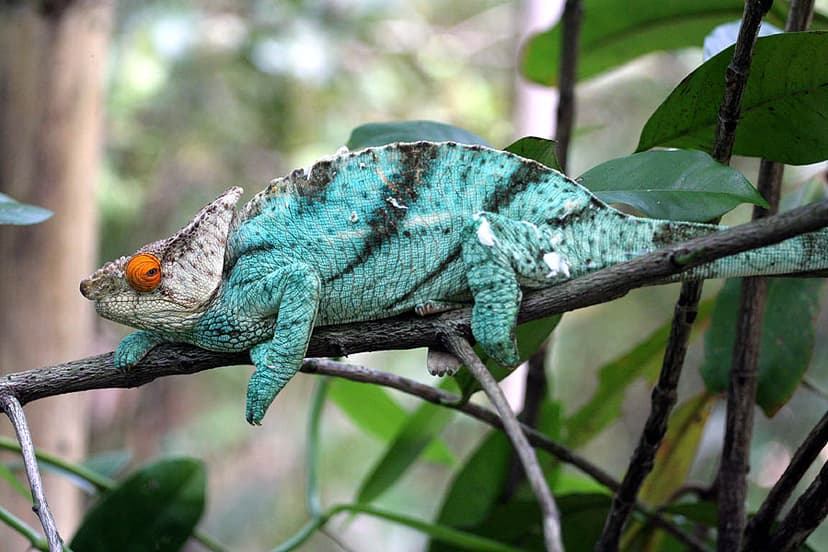
Parson's chameleon (Calumma parsonii) is one of the world's largest chameleons, known for its impressive size, longevity, and slow reproductive rate. Primarily found in the humid primary forests of eastern and northern Madagascar, this species exhibits striking color variations in males and is a slow-moving, sit-and-wait predator. Despite its protected status and large range, it faces threats from habitat loss and the pet trade.

Chalcides bedriagai
Chalcides bedriagai, commonly known as Bedriaga's skink, is a small lizard endemic to the Iberian Peninsula. It typically inhabits sandy areas with sparse vegetation or open woodlands, burrowing into loose soil for shelter. This timid, diurnal species is characterized by its elongated body, short limbs, and a tail that can be regenerated if broken.