
Latast's snake skink
Lataste's snake skink, scientifically known as Ophiomorus latastii, is a limbless lizard native to the Near East. This species inhabits dry shrubland and Mediterranean-type vegetation. Its most distinctive physical feature is its complete lack of limbs, giving it a snake-like appearance.
Key Facts
- ›It is a limbless species of skink.
- ›Native to the near East, including Israel, Jordan, and Syria.
- ›Inhabits subtropical or tropical dry shrubland and Mediterranean-type shrubby vegetation.
- ›Possesses a conical snout.
- ›Reproduction is viviparous (live-bearing).
- ›Threatened by habitat loss.

Lataste's Snake Skink, Latast's Snake Skink
Israel, Jordan, Occupied Palestinian Territories, Syria, Lebanon
Subtropical Dry Shrubland, Tropical Dry Shrubland, Mediterranean-Type Shrubby Vegetation
Limbless Lizard., Conical Snout., 16 Scale Rows Around the Body At Midbody.
Habitat Loss
About Latast's snake skink
Lataste's Snake Skink
Lataste's snake skink, scientifically identified as Ophiomorus latastii, is a unique species of skink belonging to the subfamily Scincinae within the family Scincidae. This lizard is notable for its limbless form, which gives it a serpentine appearance, and its native range in the Near East.
Distribution and Habitat
The natural habitats of O. latastii are found across several countries in the Near East, including Israel, Jordan, the Occupied Palestinian territories, and Syria. There is also a possibility of its presence in Lebanon. The species thrives in subtropical or tropical dry shrubland and Mediterranean-type shrubby vegetation, environments that offer suitable conditions for its survival and concealment.
Physical Characteristics
The most striking physical attribute of Lataste's snake skink is its complete lack of limbs. It possesses a distinctly conical snout and exhibits 16 scale rows around its body when measured at midbody. These features contribute to its specialized morphology and lifestyle.
Reproduction and Conservation
Ophiomorus latastii is a viviparous species, meaning it gives birth to live young rather than laying eggs. This reproductive method is a key aspect of its life cycle. Unfortunately, the species faces threats, with habitat loss being a significant concern. Conservation efforts are crucial to protect its populations and the fragile ecosystems it inhabits.
Source: Wikipedia ↗
Frequently Asked Questions
What is the scientific name for Lataste's snake skink?
The scientific name for Lataste's snake skink is Ophiomorus latastii. This binomial nomenclature is used by scientists to classify and identify the species.
Where can Lataste's snake skink be found?
Lataste's snake skink is found in the Near East. Its natural geographic range includes Israel, Jordan, Occupied Palestinian territories, and Syria, with possible presence in Lebanon.
What kind of habitat does Lataste's snake skink prefer?
This species prefers subtropical or tropical dry shrubland and Mediterranean-type shrubby vegetation. These environments provide suitable cover and conditions for survival.
What are the distinctive physical characteristics of Lataste's snake skink?
The most notable characteristic of Lataste's snake skink is that it is limbless, giving it a snake-like appearance. It also features a conical snout and has 16 scale rows around its body at midbody.
How does Lataste's snake skink reproduce?
Lataste's snake skink is viviparous, meaning it gives birth to live young rather than laying eggs. This reproductive strategy is shared by some other lizard species.
What are the main threats to Lataste's snake skink?
The primary threat to the survival of Lataste's snake skink is habitat loss. This loss of suitable environments can reduce populations and make them more vulnerable.
Related Lizards

Be'er Sheva fringe-fingered lizard
The Be'er Sheva fringe-fingered lizard is a critically endangered lizard endemic to the loess scrublands of the Negev desert in Israel. Characterized by its changing tail color from bright blue at birth to brownish-gray in adulthood, this species faces significant population decline due to habitat destruction and an ecological trap created by conservation efforts. Its small, fragmented populations are vulnerable to predation and human-induced environmental changes.
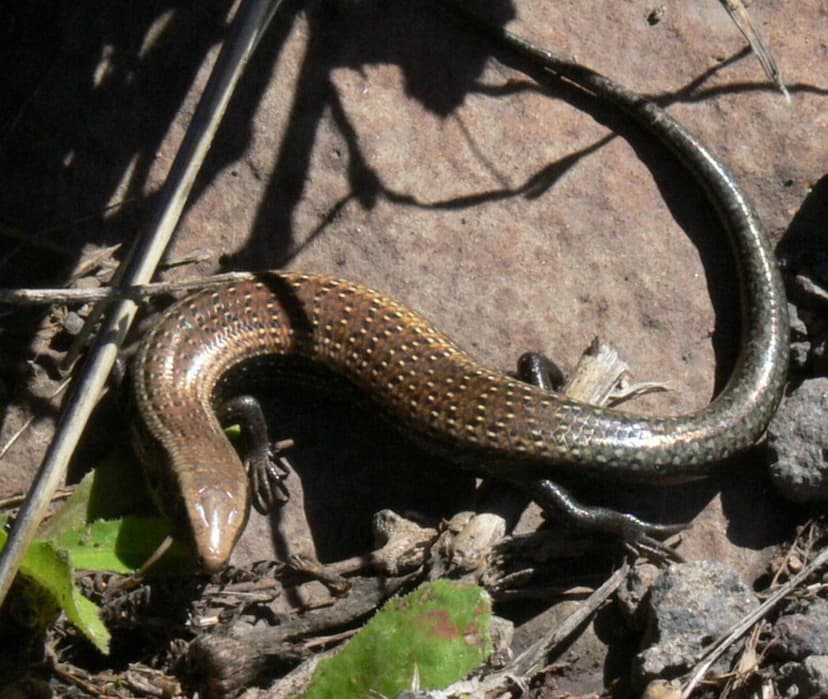
Chalcides viridanus
The West Canary skink, scientifically known as Chalcides viridanus, is a species of lizard endemic to the Canary Islands. This skink inhabits a diverse range of environments, from temperate forests and grasslands to urban areas, and can be found at elevations up to 2,000 meters. It is characterized by its cylindrical body and can reach a total length of approximately 18 cm.
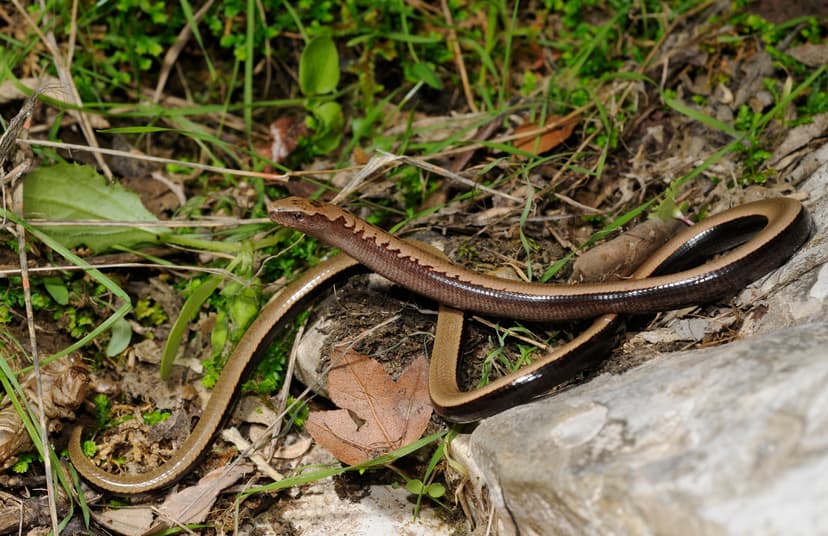
Peloponnese slowworm
The Peloponnese slow worm (Anguis cephallonica) is a legless lizard endemic to specific regions of Greece, including the Peloponnese peninsula and the Ionian islands of Cephalonia, Ithaca, and Zakynthos. This species is distinguished by a higher number of scale rows around its body and a unique chocolate-brown lateral stripe, and it gives birth to live young.