
Laudakia nupta
Laudakia nupta, commonly known as the large-scaled rock agama, is a species of lizard native to western Asia, specifically found in Iraq, Iran, Afghanistan, and Pakistan. This species is characterized by its large size, heavy head, and vertebral enlarged scales along its back. It primarily inhabits rocky areas with crevices and man-made structures, and its diet consists mainly of plants, though one subspecies is known to be omnivorous.
Key Facts
- ›Native to Iraq, Iran, Afghanistan, and Pakistan.
- ›Has two subspecies: Laudakia nupta nupta and Laudakia nupta fusca.
- ›Characterized by a large size, heavy head, and prominent vertebral scales.
- ›Reproduces by laying eggs (oviparous).
- ›Primarily herbivorous, with one subspecies being omnivorous.
- ›Inhabits rocky outcrops and man-made structures.
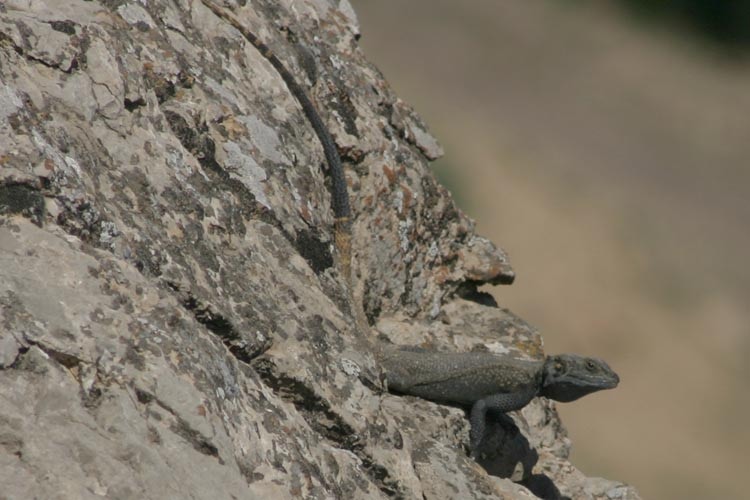
Large-Scaled Agama, Large-Scaled Rock Agama, Yellow-Headed Rock Agama
Iraq, Iran, Afghanistan, Pakistan
Rocky Outcrops, Limestone Rocks, Man-Made Structures, Old Buildings, Mud-Brick Homes
- Large Sized Lizard.
- Heavy Head.
- Nostrils On the Canthus Rostralis.
- Moderately Depressed Body.
- Vertebral Enlarged Scales Covering Most of the Lizard's Back.
- Long Tail With Segments of Three Whorls.
- Subspecies L. Nupta Nupta Is Yellowish Or Reddish Brown.
- Subspecies L. Nupta Nupta Has Strongly Keeled Vertebral Enlarged Scales.
- Subspecies L. Nupta Fusca Has No Nuchal Fold.
- Subspecies L. Nupta Fusca Has Strongly Mucronate Vertebral Enlarged Scales.
Plants, Daphne Oleoides, Beetles, Ants
Not Specified In Text
About Laudakia nupta
Laudakia nupta, commonly known as the large-scaled rock agama, is a species of lizard indigenous to western Asia. Described in 1843, it is recognized for its substantial size and distinctive physical characteristics. The species is divided into two subspecies: Laudakia nupta nupta and Laudakia nupta fusca.
Physical Characteristics
This lizard is characterized by its large size, a heavy head, and nostrils positioned on the canthus rostralis. Its body is moderately flattened, and its back is adorned with enlarged vertebral scales. The tail is notably long and segmented into three distinct whorls. The subspecies L. nupta nupta typically presents with yellowish or reddish-brown coloration and possesses strongly keeled vertebral scales. In contrast, L. nupta fusca lacks a nuchal fold and features strongly mucronate vertebral scales.
Habitat and Distribution
Laudakia nupta is primarily found across Iraq, Iran, Afghanistan, and Pakistan. It favors habitats that include large limestone rocks and outcrops featuring deep crevices, providing ample shelter. Additionally, these lizards have adapted to human-altered environments, often inhabiting man-made structures such as old buildings and mud-brick homes.
Diet and Reproduction
The diet of Laudakia nupta consists mainly of plants. However, the subspecies L. nupta fusca exhibits omnivorous tendencies, supplementing its plant-based diet with insects like beetles and ants. Reproduction in Laudakia nupta is oviparous, meaning they reproduce by laying eggs.
Source: Wikipedia ↗
Frequently Asked Questions
What are the common names for Laudakia nupta?
Laudakia nupta is commonly referred to as the large-scaled agama or large-scaled rock agama. The subspecies Laudakia nupta fusca is specifically known as the yellow-headed rock agama.
Where is Laudakia nupta found?
This lizard species is typically found in western Asia. The subspecies Laudakia nupta nupta inhabits eastern Iraq, Iran, Afghanistan, and Pakistan, while Laudakia nupta fusca is found in southern Pakistan and southern Iran.
What does Laudakia nupta eat?
Plants form the primary food source for Laudakia nupta. The subspecies Laudakia nupta fusca is known to be omnivorous, consuming plants, beetles, and ants.
What kind of habitat does Laudakia nupta prefer?
Laudakia nupta typically resides in areas with large limestone rocks and outcrops that feature deep crevices. They are also found in man-made structures such as mud-brick homes and old buildings.
How does Laudakia nupta reproduce?
Laudakia nupta reproduces by laying eggs, a method known as oviparous reproduction.
What are the key physical features of Laudakia nupta?
Laudakia nupta is a large lizard with a heavy head and nostrils located on the canthus rostralis. Its body is moderately flattened, and it possesses vertebral enlarged scales along most of its back. It also has a long tail with distinct segments.
Related Lizards
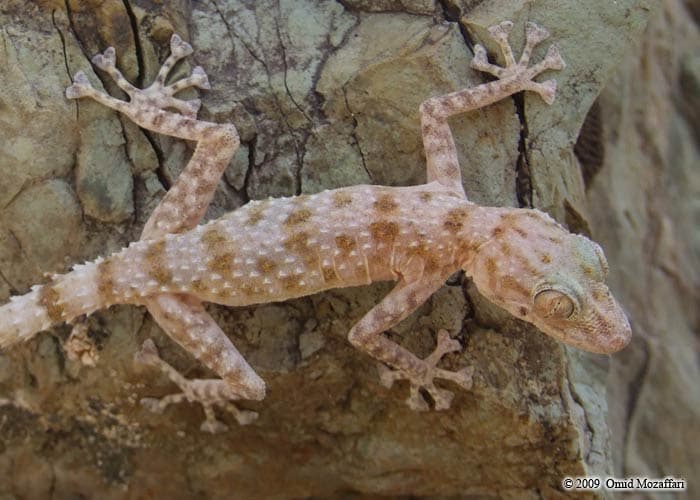
Werner's leaf-toed gecko
Werner's leaf-toed gecko, also known as Elisa's leaf-toed gecko, is a small gecko species native to the Middle East. It inhabits rocky areas with sparse vegetation, often found at altitudes between 150 and 1,000 meters, and can also be found in caves and old ruins. This oviparous lizard is characterized by its keeled dorsal tubercles and a thin tail longer than its body.

Allison's anole
Allison's anole, also known as the Cuban blue anole, is a lizard species endemic to Cuba and surrounding islands, with introduced populations in southern Florida. This diurnal species is characterized by its bright blue head and forelegs in males and its ability to change color to brown. They are typically found on palm trunks and are known for their communal nesting behavior.
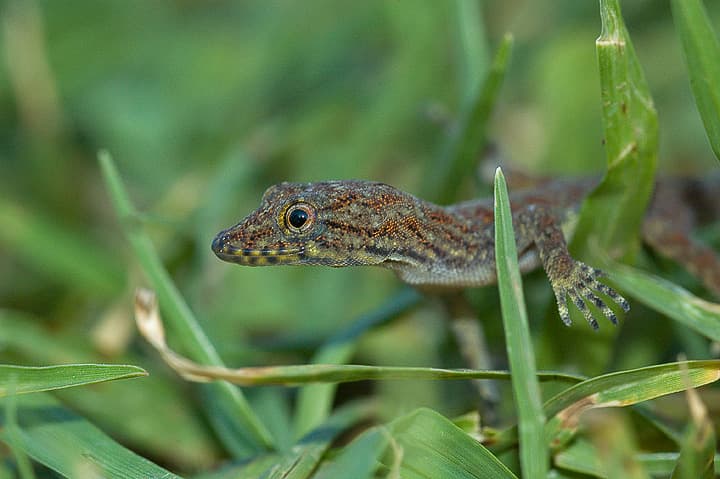
Rough-bellied day gecko
The rough-bellied day gecko is a species of day geckos found in the Western Ghats of India and Sri Lanka. This diurnal and crepuscular lizard is characterized by its distinct head, elongated snout, and keeled ventral scales, with a dark-brown dorsal side featuring variegated patterns. It inhabits rocky substrates and low tree trunks, occasionally venturing into human-made structures.