
Werner's leaf-toed gecko
Werner's leaf-toed gecko, also known as Elisa's leaf-toed gecko, is a small gecko species native to the Middle East. It inhabits rocky areas with sparse vegetation, often found at altitudes between 150 and 1,000 meters, and can also be found in caves and old ruins. This oviparous lizard is characterized by its keeled dorsal tubercles and a thin tail longer than its body.
Key Facts
- ›Native to the Middle East, including parts of Turkey, Syria, Iraq, and Iran.
- ›Prefers rocky habitats with limited vegetation, but also found in caves and ruins.
- ›Has strongly keeled dorsal tubercles and a thin tail that exceeds its snout-to-vent length.
- ›Reproduction is oviparous, with females laying at least two clutches per year, each containing one or two eggs.
- ›Found at altitudes ranging from 150 to 1,000 meters above sea level.
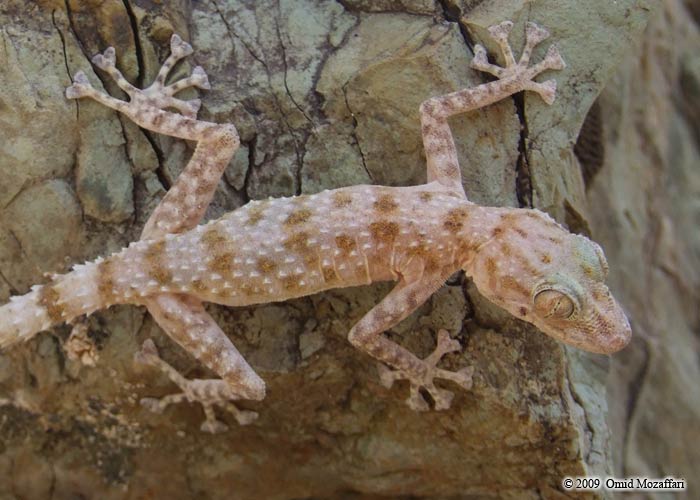
Elisa's Leaf-Toed Gecko, Werner's Leaf-Toed Gecko
Turkey, Syria, Iraq, Iran
May Attain A Snout-To-Vent Length of 5.7 cm ., Possesses Strongly Keeled Dorsal Tubercles., Has A Thin Tail That Is Longer Than Its Svl.
About Werner's leaf-toed gecko
Werner's leaf-toed gecko, scientifically designated as Asaccus elisae and also known as Elisa's leaf-toed gecko, is a species of gecko native to the Middle East. This lizard belongs to the family Phyllodactylidae and is recognized for its adaptation to arid and rocky environments.
Habitat and Distribution
The species is found across a range that includes southeastern Anatolia in southern Turkey, extending eastward into Syria, Iraq, and western Iran. Werner's leaf-toed gecko typically inhabits rocky terrains characterized by sparse vegetation. It has been recorded at altitudes ranging from 150 to 1,000 meters above sea level. In addition to its preferred rocky habitats, the species has also been observed in caves and within the ruins of old buildings and houses in Iran.
Physical Characteristics and Reproduction
Adult Werner's leaf-toed geckos can reach a snout-to-vent length of up to 5.7 centimeters (2.2 inches). A notable physical attribute is the presence of strongly keeled dorsal tubercles. The gecko possesses a slender tail, which is longer than its snout-to-vent measurement. Reproduction in this species is oviparous, meaning they lay eggs. Adult females are known to lay at least two clutches per year, with each clutch typically containing one or two eggs.
Source: Wikipedia ↗
Frequently Asked Questions
What is Werner's leaf-toed gecko?
Werner's leaf-toed gecko, scientifically known as Asaccus elisae, is a species of gecko belonging to the family Phyllodactylidae. It is a lizard native to the Middle East region.
Where can Werner's leaf-toed gecko be found?
This gecko's geographic range extends across the Middle East. It is found in southern Turkey, eastern Syria, eastern and northern Iraq, and western Iran.
What kind of habitat does Werner's leaf-toed gecko prefer?
Werner's leaf-toed gecko thrives in rocky environments with minimal vegetation. It is also known to inhabit caves and is sometimes found in old buildings and ruins in Iran.
What are the physical characteristics of Werner's leaf-toed gecko?
It can reach a snout-to-vent length of up to 5.7 cm. A distinguishing feature is its strongly keeled dorsal tubercles, and it possesses a thin tail that is longer than its body.
How does Werner's leaf-toed gecko reproduce?
Werner's leaf-toed gecko is oviparous, meaning it lays eggs. Adult females typically lay at least two clutches annually, with each clutch containing one or two eggs.
What is the altitude range for this gecko species?
Werner's leaf-toed gecko is found at elevations between 150 to 1,000 meters (approximately 490 to 3,280 feet) above sea level.
Related Lizards
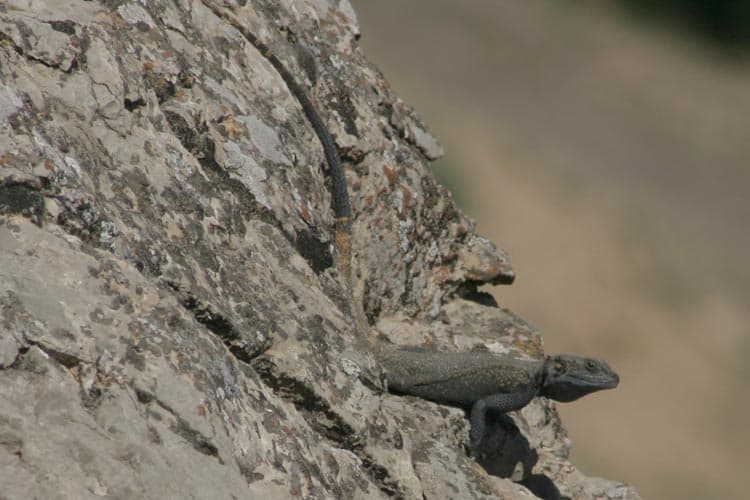
Laudakia nupta
Laudakia nupta, commonly known as the large-scaled rock agama, is a species of lizard native to western Asia, specifically found in Iraq, Iran, Afghanistan, and Pakistan. This species is characterized by its large size, heavy head, and vertebral enlarged scales along its back. It primarily inhabits rocky areas with crevices and man-made structures, and its diet consists mainly of plants, though one subspecies is known to be omnivorous.

Common wall gecko
The common wall gecko, scientifically known as Tarentola mauritanica, is a robust gecko species native to the western Mediterranean region of North Africa and Europe. Characterized by enlarged, tubercules that give it a spiny, armored appearance, this nocturnal insectivore is frequently observed on walls in urban and coastal areas. It has a long history of cohabitation with humans, particularly in Spain, where it acts as an insect hunter.

Cyrtopodion fedtschenkoi
The Turkestan thin-toed gecko, scientifically known as Tenuidactylus fedtschenkoi, is a species of lizard native to Central Asia. This gecko is characterized by its adaptation to vertical surfaces in rocky environments and is oviparous, laying two eggs per clutch. It was named in honor of the Russian naturalist Alexei Pavlovich Fedtschenko.