
Allison's anole
Allison's anole, also known as the Cuban blue anole, is a lizard species endemic to Cuba and surrounding islands, with introduced populations in southern Florida. This diurnal species is characterized by its bright blue head and forelegs in males and its ability to change color to brown. They are typically found on palm trunks and are known for their communal nesting behavior.
Key Facts
- ›Males have bright blue heads and forelegs, while females are generally green.
- ›Both sexes can rapidly change their color to brown.
- ›They are commonly found on the trunks of palm trees.
- ›Females may lay their eggs together in communal nests.
- ›Introduced populations have been documented in southern Florida.

Cuban Blue Anole
Cuba, Bay Islands, Cayos Cochinos, Half Moon Caye, Southern Florida
- Males Have Bright Blue Heads, Forelegs, and Frontal Half of the Body; Females Are Overall Green With Paler Underparts.
- Males Possess A Reddish-Pink Dewlap and A Prominent Nuchal Crest.
- Both Sexes Have White Throats and Can Rapidly Change Color To Brown.
- Features Large Subdigital Toepads For Climbing Vertical Surfaces.
- Males Reach About 10 cm Snout-Vent Length; Females Reach About 7.5 cm Snout-Vent Length.
- Possesses A Large, Conspicuously Triangular-Shaped Head.
Invertebrates
- Diurnal Activity Patterns.
- Often Seen On Palm Trunks.
- Exhibit Communal Nesting Behavior.
- Show Little Fear of Humans In Introduced Populations.
About Allison's anole
Allison's anole, scientifically known as Anolis allisoni, is a striking lizard species recognized for its vibrant coloration and arboreal lifestyle. It is commonly referred to as the Cuban blue anole due to the distinctive bright blue hues that adorn the heads and forelegs of adult males. This species belongs to the carolinensis group of anoles, a lineage of mid-sized lizards thought to have originated in Cuba.
Distribution and Habitat
The natural range of Allison's anole encompasses Cuba, with the exception of its western and far southeastern regions. It has also established populations on the Bay Islands and Cayos Cochinos off the coast of Honduras, as well as Half Moon Caye in Belize. Recently, introduced populations have been documented in southern Florida, where they appear to be thriving and breeding. Allison's anoles are typically found in the canopy and on the upper trunks of tall trees, particularly coconut palms, utilizing their specialized subdigital toepads to cling to vertical surfaces. In more developed areas, they can also be observed on walls and other man-made structures.
Physical Characteristics and Behavior
Adult males are characterized by their bright blue heads and forelegs, a reddish-pink dewlap, and a prominent nuchal crest. Females, while generally green with paler undersides, share the ability with males to rapidly change their color to brown. Males typically reach a snout-to-vent length of about 10 cm, while females are slightly smaller at around 7.5 cm. These lizards are diurnal, meaning they are active during the day. A notable behavioral trait is their communal nesting, where multiple females may lay their eggs together, a behavior uncommon among other anole species. In introduced areas, such as Florida, they have shown little fear of humans, often allowing close proximity and readily climbing on buildings and in yards.
Source: Wikipedia ↗
Frequently Asked Questions
What is Allison's anole commonly known as?
Allison's anole is also commonly referred to as the Cuban blue anole. This name likely stems from the striking blue coloration observed on the heads and forelegs of the males.
Where are Allison's anoles naturally found?
The species is naturally endemic to Cuba, with populations also found on the Bay Islands and Cayos Cochinos off the coast of Honduras, and Half Moon Caye off the coast of Belize. There is also a single, unconfirmed record from Cozumel, Mexico.
What is the typical habitat of Allison's anole?
Allison's anoles are typically found on the trunks and in the canopy of tall trees, especially coconut palms. They are adapted to clinging to vertical surfaces with their large subdigital toepads. In urban environments, they may also be seen on walls and other man-made structures.
How do male and female Allison's anoles differ in appearance?
Males are distinguished by their bright blue heads, forelegs, and the frontal half of their bodies, along with a reddish-pink dewlap. Females are generally green with paler underparts, similar to the American green anole. Both sexes, however, can change their color to brown.
What is unique about the nesting behavior of Allison's anoles?
Allison's anoles are among the few anole species where females may engage in communal nesting. This means multiple females can lay their eggs together in a single nest site.
Are there any introduced populations of Allison's anole?
Yes, Allison's anole has been documented in southern Florida, where it appears to be surviving and breeding. These introduced populations are believed to have originated from eggs accidentally transported with plants from Cuba.
Related Lizards
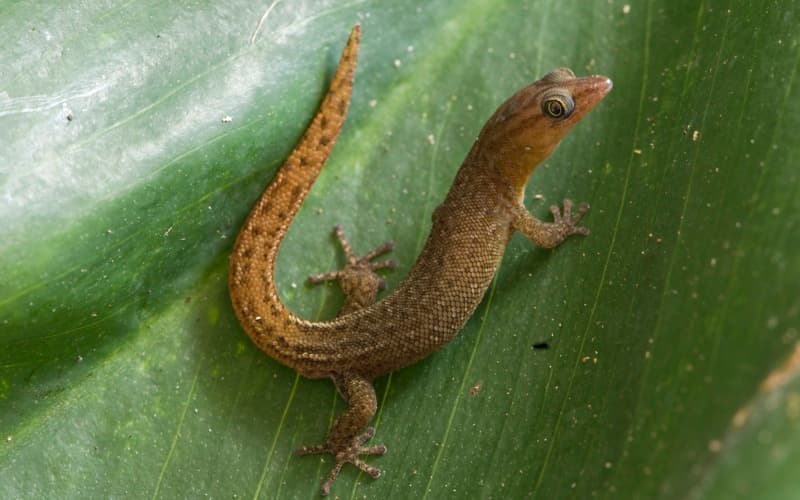
Sphaerodactylus sabanus
The Saba least gecko (Sphaerodactylus sabanus) is a small gecko species endemic to the Lesser Antilles in the Caribbean. It exhibits a range of coloration from light to dark brown, with some individuals displaying dull orange heads and dark brown stripes. This adaptable species inhabits various environments, including forests, palm groves, xeric habitats, and human settlements, and is generally considered to be of least concern for conservation.

Trachylepis quinquetaeniata
The African five-lined skink (Trachylepis quinquetaeniata) is a medium-sized lizard native to north-central Africa, characterized by its glossy scales and distinctive five stripes running from head to tail. Its coloration varies with age, sex, and season, but typically features an olive-brown base with blue, black, and yellowish markings, especially on its bright blue tail. This adaptable species inhabits both rocky and grassland environments, often making its home on trees or man-made structures.
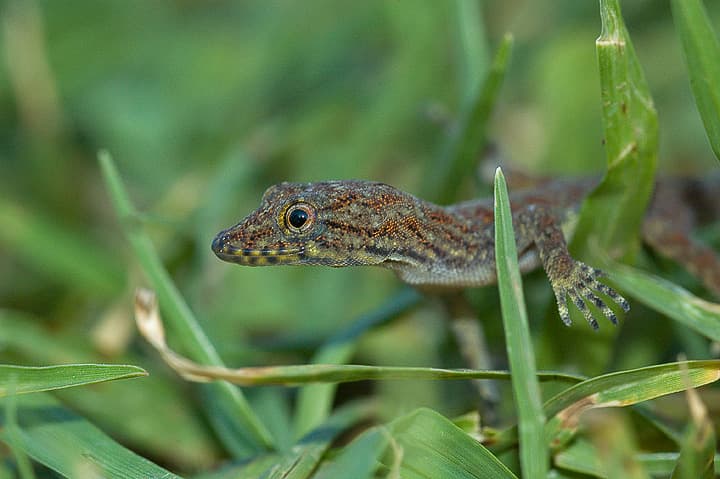
Cnemaspis tropidogaster
The Cnemaspis tropidogaster, also known as the rough-bellied day gecko, is a species of gecko found in the Western Ghats of India and Sri Lanka. This diurnal lizard is characterized by its distinct head, elongated snout, and keeled ventral scales. It inhabits rocky substrates and low tree trunks, and has been rediscovered in the wet zone of Sri Lanka.