
Lepidothyris fernandi
The fire skink (Lepidothyris fernandi) is a large, vibrantly colored lizard native to the tropical forests of West and Central Africa. Known for its striking gold scales and red and black side bars, it is a diurnal, burrowing species that is generally shy. These skinks inhabit humid forest zones and are primarily insectivorous, with a lifespan of 15 to 20 years.
Key Facts
- ›Reaches up to 37 cm (15 in) in total length.
- ›Adorned with VIVID gold scales on its back and red and black bars on its sides.
- ›Native to the humid forest zones of southern West and Central Africa.
- ›Primarily insectivorous, feeding on insects like crickets and larvae.
- ›Oviparous, with females laying clutches of five to nine eggs.
- ›Has a lifespan of 15 to 20 years.

Fernand's Skink, Togo Fire Skink, True Fire Skink, Oloronto
Guinea, Sierra Leone, Gabon, Democratic Republic of the Congo, Nigeria, West Africa, Central Africa
- Fairly Large Skink Species, Reaching Up To 37 cm In Total Length.
- Vivid, Bright Coloration Is A Notable Aspect of Its Appearance.
- Smooth, Gold Scales Adorn the Back.
- Red and Black Bars Are Set Against A Silver Background On Its Sides.
- Does Not Display Obvious Sexual Dimorphism.
- Males Tend To Be Bulkier Than Females With Slightly Flatter Heads and Wider Jaws.
Insects, Larvae, Occasional Pinkie Mouse
Diurnal, Burrows and Hides, Relatively Shy and Reclusive, May Become Tame In Captivity, Not Social, Should Be Kept Alone, Occasional Tendency To Climb
About Lepidothyris fernandi
Fire Skink (Lepidothyris fernandi)
The fire skink, scientifically known as Lepidothyris fernandi, is a striking lizard species found in the tropical forests of West and Central Africa. This relatively large skink is renowned for its brilliant coloration, featuring smooth gold scales on its back and distinctive red and black bars along its sides, set against a silver background. It can grow up to 37 cm (15 inches) in total length.
Habitat and Distribution
Lepidothyris fernandi inhabits the humid forest zones of southern West and Central Africa, with its natural range extending from Guinea and Sierra Leone eastward to Gabon and the Democratic Republic of the Congo. It prefers environments that offer ample opportunities for burrowing and hiding.
Diet and Behavior
As a diurnal species, the fire skink is active during the day. Its diet consists primarily of insects, such as crickets and mealworms, though some keepers may offer an occasional pinkie mouse. Despite being described as shy and reclusive, fire skinks can become tame when kept in captivity. They require a moist and humid environment with plenty of ground cover and a loose substrate for burrowing.
Reproduction and Lifespan
The fire skink is oviparous, meaning it reproduces by laying eggs. A female typically lays a clutch of five to nine eggs, which hatch after an incubation period of 40 to 50 days at around 29°C (85°F). These lizards have a lifespan of approximately 15 to 20 years in both natural and captive environments.
Source: Wikipedia ↗
Frequently Asked Questions
What is the fire skink also known as?
The fire skink is also commonly referred to as Fernand's skink, the Togo fire skink, and the true fire skink. In the Yoruba language, it is known as Oloronto.
Where is the fire skink found geographically?
This species is native to the humid forest zone of southern West and Central Africa, with its range extending from Guinea and Sierra Leone to Gabon and the Democratic Republic of the Congo.
What does the fire skink look like?
The fire skink is notable for its bright coloration. Its back is covered in smooth, gold scales, while its sides are marked with red and black bars against a silver background. Adult individuals can reach up to 37 cm in total length.
What is the diet of the fire skink?
The fire skink is primarily insectivorous, meaning it feeds mainly on insects. Crickets and mealworms are commonly used as food for captive specimens.
How long does a fire skink typically live?
In the wild, the fire skink typically lives between 15 to 20 years. This lifespan can be similar in captivity under proper care.
How does the fire skink reproduce?
The fire skink is oviparous, meaning it lays eggs. After mating, adult females generally lay a clutch of five to nine eggs, which take approximately forty to fifty days to hatch at a temperature of 85°F (29°C).
Is the fire skink social?
No, the fire skink is not a social species and is best kept alone. They are also described as relatively shy and reclusive, though they can become tame in captivity.
Related Lizards
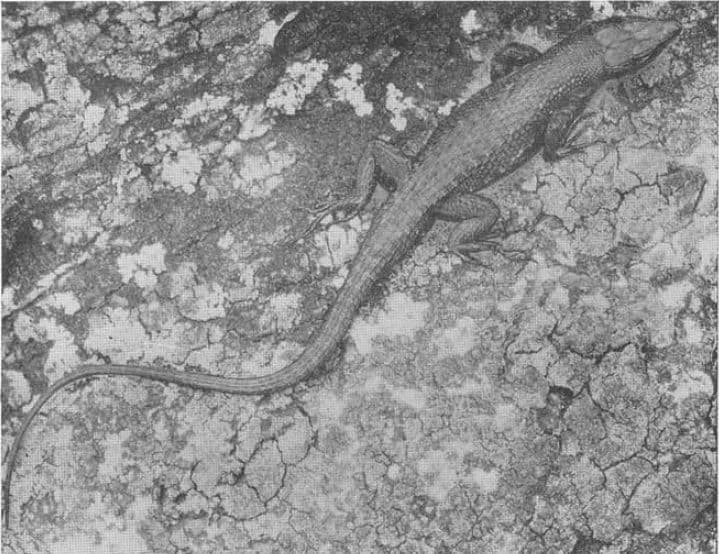
Adolfus africanus
Adolfus africanus, also known as the multi-scaled forest lizard or green-bellied forest lizard, is a species of lizard found in the humid forest zones of Central Africa. Its distribution is disjunct and primarily associated with primary forests, suggesting it is sensitive to deforestation.

Allison's anole
Allison's anole, also known as the Cuban blue anole, is a lizard species endemic to Cuba and surrounding islands, with introduced populations in southern Florida. This diurnal species is characterized by its bright blue head and forelegs in males and its ability to change color to brown. They are typically found on palm trunks and are known for their communal nesting behavior.

Mochlus fernandi
The fire skink (Mochlus fernandi), also known as Fernand's skink, is a large, vibrantly colored lizard native to the tropical forests of West and Central Africa. Renowned for its bright gold, red, and black markings against a silver background, this diurnal species is reclusive and prefers to burrow. It is oviparous, with females laying clutches of five to nine eggs, and typically lives 15 to 20 years.