
Mochlus fernandi
The fire skink (Mochlus fernandi), also known as Fernand's skink, is a large, vibrantly colored lizard native to the tropical forests of West and Central Africa. Renowned for its bright gold, red, and black markings against a silver background, this diurnal species is reclusive and prefers to burrow. It is oviparous, with females laying clutches of five to nine eggs, and typically lives 15 to 20 years.
Key Facts
- ›Reaches up to 37 cm (15 inches) in total length.
- ›Characterized by VIVID gold scales on its back and red and black bars on its sides.
- ›Native to the humid forest zones of southern West and Central Africa.
- ›Diurnal and prefers environments that allow for burrowing.
- ›Oviparous, laying 5-9 eggs per clutch.
- ›Lifespan ranges from 15 to 20 years.

Fernand's Skink, Togo Fire Skink, True Fire Skink, Oloronto
Guinea, Sierra Leone, Gabon, Democratic Republic of the Congo, Nigeria, West Africa, Central Africa
Tropical Forests, Humid Forest Zones
- Fairly Large Skink Species.
- Total Length Up To 37 cm Including Tail.
- Vivid, Bright Coloration.
- Smooth, Gold Scales Adorn the Back.
- Sides Are Lined With Red and Black Bars Against A Silver Background.
- Does Not Display Obvious Sexual Dimorphism.
- Males Tend To Be Bulkier With Slightly Flatter Heads and Wider Jaws.
Insects, Crickets, Larvae, Mealworms, Occasional Pinkie Mouse
Diurnal, Burrows and Hides, Shy and Reclusive, Can Become Tame In Captivity, Not Social, Should Be Kept Alone, Occasional Tendency To Climb
About Mochlus fernandi
The Fire Skink: A Dazzling Reptile of African Forests
The fire skink, scientifically known as Mochlus fernandi, is a striking lizard species belonging to the family Scincidae. It is readily identifiable by its brilliant and vivid coloration, featuring smooth gold scales on its back and distinctive red and black bars against a silver backdrop on its sides. This relatively large skink can reach a total length of up to 37 cm (15 inches).
Habitat and Distribution
This species is native to the humid forest zones of southern West and Central Africa. Its natural range extends across countries such as Guinea, Sierra Leone, Gabon, and the Democratic Republic of the Congo. The fire skink thrives in tropical forest environments.
Behavior and Diet
The fire skink is a diurnal creature, meaning it is active during the day. It is known for its reclusive nature, often burrowing and hiding within its environment. While shy in the wild, they can become accustomed to human presence and tame down when kept in captivity. Their diet is primarily insectivorous, with insects like crickets and larvae such as mealworms forming the bulk of their food intake.
Reproduction and Lifespan
As an oviparous species, the fire skink reproduces by laying eggs. A female typically lays between five and nine eggs in a clutch, which hatch after an incubation period of 40 to 50 days, provided the temperature is maintained around 29°C (85°F). These lizards generally have a lifespan of 15 to 20 years, whether in their natural habitat or in captivity.
Taxonomy and Subspecies
Historically, the fire skink has been placed in various genera, but it is now recognized as belonging to the genus Mochlus. While the name Mochlus fernandi traditionally encompassed a broader range, recent taxonomic reviews suggest it may consist of up to three separate species, with true M. fernandi largely limited to tropical West Africa and the westernmost parts of Central Africa. Two subspecies are recognized: Mochlus fernandi fernandi and Mochlus fernandi harlani.
Source: Wikipedia ↗
Frequently Asked Questions
What are the common names for Mochlus fernandi?
Mochlus fernandi is commonly known as the fire skink. Other names include Fernand's skink, the Togo fire skink, and the true fire skink. In the Yoruba language, it is called Oloronto.
Where is the fire skink found?
The fire skink is native to the humid forest zones of southern West and Central Africa. Its distribution extends from Guinea and Sierra Leone eastward to Gabon and the Democratic Republic of the Congo.
What does the fire skink look like?
This is a fairly large skink, notable for its bright coloration. Its back is adorned with smooth, gold scales, while its sides feature red and black bars against a silver background. It can reach a total length of up to 37 cm (15 inches).
What is the diet of the fire skink?
The fire skink is primarily insectivorous. Its diet consists mainly of insects such as crickets, and larvae like mealworms, especially when kept in captivity.
How long do fire skinks live?
Fire skinks typically have a lifespan of 15 to 20 years. This applies to both their wild existence and when kept in captivity.
What are the reproduction habits of the fire skink?
The fire skink is oviparous, meaning it lays eggs. After mating, an adult female will generally lay a clutch of five to nine eggs, which hatch after 40 to 50 days of incubation at approximately 29°C (85°F).
Is the fire skink social?
No, the fire skink is not a social species and is best kept alone. They are described as relatively shy and reclusive in their natural habitat.
Related Lizards

Oplurus cuvieri
Oplurus cuvieri, commonly known as the collared iguana, is a species of arboreal lizard native to Madagascar and Grande Comore. It is distinguished by a prominent black collar and a spiny, relatively short tail. This diurnal species is primarily carnivorous and insectivorous, spending its time in trees scanning for prey.

Phelsuma laticauda
The gold dust day gecko (Phelsuma laticauda) is a vibrant, diurnal lizard known for its bright green or yellowish-green coloration, often adorned with gold speckles on its neck and back, and distinctive rust-colored bars on its snout. Primarily arboreal, it inhabits tropical forests in Madagascar and surrounding islands, and has also been introduced to Hawaii. Its diet consists of insects, nectar, and soft fruits.
Tupinambis teguixin
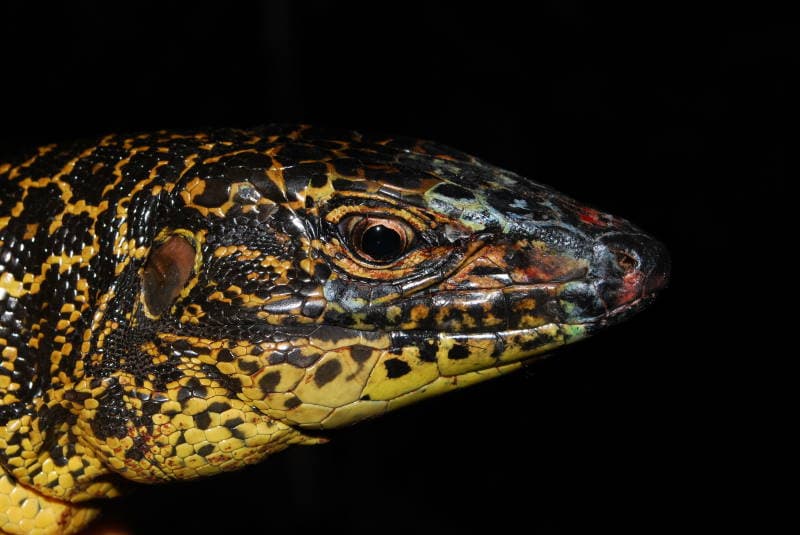
The gold tegu (Tupinambis teguixin) is a species of tegu found in the tropical forests of northern and central South America, extending to Panama and the island of Trinidad. These lizards are characterized by their glossy bodies, powerful limbs, thick tails, and distinctive black and gold stripes, typically reaching lengths of 60 to 100 cm. Their diet is varied, including insects, small vertebrates, eggs, and occasionally fruits and honey.