
Lerista walkeri
Lerista walkeri, also known as the coastal Kimberley slider and Walker's lerista, is a skink endemic to Australia. This species is characterized by having only two digits on each of its four feet. It prefers natural habitats such as forests, shrublands, and rocky areas.
Key Facts
- ›Endemic to Australia, specifically found in Western Australia.
- ›Possesses only two digits on each of its four feet.
- ›Inhabits forests, shrublands, and rocky areas.
- ›Reproduces by laying eggs (oviparous).
- ›Named in honor of British entomologist James John Walker.

Coastal Kimberley Slider, Walker's Lerista
Western Australia, Australia
Has Only Two Digits On Each of Its Four Feet.
About Lerista walkeri
Lerista walkeri, commonly recognized as the coastal Kimberley slider or Walker's lerista, is a species of skink belonging to the family Scincidae. This lizard is endemic to Australia, with its known natural range specifically located within Western Australia.
Habitat and Distribution
The preferred natural environments for L. walkeri include forests, shrublands, and rocky areas. This suggests the species is adapted to a variety of terrestrial ecosystems found within its geographic distribution.
Physical Characteristics
A distinctive physical trait of Lerista walkeri is the reduction in the number of digits on its limbs. Each of its four feet possesses only two digits, a notable characteristic for this species.
Reproduction
Lerista walkeri reproduces through oviparity, meaning it lays eggs. This method of reproduction is a fundamental aspect of its life cycle.
Etymology
The specific name, walkeri, was bestowed in honor of the British entomologist James John Walker, acknowledging his contributions to the field.
Source: Wikipedia ↗
Frequently Asked Questions
What are the common names for Lerista walkeri?
Lerista walkeri is commonly known as the coastal Kimberley slider and Walker's lerista. These names reflect its geographic location and a tribute to the entomologist it is named after.
Where is Lerista walkeri found?
This skink species is endemic to Australia, with its known geographic range being Western Australia. It is specifically found within this region of the continent.
What kind of habitat does Lerista walkeri prefer?
Lerista walkeri thrives in a variety of natural Australian environments. Its preferred habitats include forests, shrublands, and rocky areas, indicating an adaptation to diverse terrestrial conditions.
What is a distinctive physical feature of Lerista walkeri?
A notable physical characteristic of Lerista walkeri is its reduced number of digits. It possesses only two digits on each of its four feet, which is an unusual trait among lizards.
How does Lerista walkeri reproduce?
Lerista walkeri is oviparous, meaning it reproduces by laying eggs. This reproductive strategy is common among many lizard species.
Related Lizards
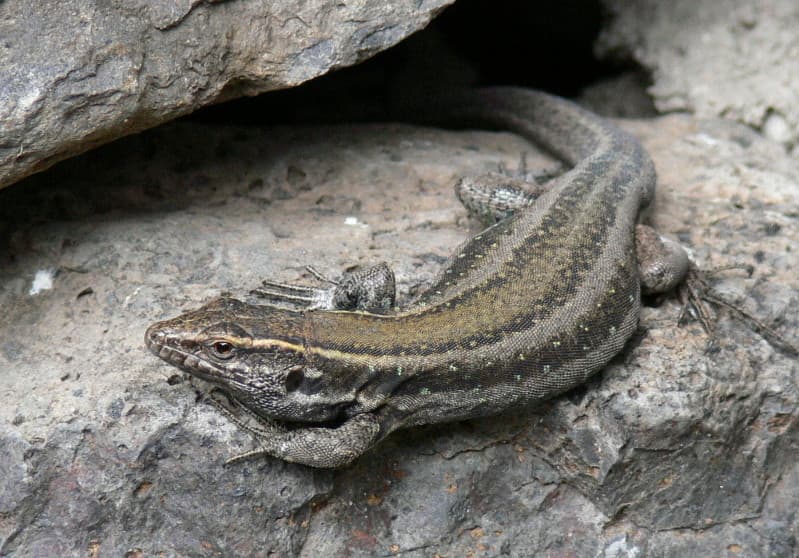
Boettger's lizard
Boettger's lizard (Gallotia caesaris) is a species of wall lizard endemic to the western Canary Islands, specifically El Hierro and La Gomera. This oviparous reptile inhabits rocky areas, shrubland, and forests, and is known for its capacity to lay multiple clutches of eggs per year. It is closely related to the Gallotia galloti species found on neighboring islands.
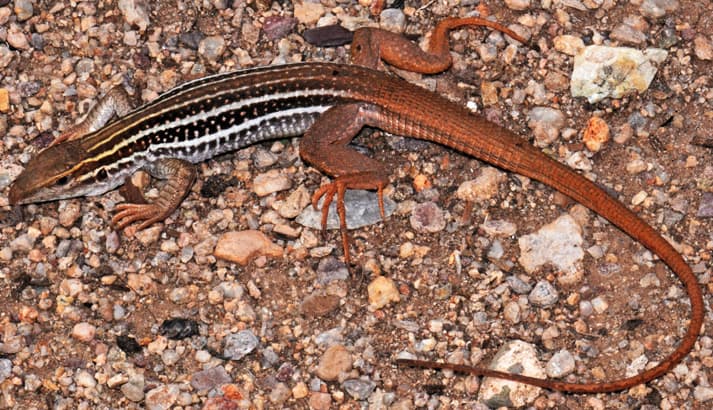
Canyon Spotted Whiptail
The Canyon Spotted Whiptail, also known as el huico manchado de cañón, is a lizard species found in northwestern Mexico and the southwestern United States. It inhabits forests, shrublands, and rocky areas, and is oviparous, laying eggs as its primary method of reproduction.

Danford's lizard
Danford's lizard (Anatololacerta danfordi) is a species of lizard belonging to the Lacertidae family, found in rocky areas within forests and shrublands across Greece and Turkey. This oviparous species is known to lay clutches of 3 to 8 eggs. It was named in honor of the zoologist Charles G. Danford.