
Limbless skink
The Greek snake skink, scientifically known as Ophiomorus punctatissimus, is a species of skink found in Greece. It inhabits temperate grasslands and plantations, and is characterized by its limbless appearance, resembling a snake. Recent genetic studies have identified distinct lineages, suggesting potential further taxonomic revisions.
Key Facts
- ›Endemic to Greece, found on the Peloponnese Peninsula and nearby islands.
- ›Inhabits temperate grasslands and plantations.
- ›Belongs to the Scincidae family of lizards.
- ›Recently, a distinct species, Ophiomorus kardesi, was described from the Anatolian genetic lineage previously grouped with this species.
- ›Further genetic studies are ongoing to clarify taxonomic status of other lineages.

Greek Snake Skink
Greece
Limbless Appearance, Resembling A Snake., Species Within the Skink Family .
About Limbless skink
The Greek Snake Skink
The Greek snake skink, scientifically classified as Ophiomorus punctatissimus, is a species of skink belonging to the family Scincidae. This lizard is notable for its limbless appearance, which gives it a serpentine resemblance. It is endemic to Europe, with its known distribution confined to Greece.
Geographic Range and Habitat
The natural habitats of the Greek snake skink include temperate grasslands and plantations. It is found on the Peloponnese Peninsula and on the Aegean islands of Kythira and Elafonisos, located off the southern coast of the Peloponnese.
Taxonomy and Ongoing Research
Recent scientific investigations have shed light on the complex genetic makeup of this species. A distinct species, Ophiomorus kardesi, was recently described from the Anatolian genetic lineage that was previously identified under Ophiomorus punctatissimus. Although morphological differences between these lineages have not yet been identified, the significant genetic divergence and estimated divergence time of around 10 million years have led scientists to recognize Ophiomorus kardesi as a separate species. Furthermore, these studies have revealed additional mitochondrial lineages within Ophiomorus punctatissimus, indicating that further research is needed to clarify the precise taxonomic status of these populations.
Source: Wikipedia ↗
Frequently Asked Questions
Where is the Greek snake skink found?
The Greek snake skink is endemic to Europe, specifically found in Greece. Its range includes the Peloponnese Peninsula and the islands of Kythira and Elafonisos in the Aegean Sea.
What kind of habitat does the Greek snake skink prefer?
This species naturally inhabits temperate grasslands and plantations. These environments provide suitable conditions for its lifestyle.
Has the classification of the Greek snake skink changed recently?
Yes, recent genetic research has led to the description of a new species, Ophiomorus kardesi, from a lineage previously identified as Ophiomorus punctatissimus. This indicates ongoing scientific understanding of its taxonomy.
Are there other genetic lineages within Ophiomorus punctatissimus?
Indeed, studies have revealed several additional mitochondrial lineages within Ophiomorus punctatissimus. Further research is required to fully understand the taxonomic status of these lineages.
Related Lizards
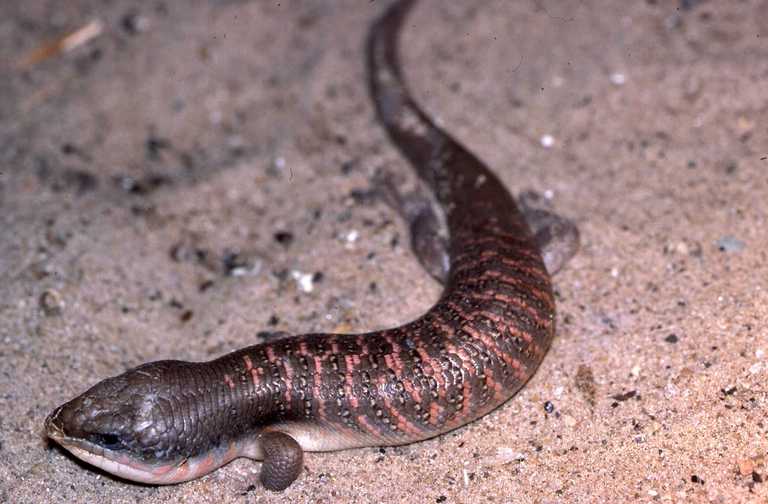
Eumeces algeriensis
Eumeces algeriensis, also known as the Algerian skink or Algerian orange-tailed skink, is a species of skink native to the Maghreb region of North Africa. It inhabits a variety of environments including temperate forests, shrublands, grasslands, and even rural gardens. This oviparous lizard is characterized by its endemic distribution within Algeria and Morocco.

Iberolacerta cyreni
Iberolacerta cyreni, commonly known as the Cyren's rock lizard, is a species endemic to central Spain. It is characterized by its ability to recognize individuals within its species and its sophisticated thermoregulation strategies. This lizard is currently listed as endangered due to the impacts of global warming on its cool-climate adapted habitat.
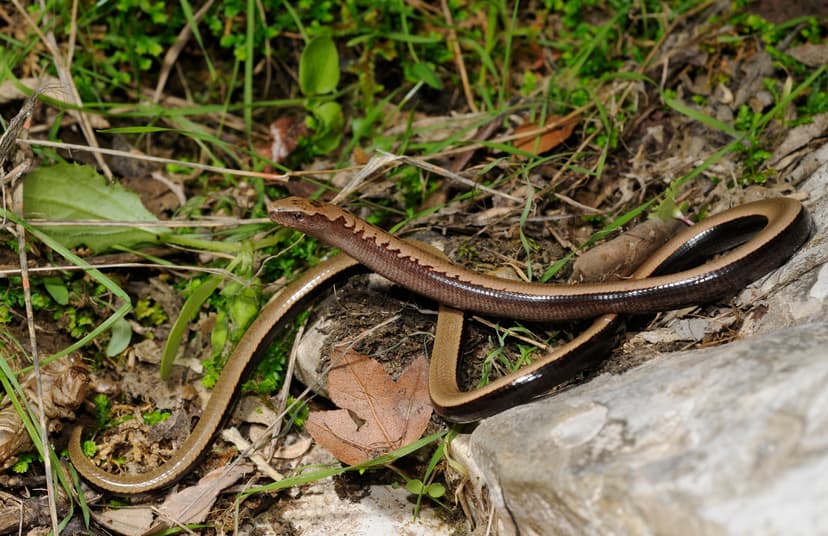
Peloponnese slowworm
The Peloponnese slow worm (Anguis cephallonica) is a legless lizard endemic to specific regions of Greece, including the Peloponnese peninsula and the Ionian islands of Cephalonia, Ithaca, and Zakynthos. This species is distinguished by a higher number of scale rows around its body and a unique chocolate-brown lateral stripe, and it gives birth to live young.