
Madurai rock gecko
The Madurai rock gecko is a recently described species of rock-dwelling gecko found near Madurai, India. It is distinguished by specific scale arrangements and coloration, featuring a grey dorsal side with yellowish-brown blotches and a whitish ventral side. As a member of the Hemidactylus genus, it is generally harmless to humans and is nocturnal.
Key Facts
- ›Described in 2023 from Nagamalai near Madurai, India.
- ›Distinguished by specific numbers of dorsal tubercle rows, enlarged tubercles, and femoral pores in males.
- ›Medium-sized gecko with a recorded length of 84 mm.
- ›Dorsal coloration is grey with four yellowish-brown circular blotches between neck and hind limbs.
- ›Nocturnal and prefers rocky habitats.
- ›Belongs to the Hemidactylus genus, known for being non-venomous and harmless to humans.

Madurai Rock Gecko
India
- Medium-Sized Gecko, Recorded Length of 84 mm.
- Dorsal Side Is Grey In Colour.
- Four Yellowish-Brown Circular Blotches Between the Neck and the Hind Limbs.
- Head Is Dark Brown.
- Tail Has Nine Or 10 Grey Bands.
- Ventral Side Is Whitish From Head To Hindlegs.
- Tail Has Yellowish Bands On A Grey Background.
- Distinguishing Characteristics Include Specific Numbers of Dorsal Tubercle Rows, Enlarged Tubercles, and Femoral Pores In Males.
Nocturnal, Rock-Dwelling
About Madurai rock gecko
The Madurai rock gecko (Hemidactylus multisulcatus) is a species of gecko described in 2023. It is native to the rocky terrain of Nagamalai, located near the city of Madurai in India. This species belongs to the extensive Hemidactylus genus, which includes common house geckos, and shares their characteristic of being non-venomous and harmless to humans.
Appearance and Characteristics
Distinguishing features of the Madurai rock gecko are found in its specific scale morphology. These include the number of dorsal tubercle rows along its mid-body, the count of enlarged tubercles within the paravertebral rows, and the number of femoral pores and separating scales in males along the femoral-precloacal row. Physically, it is a medium-sized gecko, with a recorded length of 84 mm. Its dorsal surface is grey, marked by four distinct yellowish-brown circular blotches situated between the neck and hind limbs. The head is dark brown, and the tail features approximately nine to ten grey bands. The underside of the gecko, from head to hind legs, is whitish, while the tail exhibits yellowish bands against a grey background.
Habitat and Behavior
The Madurai rock gecko is a rock-dwelling species, preferring the rugged environments found in its native region. Consistent with many geckos in its genus, it is nocturnal, meaning it is most active during the night. Its known range is currently limited to its type locality in Nagamalai near Madurai, and it has been distinguished from closely related rock geckos such as the Sirumalai, Meghamalai, Travancore, and Tirunelveli rock geckos.
Source: Wikipedia ↗
Frequently Asked Questions
What is the Madurai rock gecko and where is it found?
The Madurai rock gecko is a species of gecko described in 2023. It is found in its type location in Nagamalai, a rocky area near Madurai, India.
What are the distinguishing physical characteristics of the Madurai rock gecko?
Key distinguishing features include the number of dorsal tubercle rows, the number of enlarged tubercles in paravertebral rows, and specific arrangements of femoral pores and scales in males. It is a medium-sized gecko with grey dorsal coloration and yellowish-brown blotches.
Is the Madurai rock gecko venomous or dangerous to humans?
No, the Madurai rock gecko is not venomous. Members of its genus, Hemidactylus, are generally non-venomous and considered harmless to humans.
What is the habitat and activity pattern of the Madurai rock gecko?
This gecko prefers rocky areas and is nocturnal, meaning it is primarily active during the night.
What is the size of the Madurai rock gecko?
The Madurai rock gecko is considered a medium-sized gecko. A recorded length for this species is 84 mm.
Related Lizards
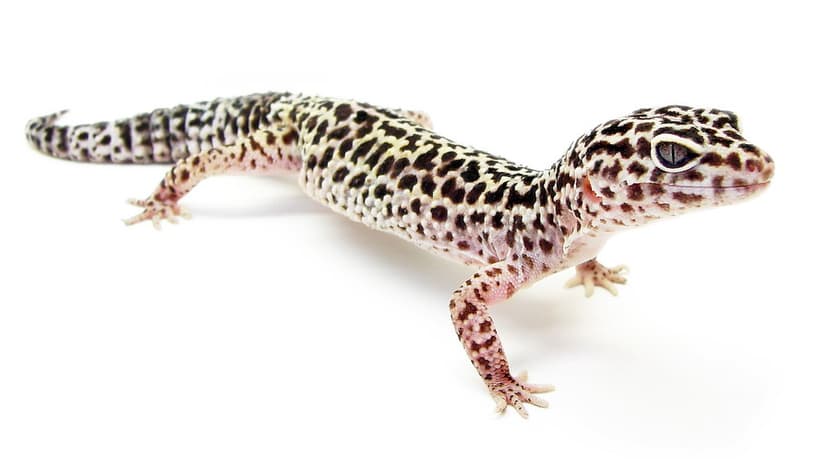
Common leopard gecko
The common leopard gecko (Eublepharis macularius) is a ground-dwelling lizard native to the arid regions of South Asia, including Afghanistan, Pakistan, India, and Nepal. Known for its distinctive spotted patterns and thick, fat-storing tail, it is a popular pet, often considered the first domesticated lizard species. These geckos are primarily nocturnal and opportunistic predators, feeding on invertebrates and small vertebrates.

East Canary gecko
The East Canary gecko, also known as the Canary wall gecko (Tarentola angustimentalis), is a species of lizard native to the eastern Canary Islands. This plump, dorsally flattened gecko is characterized by adhesive toe pads, small tubercles on its skin, and variable greyish-brown coloration with darker bars. It inhabits a wide range of environments, from rocky shores and shrubland to urban areas, and is commonly observed at night on walls and ceilings.

Euleptes europaea
The European leaf-toed gecko (Euleptes europaea) is a small lizard distinguished by adhesive pads on its toes and tail, enabling it to climb exceptionally well. Its coloration varies from yellowish-brown to greyish-brown, often with blotchy patterns. Primarily found in rocky coastal regions and Mediterranean islands, this gecko is mostly nocturnal and feeds on insects and other small invertebrates.