
Maltese wall lizard
The Maltese wall lizard (Podarcis filfolensis) is a species of lizard found in Malta and the Pelagian Islands of Italy. It inhabits Mediterranean-type shrubland, rocky areas, shores, arable land, pasture, and rural gardens. Distinguishing features vary by subspecies, with males generally exhibiting brighter colors than females and juveniles.
Key Facts
- ›Native to Malta and the Pelagian Islands of Italy.
- ›Inhabits diverse Mediterranean environments including rocky shores and rural gardens.
- ›Males are typically more colorful than females and juveniles.
- ›Males exhibit territorial behavior and display to attract mates.
- ›Mating occurs in spring, with eggs laid shortly after and hatching between June and MID-August.
- ›Several endemic subspecies are found within the Maltese Islands.

Filfola Lizard
Malta, Italy
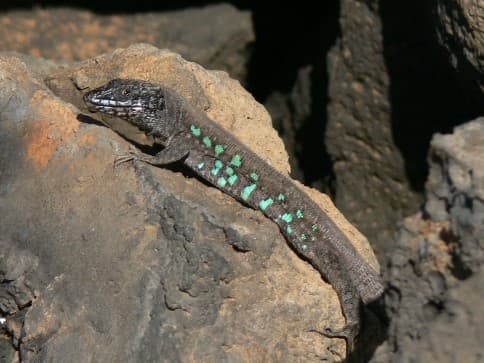
- Males Are Typically Brightly Colored.
- Young Lizards and Females Have Somewhat Duller, Brownish Coloration.
- Subspecies Exhibit Variations: Ssp. Maltensis Is Greenish and Sometimes Speckled; Ssp. Filfolensis Is Blackish With Bluish Spots; Ssp. Kieselbachi Varies In Color With An Orange Belly and Small Black Spots; Ssp. Generalensis Has A Reddish Belly and Blue-Like Flanks.
Small Insects, Ants, Termites
- Males Exhibit Territorial Behavior.
- Males Puff Up and Raise Their Heads When Encountering Other Males Or Attracting Females.
- Mating Occurs In Spring.
Extinction of Subspecies
About Maltese wall lizard
The Maltese Wall Lizard: A Mediterranean Reptile
The Maltese wall lizard, scientifically known as Podarcis filfolensis, is a species of lizard belonging to the Lacertidae family. It is native to the island nation of Malta and also found in the Pelagian Islands of Italy. This species is well-adapted to a variety of Mediterranean environments, inhabiting areas such as shrubland, rocky outcrops, coastal shores, agricultural fields, pastures, and even the gardens of rural settlements.
Subspecies and Distribution
Within the Maltese Islands, the Maltese wall lizard exhibits significant diversity with four endemic subspecies. These include Podarcis filfolensis ssp. maltensis, found on Malta, Gozo, and Comino, which is typically greenish and sometimes speckled. The nominate subspecies, Podarcis filfolensis ssp. filfolensis, is endemic to the islet of Filfla and is noted as the largest, characterized by a blackish hue with bluish spots. Podarcis filfolensis ssp. kieselbachi, historically found on Selmunett (St. Paul's Islands), varied in color but became extinct in 2005. Lastly, Podarcis filfolensis ssp. generalensis is endemic to Fungus Rock, distinguished by a reddish belly and blue-like flanks. A fifth subspecies is believed to exist on Cominotto/Kemunett, and Podarcis filfolensis ssp. laurentimulleri inhabits the Italian islands of Linosa and Lampione.
Behavior and Reproduction
Maltese wall lizards display distinct behavioral patterns. Unlike the brighter males, young lizards and females generally possess a duller, brownish coloration. Males are territorial and will puff up and raise their heads when encountering rivals or when attempting to attract females. Mating occurs during the spring, after which one to two eggs are laid. Hatching typically takes place between June and mid-August. Their diet primarily consists of small insects, such as ants and termites.
Source: Wikipedia ↗
Frequently Asked Questions
What are the natural habitats of the Maltese wall lizard?
The Maltese wall lizard thrives in a variety of Mediterranean environments. These include shrubby vegetation, rocky areas, and shores, as well as agricultural and pasturelands, and even rural gardens.
How do male Maltese wall lizards behave?
Male Maltese wall lizards are territorial. When another male enters their territory, they inflate their bodies and raise their heads. This display is also used when attracting females.
When do Maltese wall lizards reproduce?
Mating for the Maltese wall lizard typically takes place in the spring. Following mating, one or two eggs are laid, and these eggs hatch between June and mid-August.
Are there different types of Maltese wall lizards?
Yes, there are several subspecies of the Maltese wall lizard. Four subspecies are endemic to the Maltese Islands, with others found on Italian islands.
What do Maltese wall lizards eat?
The diet of the Maltese wall lizard primarily consists of small insects. Ants and termites are commonly preyed upon by this species.
What is the difference in appearance between male and female Maltese wall lizards?
Male Maltese wall lizards are noted for their bright coloration. In contrast, young lizards and females tend to have more subdued, brownish coloration.
Related Lizards
Atlantic lizard
The Atlantic lizard (Gallotia atlantica) is a species of lizard belonging to the family Lacertidae. It is native to the eastern Canary Islands, specifically Lanzarote and Fuerteventura, and their associated smaller islands. Its natural habitats are diverse, ranging from temperate forests and shrublands to rocky shores and sandy areas, as well as agricultural and garden environments.

Algyroides fitzingeri
Fitzinger's algyroides (Algyroides fitzingeri) is the smallest and most slender member of its genus, native to Corsica and Sardinia. This lizard is distinguished by the sharp demarcation between its side and underside scales and the absence of pale lines above its eyes. It inhabits a variety of temperate and Mediterranean environments, from sea level to high altitudes.

Anatololacerta oertzeni
Anatololacerta oertzeni, commonly known as the rock lizard, is a species of lizard found in Greece and Turkey. It inhabits a variety of Mediterranean-type environments, including shrubland, rocky areas, and pastures.