
Many-lined skink
The many-lined skink is a medium-sized lizard belonging to the genus Plestiodon, native to the western United States. It is characterized by its olive to brown body and distinct stripe patterns, which vary between its recognized subspecies. This oviparous species is found in both sandy and rocky habitats, depending on the subspecies.
Key Facts
- ›Medium-sized skink with a maximum snout-to-vent length of about 7.5 cm.
- ›Body coloration is olive to brown with distinct stripes.
- ›Two subspecies are commonly recognized: P. M. multivirgatus and P. M. epipleurotus.
- ›P. M. multivirgatus prefers sandy soils in lower elevations.
- ›P. M. epipleurotus inhabits rocky areas at higher elevations.
- ›Reproduction is oviparous, with eggs laid under rocks.
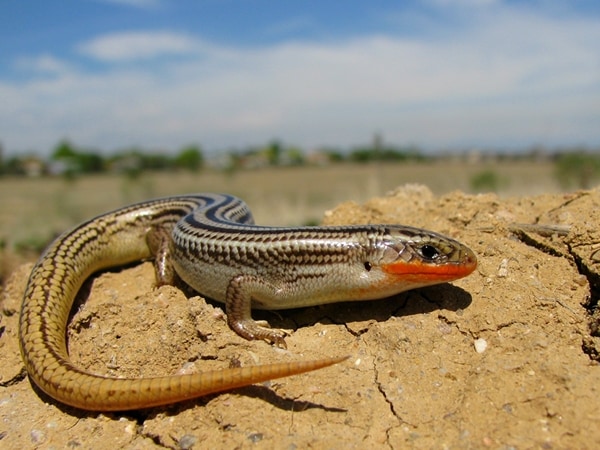
Many-Lined Skink, Northern Many-Lined Skink, Variable Skink, Two-Lined Skink
United States
- Medium-Sized Skink.
- Maximum Snout-To-Vent Length of About 7.5 cm .
- Total Length Roughly 19 cm .
- Body Color Is Olive To Brown.
- P. M. Multivirgatus Has Black Stripes Along the Body and Tail.
- P. M. Epipleurotus Has Two White Stripes With Black Borders.
About Many-lined skink
The many-lined skink, scientifically known as Plestiodon multivirgatus, is a medium-sized lizard native to the western United States. It belongs to the skink family, Scincidae, and is a member of the North American genus Plestiodon. This species is recognized for its distinct stripe patterns, which help differentiate its two commonly acknowledged subspecies.
Description and Subspecies
This lizard typically measures around 7.5 cm (3.0 inches) in snout-to-vent length, with a total length reaching approximately 19 cm (7.5 inches). Its body is generally olive to brown in coloration. The subspecies P. m. multivirgatus, often called the northern many-lined skink, is characterized by black stripes running along its body and tail. The other subspecies, P. m. epipleurotus, also known as the variable skink or sometimes the two-lined skink, features two white stripes that are bordered by black.
Range and Habitat
The geographic distribution of the many-lined skink varies between its subspecies. P. m. multivirgatus is found in southern South Dakota, Nebraska, and Wyoming, extending southward to the Arkansas River in Colorado. This subspecies prefers habitats with sandy soil and is typically found at elevations below 1,675 meters (5,495 feet).
In contrast, P. m. epipleurotus is distributed from southeastern Utah and southern Colorado through Arizona, New Mexico, and into western Texas. This subspecies thrives in rocky environments and can be found at higher elevations, up to 2,600 meters (8,500 feet).
Reproduction
The many-lined skink reproduces by laying eggs, a characteristic known as being oviparous. The eggs are deposited in sheltered locations, specifically under rocks, which provides them with protection and a stable environment for development.
Source: Wikipedia ↗
Frequently Asked Questions
What are the common names for Plestiodon multivirgatus?
Plestiodon multivirgatus is commonly known as the many-lined skink. It is also referred to as the northern many-lined skink or the variable skink, with the latter name often associated with the subspecies P. m. epipleurotus.
How large does the many-lined skink get?
The many-lined skink is a medium-sized lizard. It can reach a maximum snout-to-vent length of approximately 7.5 cm (3.0 inches) and a total length of around 19 cm (7.5 inches).
What is the difference between the subspecies of the many-lined skink?
The two commonly recognized subspecies have different stripe patterns and habitat preferences. P. m. multivirgatus typically has black stripes along its body and tail, while P. m. epipleurotus features two white stripes bordered by black.
Where does the many-lined skink live?
The many-lined skink is native to the western United States. Its range includes states like South Dakota, Nebraska, Wyoming, Colorado, Utah, Arizona, New Mexico, and western Texas, with habitat varying from sandy plains to rocky slopes.
How does the many-lined skink reproduce?
The many-lined skink is oviparous, meaning it reproduces by laying eggs. These eggs are typically deposited and hidden under rocks.
What are the habitat preferences of the many-lined skink subspecies?
The subspecies P. m. multivirgatus prefers sandy soil and is found at elevations below 1,675 meters. In contrast, P. m. epipleurotus lives in rocky habitats and can be found at elevations up to 2,600 meters.
Related Lizards
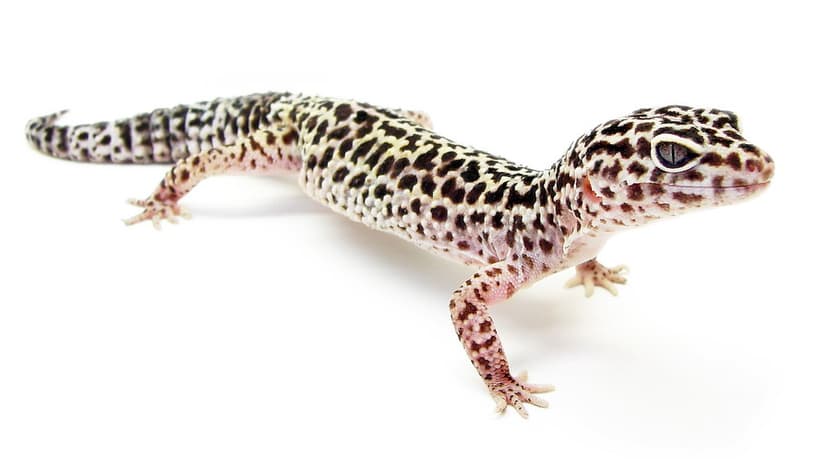
Eublepharis macularius
The leopard gecko (Eublepharis macularius) is a ground-dwelling lizard native to the dry grasslands and deserts of South Asia. Known for its distinctive spotted pattern, it is a popular pet and often considered the first domesticated lizard species due to extensive captive breeding. These geckos possess unique features like mobile eyelids and a thick tail used for fat storage.

Gokak fan-throated lizard
The Gokak fan-throated lizard (Sitana gokakensis) is a cryptic agamid lizard found exclusively in India. This species is characterized by its darker head, brown dorsum with blue and pink markings, and a distinctive dewlap. It inhabits the open, xeric, rocky terrain of the Gokak plateau.
Leopard gecko
The leopard gecko, scientifically known as Eublepharis macularius, is a ground-dwelling lizard native to the dry grasslands and deserts of South Asia. Renowned for its distinctive spotted pattern, it is a popular pet, often considered the first domesticated lizard species. These geckos possess unique features like movable eyelids and thick, fat-storing tails.