
Eublepharis macularius
The leopard gecko (Eublepharis macularius) is a ground-dwelling lizard native to the dry grasslands and deserts of South Asia. Known for its distinctive spotted pattern, it is a popular pet and often considered the first domesticated lizard species due to extensive captive breeding. These geckos possess unique features like mobile eyelids and a thick tail used for fat storage.
Key Facts
- ›Native to arid and semi-arid regions including Afghanistan, Pakistan, India, and Nepal.
- ›Possesses mobile eyelids, a characteristic distinguishing it from many other geckos.
- ›Stores fat in its thick tail as an energy reserve.
- ›Can voluntarily detach its tail (autotomy) as a defense mechanism, with it regenerating later.
- ›Exhibits temperature-dependent sex determination during incubation.
- ›A popular pet, often referred to as the first domesticated lizard species.
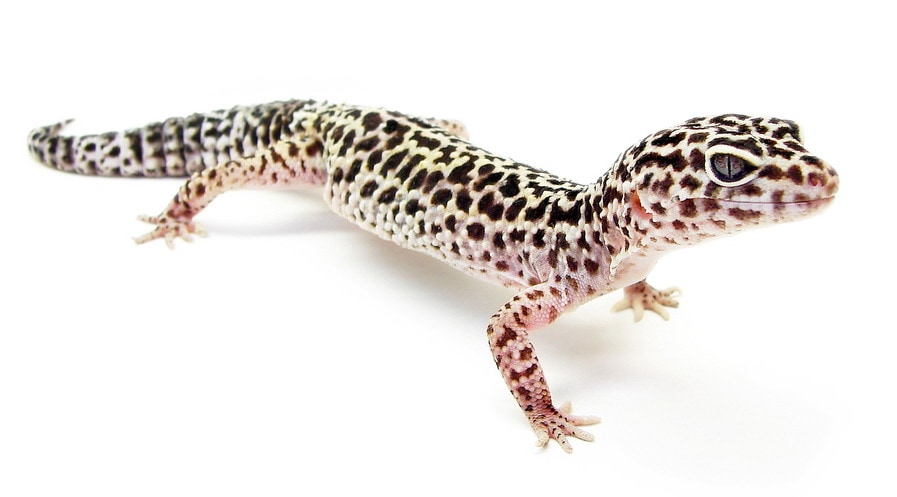
Common Leopard Gecko
Afghanistan, Iran, Pakistan, India, Nepal
Dry Grassland, Desert Regions, Rocky Habitat, Arid Areas, Semi-Arid Areas, Arid Forests
- Small Lizards With A Base Coloration Ranging From Yellow To Brownish-Orange.
- Covered In Distinctive Spots, Which Can Cover All Or Most of the Dorsal Region.
- Hatchlings Measure 7-10 cm In Length and Weigh 2-5 Grams.
- Adult Females Are 18-20 cm Long and Weigh 50-70 Grams.
- Adult Males Are 20-28 cm Long and Weigh 60-80 Grams.
- Possess Thick Tails That Store Fat.
- Unlike Many Geckos, Their Toes Lack Adhesive Lamellae, Preventing Them From Climbing Smooth Vertical Surfaces.
- Have Mobile Upper and Lower Eyelids.
Invertebrates, Small Vertebrate Prey
- Generally Nocturnal, Retreating To Burrows and Sheltered Spots During the Day.
- Become Active At Dusk.
- May Live In Loose Colonies In the Wild, Though Often Considered Solitary In Captivity.
- Can Vocalize To Ward Off Predators.
- Capable of Caudal Autotomy .
- Males Exhibit Aggressive Behavior Towards Other Males and Courtship Behavior Towards Females.
Opportunistic Predators, Insectivore, Carnivore
About Eublepharis macularius
Leopard Gecko (Eublepharis macularius)
The leopard gecko, scientifically known as Eublepharis macularius, is a ground-dwelling lizard celebrated for its distinctive spotted pattern and its status as one of the first lizard species to be extensively domesticated for the pet trade. Native to the arid and semi-arid environments of South Asia, including regions of Afghanistan, Pakistan, India, and Nepal, these geckos inhabit rocky, dry grasslands and desert areas, often seeking refuge in crevices and under loose bark.
Key Characteristics and Behavior
Distinguished by their mobile eyelids—a trait that sets them apart from many other gecko species—leopard geckos are typically nocturnal, emerging at dusk to hunt. Their coloration ranges from yellow to brownish-orange, adorned with characteristic spots that vary in intensity and coverage. A notable physical feature is their thick tail, which serves as a vital reservoir for storing fat, providing energy during times of scarcity. This tail also plays a role in defense; leopard geckos possess the ability of caudal autotomy, meaning they can voluntarily detach their tail when threatened. The detached tail continues to twitch, distracting predators and allowing the gecko to escape, after which the tail regenerates, though often with a different appearance.
Reproduction and Life Cycle
Reproduction in leopard geckos is influenced by temperature, a phenomenon known as temperature-dependent sex determination. Embryos incubated at cooler or very warm temperatures tend to develop into females, while intermediate temperatures result in males. Females can lay multiple clutches of two eggs each, with incubation periods varying significantly. In the wild, leopard geckos have a relatively short lifespan, averaging around 4.9 years. However, under proper care as pets, their longevity increases dramatically, with individuals often living for more than 20 years, a testament to their adaptability and the success of captive breeding efforts.
Diet and Predation
As opportunistic predators, leopard geckos primarily feed on invertebrates. Their diet can also include small vertebrates, such as hatchlings of other reptiles or small mammals, especially if they are not adequately fed. While they possess natural camouflage and hide during the day to avoid diurnal predators, they may vocalize when confronted. Their primary defense, however, remains their ability to shed their tail and escape.
Subspecies and Domestication
There are five recognized subspecies of Eublepharis macularius, each with subtle variations. The extensive captive breeding of leopard geckos has led to a wide array of color morphs and patterns, far more diverse than those found in their wild counterparts. This widespread domestication has made them one of the most popular reptile pets globally.
Source: Wikipedia ↗
Frequently Asked Questions
What is the scientific name for the leopard gecko?
The scientific name for the leopard gecko is Eublepharis macularius. This name is derived from Greek and Latin, with 'eu' meaning good, 'blepharos' meaning eyelid (referring to their mobile eyelids), and 'macularius' meaning spotted.
Where do leopard geckos live in the wild?
Leopard geckos are native to the rocky, dry grassland, and desert regions of Afghanistan, Pakistan, northwest India, western Nepal, and parts of Iran. They prefer arid or semi-arid areas with sparse vegetation and clay or sandy soils, often seeking shelter in rocky crevices.
What do leopard geckos eat?
Leopard geckos are opportunistic predators. Their diet primarily consists of invertebrates, but they will also consume small vertebrates such as mouse pups, smaller reptiles, and even hatchling leopard geckos if given the opportunity.
How long do leopard geckos live?
In the wild, leopard geckos have an average lifespan of about 4.9 years. However, with proper care in captivity, they can live for over 20 years.
Are leopard geckos venomous?
No, leopard geckos are not venomous. Despite their predatory nature and ability to bite, they do not possess venom.
Can leopard geckos regenerate their tails?
Yes, leopard geckos can regenerate their tails if they are detached. This process, known as caudal autotomy, is a defense mechanism, though the regenerated tail is often stouter and shorter than the original.
What are the different subspecies of leopard geckos?
There are five recognized subspecies of Eublepharis macularius: Eublepharis macularius afghanicus, Eublepharis macularius fasciolatus, Eublepharis macularius macularius, Eublepharis macularius montanus, and Eublepharis macularius smithi.
What are the primary defense mechanisms of leopard geckos?
The primary defense mechanisms of leopard geckos include avoiding detection through camouflage, remaining hidden during the day, and vocalizing when confronted. They can also detach their tails to distract predators and escape.
Related Lizards
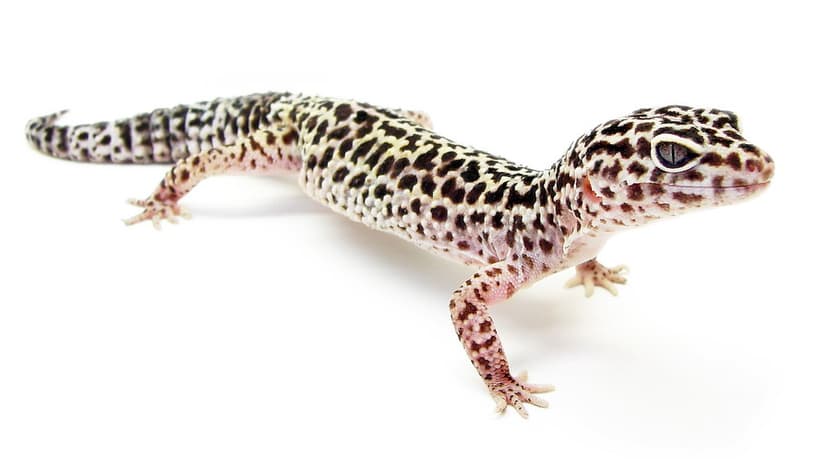
Leopard gecko
The leopard gecko, scientifically known as Eublepharis macularius, is a ground-dwelling lizard native to the dry grasslands and deserts of South Asia. Renowned for its distinctive spotted pattern, it is a popular pet, often considered the first domesticated lizard species. These geckos possess unique features like movable eyelids and thick, fat-storing tails.
Common leopard gecko
The common leopard gecko (Eublepharis macularius) is a ground-dwelling lizard native to the arid regions of South Asia, including Afghanistan, Pakistan, India, and Nepal. Known for its distinctive spotted patterns and thick, fat-storing tail, it is a popular pet, often considered the first domesticated lizard species. These geckos are primarily nocturnal and opportunistic predators, feeding on invertebrates and small vertebrates.

Morethia obscura
The shrubland Morethia skink (Morethia obscura) is a small, terrestrial lizard endemic to Australia. It is characterized by its olive-brown to olive-gray coloration, often with pale dorsolateral and broad black lateral stripes, and measures up to 129 mm in total length. Primarily found in arid and semi-arid woodlands, heaths, and shrublands, this species is insectivorous and reproduces by laying eggs.