
Morethia boulengeri
Morethia boulengeri, commonly known as Boulenger's skink, is a small, insectivorous lizard endemic to Australia. It is characterized by its grey or brown dorsal coloration with darker flecks and a white ventral side, often featuring distinctive stripes. This adaptable species inhabits a variety of semi-arid and arid environments across the Australian mainland.
Key Facts
- ›Endemic to Australia, found in all states and territories except Tasmania.
- ›Inhabits diverse semi-arid and arid zones, including dry sclerophyll forests, mallee, desert, and woodlands.
- ›Primarily insectivorous, feeding on arthropods and snails, with moths being a significant part of its diet.
- ›Oviparous, with females laying approximately three eggs per clutch, typically three times a year.
- ›Juveniles display a distinguishing red-orange tinge on the ventral side of their tail.
- ›Can reach a total length of up to 10 cm, though typically averages around 8 cm.

South-Eastern Morethia Skink, Boulenger's Snake-Eyed Skink, Boulenger's Morethia, Boulenger's Skink
Australia
Dry Sclerophyll Forests, Mallee, Desert, Scrublands, Woodlands, Low Shrublands, Leaf Litter, Dry Vegetation
- Grey Or Brown Dorsal Coloration With Darker Flecks In A Longitudinal Pattern.
- White Ventral Side.
- Thin White Stripe Running Longitudinally From Mouth To Groin On Both Sides.
- Thicker Black Stripe Above the White Line Bordering the White Stripes.
- Juveniles Have A Distinctive Red-Orange Tinge On the Ventral Side of the Tail.
- Square-Shaped Supraciliary Scales Above the Eye Region.
Insects, Arthropod Species, Snails, Moths, Spiders, Beetles, Ants, Cockroaches, Other Bugs
- Mating Occurs In Warmer Months .
- Males' Throats Turn Vibrant Orange During Mating Season.
- Can Be Found In High Numbers, With Densities of Several Hundred Individuals Per Hectare.
- Generalist Species Adapted To Various Environments.
About Morethia boulengeri
Morethia boulengeri: Boulenger's Skink
Morethia boulengeri, commonly known as Boulenger's skink, is a species of lizard belonging to the Scincidae family. This species is endemic to Australia and is notable for its adaptability, inhabiting a wide array of semi-arid and arid environments across the mainland.
Description and Identification
Boulenger's skink typically presents with grey or brown dorsal coloration, often adorned with darker flecks arranged in a longitudinal pattern. Its underside is predominantly white, distinguished by a thin white stripe running from the mouth to the groin, which is bordered above by a thicker black stripe. A key identifying feature, particularly in juveniles, is a distinctive red-orange tinge on the ventral side of the tail. Adult lizards can reach a total length of up to 10 cm, with an average snout-to-vent length ranging from 4.5 to 5 cm. The species also possesses unique square-shaped supraciliary scales above the eye region.
Habitat and Distribution
Morethia boulengeri is found across the majority of Australia, with its range encompassing at least part of every state and territory except for Tasmania. It thrives in diverse ecosystems such as dry sclerophyll forests, mallee, desert regions, scrublands, woodlands, and low shrublands. Its ability to inhabit environments with leaf litter and dead fallen vegetation contributes to its success as a generalist species. In some areas, such as the Murray catchment, population densities can be remarkably high, reaching several hundred individuals per hectare.
Diet and Reproduction
As an insectivorous species, Boulenger's skink primarily feeds on arthropods and snails. Moths constitute a significant portion of its diet, supplemented by other insects like spiders, beetles, ants, and cockroaches, all of which are abundant in its preferred habitats. Reproduction occurs during the warmer months of spring and summer. During this period, males develop a vibrant orange throat, signaling fertility. The species is oviparous, with females laying an average of three eggs per clutch, typically producing around three clutches annually. The incubation period for these clutches lasts approximately 60 days, during which there is a notable increase in oxygen consumption.
Naming
The specific name, boulengeri, and several of its common names, such as Boulenger's skink, honor George Albert Boulenger, a Belgian-born British herpetologist recognized for describing numerous reptile, amphibian, and fish species.
Source: Wikipedia ↗
Frequently Asked Questions
What are the common names for Morethia boulengeri?
Morethia boulengeri is known by several common names, including south-eastern Morethia skink, Boulenger's snake-eyed skink, Boulenger's Morethia, and Boulenger's skink. These names often reference its appearance or the herpetologist it is named after.
Where is Boulenger's skink found?
Boulenger's skink is endemic to Australia and is found across the majority of the mainland, present in at least part of every state and territory except for Tasmania. It thrives in a wide range of semi-arid and arid environments.
What does Morethia boulengeri eat?
Morethia boulengeri is an insectivorous species, meaning its diet consists almost exclusively of insects and other small invertebrates. It predominantly consumes arthropod species and snails, with moths forming a large part of its diet, supplemented by spiders, beetles, ants, and other bugs.
How does Boulenger's skink reproduce?
This species is oviparous, meaning females lay eggs. Mating occurs during the warmer months of spring and summer. Females typically lay around three eggs per clutch, producing approximately three clutches annually, and the eggs are incubated for about 60 days.
What is the physical description of Morethia boulengeri?
Morethia boulengeri is generally grey or brown with darker flecks longitudinally on its dorsal side and a white ventral side. It has a thin white stripe from mouth to groin, bordered above by a thicker black stripe. Juveniles have a red-orange tinge on the tail's underside. Square-shaped supraciliary scales are also a characteristic feature.
What are the typical habitats for this lizard?
Morethia boulengeri is a generalist species capable of inhabiting a wide array of environments within semi-arid and arid zones. It is commonly found surviving in the leaf litter and dead vegetation of dry sclerophyll forests, mallee, desert, scrublands, woodlands, and low shrublands.
Related Lizards

Morethia obscura
The shrubland Morethia skink (Morethia obscura) is a small, terrestrial lizard endemic to Australia. It is characterized by its olive-brown to olive-gray coloration, often with pale dorsolateral and broad black lateral stripes, and measures up to 129 mm in total length. Primarily found in arid and semi-arid woodlands, heaths, and shrublands, this species is insectivorous and reproduces by laying eggs.

Carinascinus metallicus
The Metallic Skink (Carinascincus metallicus) is a viviparous lizard endemic to Australia, primarily found in Tasmania and southern Victoria. It is characterized by its metallic-scaled dorsal surface, which exhibits a range of colorations and patterns, and it gives birth to live young. This adaptable species inhabits diverse environments from coastal dunes to sclerophyll forests and woodlands, relying on basking to regulate its body temperature.
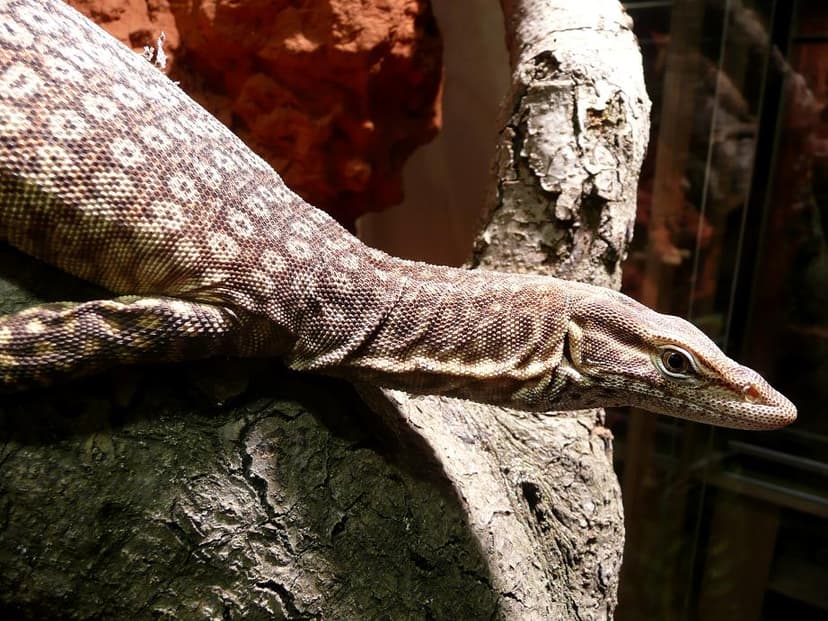
Varanus tristis
The black-headed monitor (Varanus tristis) is a relatively small monitor lizard found across mainland Australia and some northern islands. Known for its speed and ability to inhabit diverse environments from forests to deserts, this species exhibits distinct subspecies with variations in coloration and size. It is an opportunistic predator with a varied diet and a notable reproductive cycle.