
Varanus tristis
The black-headed monitor (Varanus tristis) is a relatively small monitor lizard found across mainland Australia and some northern islands. Known for its speed and ability to inhabit diverse environments from forests to deserts, this species exhibits distinct subspecies with variations in coloration and size. It is an opportunistic predator with a varied diet and a notable reproductive cycle.
Key Facts
- ›Native to Australia and found throughout the mainland and some northern islands.
- ›Subspecies include V. t. tristis (black-headed monitor) and V. t. orientalis (freckled monitor).
- ›Inhabits forests, scrublands, woodlands, and deserts, often seeking shelter in tree hollows or rocky crevices.
- ›Diet consists of small mammals, frogs, other lizards, bird eggs and chicks, and various insects.
- ›Females lay clutches of 6-17 eggs, which hatch after an incubation period of approximately 4-5 months.
- ›Known for its exceptional speed, sharing the name 'racehorse monitor' with Gould's monitor.
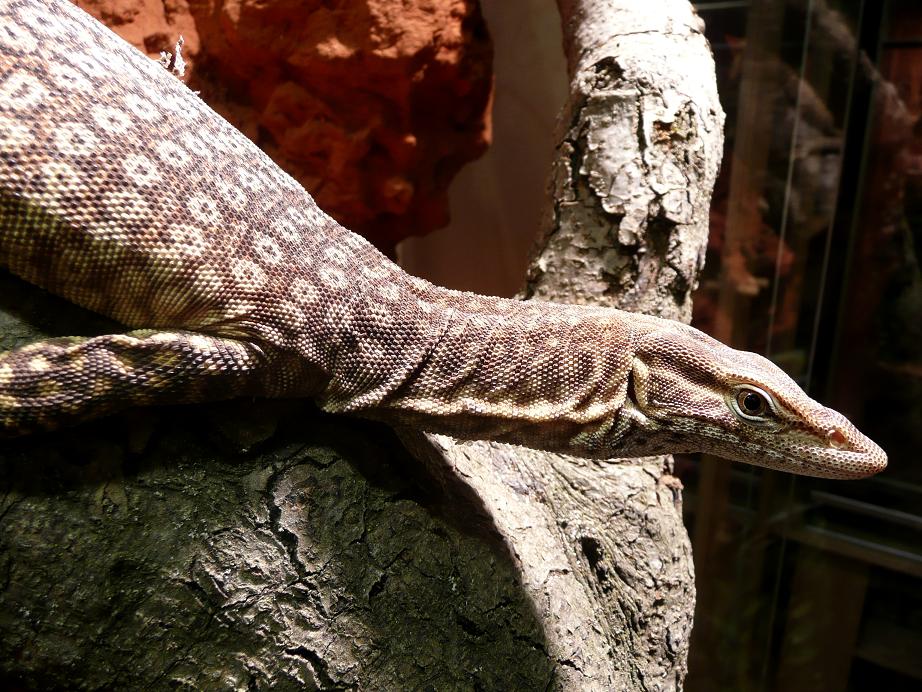
Black-Headed Monitor, Black-Tailed Monitor, Mournful Monitor, Freckled Monitor, Racehorse Monitor
Australia, Northern Australian Islands
Forests, Scrublands, Woodlands, Deserts, Near Rivers
- Relatively Small Monitor Lizard Species.
- V. T. Tristis Can Reach Up To 80 cm In Length; V. T. Orientalis Up To 60 cm.
- Populations Around Perth Are Completely Black; Populations Further North Are Lighter.
- V. T. Orientalis Has A Lighter, More Distinct Coloration and A Less Spiny Tail Compared To V. T. Tristis.
- Hatchlings of Both Subspecies Are Brightly Colored, But This Coloration Is Retained More Into Adulthood By V. T. Orientalis.
- Males Can Be Identified By A Large Cluster of Spiny Scales On Either Side of the Vent After Sexual Maturity.
- Females Lack These Prominent Protrusions and Have Few Spines.
Small Mammals, Frogs, Other Lizards, Thorny Devils, Bird Eggs, Bird Chicks, Insects
- Most Active In Spring.
- May Travel Up To A Kilometer Daily In Search of Food.
- Become Inactive During the Six To Seven Cold Winter Months.
- Semi-Arboreal, With V. T. Tristis Being Slightly Less Arboreal Than V. T. Orientalis.
- Known To Curl Tail Over Head and Body When Walking Or Basking, Though the Reason Is Unknown.
Carnivore, Insectivore, Ovolecivory
About Varanus tristis
The Black-Headed Monitor (Varanus tristis)
The black-headed monitor, scientifically known as Varanus tristis, is a species of monitor lizard native to Australia. It is also commonly referred to as the black-tailed monitor, and, due to its notable speed, shares the name 'racehorse monitor' with Gould's monitor. This species is part of the subgenus Odatria and is characterized by its relatively small size and adaptability to various Australian environments.
Distribution and Habitat
Varanus tristis is the most widespread monitor lizard in Australia, found across the mainland and on several northern islands. It is absent only from the extreme southern and southeastern parts of the continent. The species is typically arboreal and is often found near rivers within forests, scrublands, and woodlands. It also inhabits desert regions and seeks refuge in confined spaces such as loose bark, tree hollows, and rocky crevices.
Physical Characteristics
There are two recognized subspecies: V. t. tristis and V. t. orientalis (the freckled monitor). The V. t. tristis subspecies can grow up to 80 cm in length, with populations near Perth being entirely black, while those in warmer northern regions are lighter in color. The smaller freckled monitor (V. t. orientalis) reaches up to 60 cm and possesses a lighter, more distinct coloration and a less spiny tail. Hatchlings of both subspecies are brightly colored, though the freckled monitor retains more of this coloration into adulthood. Adult males can be identified by a cluster of spiny scales near their vent, a feature less pronounced in females.
Behavior and Diet
These lizards are most active during the spring, undertaking daily journeys of up to a kilometer to find food and build up fat reserves for their winter dormancy. While both subspecies are semi-arboreal, V. t. tristis spends slightly less time in trees than V. t. orientalis. A peculiar behavior observed is the curling of the tail over the head and body while walking or basking, though the reason for this remains unknown. Their diet is opportunistic and varies by geographic location, but generally includes small mammals, frogs, other lizards, bird eggs and chicks, and a variety of insects.
Reproduction
Reproduction occurs in November, with males and females often sharing the same tree. Females lay clutches of 6 to 17 eggs in December, which hatch in February or March after an incubation period of approximately four to five months at temperatures between 27-29°C.
Source: Wikipedia ↗
Frequently Asked Questions
What are the common names for Varanus tristis?
Varanus tristis is commonly known as the black-headed monitor or black-tailed monitor. It is also occasionally referred to as the mournful monitor or freckled monitor, particularly the V. t. orientalis subspecies.
Where is the Varanus tristis found?
This species is widespread throughout mainland Australia and also inhabits some northern islands. It is absent only from the southernmost and southeasternmost regions of the continent.
What kind of habitats does the black-headed monitor prefer?
The black-headed monitor is an arboreal lizard that typically lives near rivers in forests, scrublands, and woodlands. It is also adaptable to desert environments and seeks shelter in tight spaces like loose bark, tree hollows, and rocky crevices.
How large does Varanus tristis get?
The larger subspecies, V. t. tristis, can reach up to 80 cm in length. The smaller subspecies, V. t. orientalis (freckled monitor), grows up to 60 cm long.
What does Varanus tristis eat?
Its diet is varied and includes small mammals, frogs, other lizards, bird eggs and chicks, and a range of insects such as orthopterans, beetles, ants, and stick insects. They are even known to consume thorny devils.
When and how do Varanus tristis reproduce?
The breeding season occurs in November, with pairs sharing the same tree. Females lay clutches of 6-17 eggs in December, which hatch around February or March after an incubation period of about 4-5 months.
What are the differences between the subspecies of Varanus tristis?
V. t. tristis, primarily west of Australia, can be completely black around Perth but lighter elsewhere. V. t. orientalis, mainly in eastern Australia, is smaller, has a lighter and more distinct coloration, and a less spiny tail. Hatchlings of both are brightly colored, but only freckled monitors retain much of this into adulthood.
Related Lizards

Morethia boulengeri
Morethia boulengeri, commonly known as Boulenger's skink, is a small, insectivorous lizard endemic to Australia. It is characterized by its grey or brown dorsal coloration with darker flecks and a white ventral side, often featuring distinctive stripes. This adaptable species inhabits a variety of semi-arid and arid environments across the Australian mainland.

Sitana spinaecephalus
Sitana spinaecephalus, also known as the spiny-headed fan-throated lizard, is a species of agamid lizard found exclusively in India. This medium-sized lizard inhabits scrublands and forests in the west-central states of Gujarat, Rajasthan, Maharashtra, and Madhya Pradesh, primarily feeding on arthropods and using its dewlap for defense and communication.
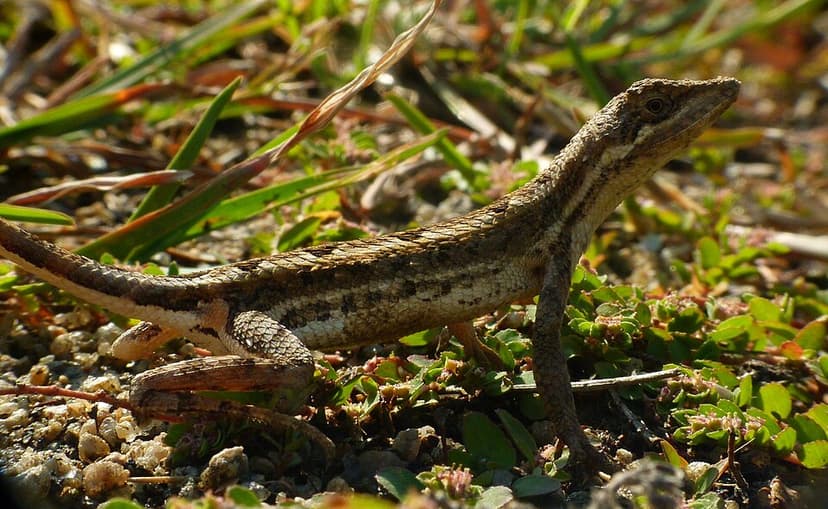
Fan-throated lizard (Sitana ponticeriana)
The Fan-throated lizard (Sitana ponticeriana) is a species of agamid lizard found in eastern peninsular India. It is characterized by an enlarged projecting scale on the posterior side of its hind thigh and a distinctive, often tricolored, gular appendage (dewlap) in males, which is used in mating displays. This ground-dwelling lizard primarily inhabits open patches within thin forests.