
Nephrurus wheeleri
Nephrurus wheeleri, commonly known as the banded knob-tailed gecko, is a lizard species endemic to Australia. This reptile inhabits shrubland and rocky areas, and is recognized for its distinctive knob-like tail tip. It reproduces by laying eggs.
Key Facts
- ›Endemic to the Australian state of Western Australia.
- ›Inhabits shrubland and rocky areas.
- ›Reproduces by laying eggs (oviparous).
- ›Named in honor of American entomologist William Morton Wheeler.
- ›Belongs to the family Carphodactylidae.

Banded Knob-Tailed Gecko, Southern Banded Knob-Tailed Gecko, Wheeler's Knob-Tailed Gecko
Western Australia
About Nephrurus wheeleri
Nephrurus wheeleri: The Banded Knob-Tailed Gecko
Nephrurus wheeleri, commonly known by several names including the banded knob-tailed gecko, southern banded knob-tailed gecko, and Wheeler's knob-tailed gecko, is a species of lizard native to Australia. This reptile belongs to the family Carphodactylidae and is specifically found within the Australian state of Western Australia.
Habitat and Distribution
The preferred natural habitats for Nephrurus wheeleri are shrubland and rocky areas. These environments provide the necessary conditions for their survival and activity. The species is endemic to Australia, with its known range primarily within Western Australia.
Reproduction and Naming
Nephrurus wheeleri is oviparous, meaning it reproduces by laying eggs. The specific name, 'wheeleri,' was bestowed in honor of the American entomologist William Morton Wheeler, recognizing his contributions to the field of entomology.
Source: Wikipedia ↗
Frequently Asked Questions
Where is Nephrurus wheeleri found?
Nephrurus wheeleri is found in the Australian state of Western Australia. It is endemic to Australia.
What kind of habitat does the banded knob-tailed gecko prefer?
The preferred natural habitats of Nephrurus wheeleri include shrubland and rocky areas. These environments provide suitable conditions for the species.
How does Nephrurus wheeleri reproduce?
Nephrurus wheeleri is oviparous, meaning it reproduces by laying eggs. This is the primary reproductive method for the species.
What is the origin of the name Nephrurus wheeleri?
The specific name, wheeleri, was given in honor of the American entomologist William Morton Wheeler. This commemorates his contributions to science.
What family does the banded knob-tailed gecko belong to?
Nephrurus wheeleri belongs to the family Carphodactylidae. This classification places it within a specific group of geckos.
Related Lizards
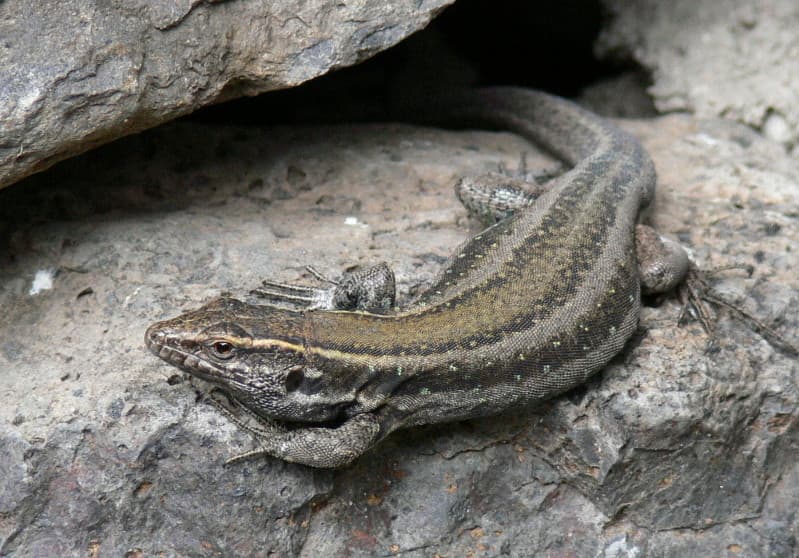
Boettger's lizard
Boettger's lizard (Gallotia caesaris) is a species of wall lizard endemic to the western Canary Islands, specifically El Hierro and La Gomera. This oviparous reptile inhabits rocky areas, shrubland, and forests, and is known for its capacity to lay multiple clutches of eggs per year. It is closely related to the Gallotia galloti species found on neighboring islands.
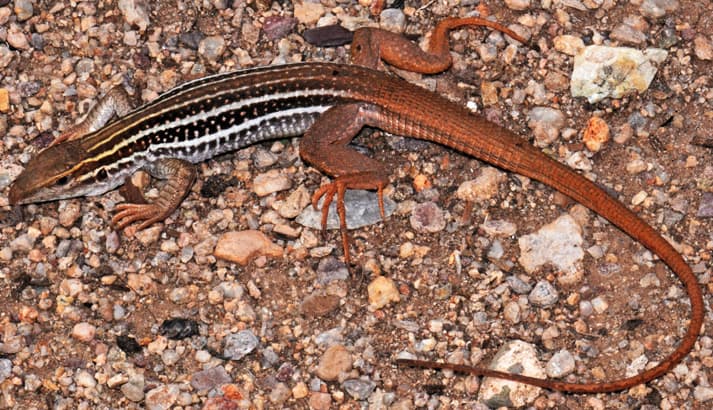
Canyon Spotted Whiptail
The Canyon Spotted Whiptail, also known as el huico manchado de cañón, is a lizard species found in northwestern Mexico and the southwestern United States. It inhabits forests, shrublands, and rocky areas, and is oviparous, laying eggs as its primary method of reproduction.
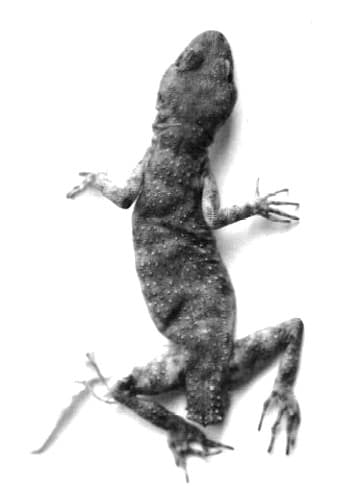
Cyrtodactylus walli
The Chitral gecko, scientifically known as Mediodactylus walli, is a species of lizard found exclusively in northwestern Pakistan. This gecko prefers shrubland and rocky terrains at moderate to high altitudes. It is distinguished by its specific epithet, honoring British herpetologist Frank Wall, and is a member of the Gekkonidae family.